Ready-made products for your natural routine..
Do you want to stay updated on offers, (giveaway) actions and recommendations? This way you won't miss out on anything! Not too often, we promise.

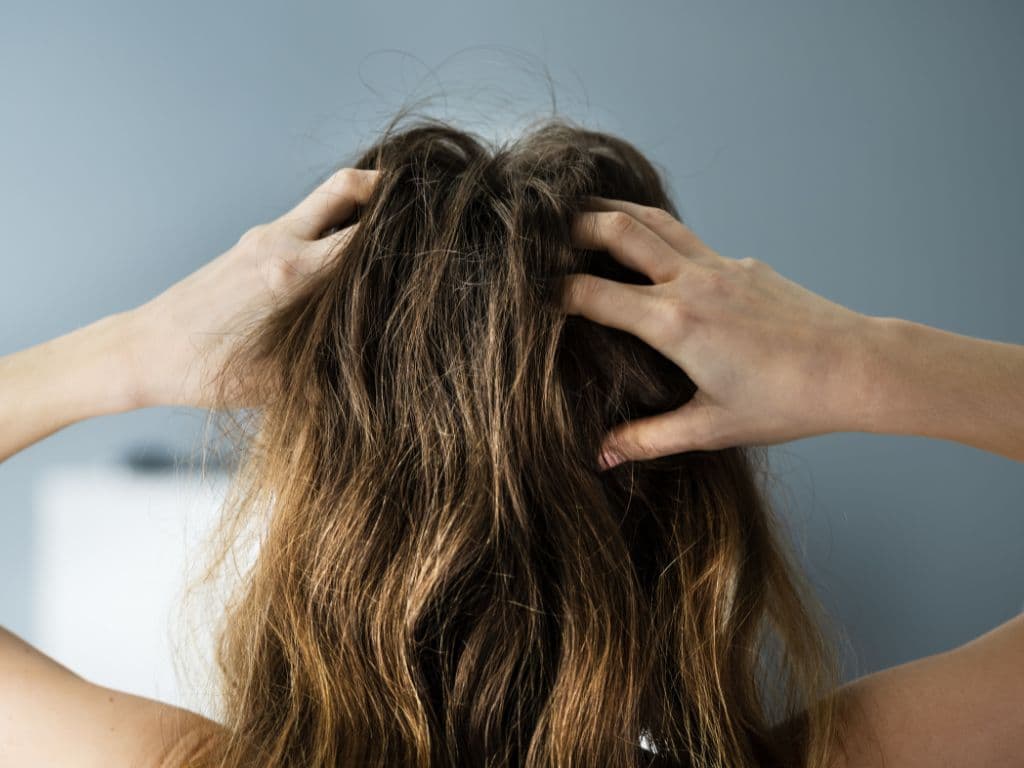
A dry scalp can be recognised by the following symptoms. The scalp feels tighter and may sometimes itch, especially after showering. You see white, fine flakes on the scalp, or the skin looks red, chapped or rough.
A dry scalp can have various causes. You may enjoy caring for your skin with all kinds of hair products. For your scalp, this is not always so pleasant. Take a good look at the ingredients in your hair products. The use of aggressive hair products can in fact dry out the scalp.
You may also suffer more from a dry scalp during the winter months. Because the heating is on indoors, the air in the house is drier and the skin can dry out. Airing your home regularly can prevent dry air.
Stress, diet and hormonal fluctuations can also affect your skin condition.

A dry scalp can resemble dandruff. What is the difference? With a dry scalp, the flakes are fine, dry and white. When you suffer from dandruff, the flakes are larger, greasy and yellowish in colour.
Good care starts in the shower. Don't shower too hot, but use lukewarm water. Choose a hydrating and caring shampoo without irritating ingredients. For example, you can try the natural shampoo from Mas Newen This shampoo is mild (with a pH of 5.5) and suitable for a dry scalp.
Also, don't use too much conditioner. As nice as it may feel, it can dry out your scalp. Many conditioners contain silicones so that your hair feels nice and smooth afterwards. Preferably go for a natural conditioner without harmful ingredients.
Blow-drying, styling and curling all work with heat, and this can damage the natural protective layer of your hair. If you suffer from a dry scalp, it is best to reduce this, protect the skin and hair well, and not blow-dry too hot.

Tips for blow-drying, styling and curling:
Make sure not to hold the hairdryer too close
use thermal brushes and blow-dry at a low temperature or with cold air
Never set the curling or straightening iron hotter than 180 degrees, but preferably at 130 to 150 degrees for as little damage to your hair as possible.
Make sure your hair is well conditioned before you start styling. If you wash your hair with only shampoo and then dry it, you have an even greater risk of damage. Shampoo often opens up the hair because of its high pH. Warm water from the shower and the heat from the hairdryer do this even more, leaving the hair too exposed to external stressors and at risk of damage.
Always ensure as little friction as possible when blow-drying. First comb through your hair with a special soft detangling brush with a leave-in conditioner, then blow-dry it from a distance with medium heat or let it air dry, that is the very best!
Of course, it is also important to pay close attention to what you eat and drink. Healthy skin and hair come from within!
Use a nourishing hair mask to care for and hydrate the scalp. Mix Jojoba oil (50%), Squalane (47%), Rosemary Essential oil (2%) and Vitamin E oil (1%) in a bottle with a dropper. Massage it into the scalp before going to bed and wash your hair the next day with your favourite shampoo.
Rosemary Essential oil supports the scalp and is also very good for the hair follicles. It helps to stimulate the hair follicles, making your hair healthier and stronger. Add 1% to your shampoo.
Written by: Helena Laarman

Do you have flakes on your scalp or does your skin feel dry? A dry scalp can be annoying. In this blog, you will read how to care for a dry scalp.