Ready-made products for your natural routine..
Do you want to stay updated on offers, (giveaway) actions and recommendations? This way you won't miss out on anything! Not too often, we promise.


Sunlight is indispensable for all life on earth. That does not mean you should not be careful with it. In this blog you will read how sunlight influences your skin in various ways, what the difference is between mineral and chemical sun filters, how antioxidants can help both from the inside and the outside, why hydration is essential and much more.
Sunlight consists of various forms of electromagnetic radiation emitted by the sun. So it is much more than just UVA and UVB. The three most important are:
Visible light (±40-50%)
This is the light we can see with the naked eye. It consists of all the colours of the spectrum: red, orange, yellow, green, blue, indigo and violet. Visible light is important for our sight and for natural processes such as photosynthesis.
Infrared light (±40-50%)
Infrared is not visible, but it can be felt as heat. This radiation is responsible for most of the warming of your skin when you sit in the sun.
Ultraviolet radiation (±3%)
UV radiation is invisible to the human eye, but has a major influence on the skin. There are three types:
UVA (315–400 nm): penetrates deep into the skin and can cause skin ageing.
UVB (280–315 nm): triggers the production of vitamin D and can cause sunburn.
UVC (100–280 nm): is blocked by the atmosphere and does not reach the earth.

UV (Ultraviolet) is a form of light with a high frequency. That means it carries a great deal of energy. If your skin cannot absorb this energy gradually, damage can occur. We call this damage 'burning'.
When you take in too much UVB radiation, oxidative stress develops in the skin. That means the cells become overloaded or damaged. Your body notices that something is wrong and starts an inflammatory response to repair the damage or clear away the broken cells. That red, burning skin after a day in the sun? Generally that is not ordinary redness but an active repair process by your body!
Turning red in the sun does not, by the way, automatically mean you are burnt. Sometimes it is simply a temporary effect of increased blood flow. As soon as sunlight reaches your skin, nitric oxide is released in the blood vessel walls. This causes your blood vessels to dilate. And that is a natural process your body uses to get rid of heat. The increased blood flow fades again after a while and does not hurt; burning lingers longer and does hurt!
When your skin is exposed to UVB radiation, pigment cells (melanocytes) produce more melanin: your natural shield against the sun. That increase in melanin causes your skin to darken in colour. That is why you are more tanned after a day in the sun at the beach or in the park. Melanin not only helps to absorb more light, but also protects you against burning and enables your body to convert sunlight into vitamin D more efficiently.

Sunlight is more than just pleasantly warm and good for your mood. It also plays an essential role in your health. The UVB radiation in sunlight in particular stimulates the production of vitamin D in the skin. Vitamin D is crucial for several bodily functions, including:
Strong bones and teeth: It helps you absorb calcium from food better.
A healthy immune system: Vitamin D plays a role in fighting off infections.
Muscle function and mood: A deficiency can lead to fatigue, muscle weakness and even low spirits.
Sunlight therefore contributes to both physical and mental wellbeing.
Exactly how much sunlight do you need? That is not a one-size-fits-all story. It depends on all sorts of factors.
Skin type: Your skin type, for example, plays an important role. Do you have fair skin? Then you produce vitamin D more quickly, but you also burn far sooner. Darker skin types actually need more sun, because the pigment melanin partly blocks the absorption of UVB radiation.
Location, season, time of day: Where you live, the season and the time of day also determine how much of the sun's strength actually reaches your skin. In summer in the Netherlands you can often produce enough vitamin D within a quarter of an hour around midday. In winter it is different: the sun is then so low that hardly any usable UVB radiation gets through. A vitamin D supplement is then usually no unnecessary luxury.
Age and lifestyle: Age and lifestyle also play a role. As you get older, your natural production of vitamin D decreases. And anyone who mainly stays indoors or wears covering clothing simply gets less sun on their skin.
So it is all about the right balance: enough sun for your health, but not so much that your skin suffers damage from it.

Clothing and shade are your best protection: Sunscreen helps, but really protecting your skin well starts with covering clothing, a hat and regularly seeking out the shade. This is most effective especially during the hottest hours of the day.
Avoid the sun during peak hours: Between 11am and 3pm the sun is at its strongest. The chance of burning is then greatest. It is better to plan outdoor activities in the morning or late afternoon, when the sun is milder.
Let your skin get used to the sun: Are you going on holiday and has your skin not seen much sun yet this year? Let your skin acclimatise gently: start with short periods in the sun and build this up gradually. This gives your skin the chance to set its natural defences (such as pigment formation) in motion, without immediate overload.
Also go into the sun without sun protection: sunscreen blocks the production of vitamin D, but do prevent burning!
Use mineral filters such as zinc oxide during prolonged exposure.
After a day outdoors, your skin can feel tight or flaky. That is because sunlight causes oxidative stress, during which free radicals are released. Your skin responds with accelerated cell division and as a result loses moisture and lipids. The consequence: a disrupted skin barrier and drier skin.
Aftersun is not an unnecessary luxury, but an essential part of your skincare. Even if you are not burnt, your skin needs support. It helps your skin to recover and to replenish moisture.
A good aftersun:
hydrates intensely: for example with humectants such as Aloe Vera, Glycerine and/or a hydrosol
Soothes with plant extracts such as Lavender or Chamomile
Repairs the skin barrier with nourishing oils or butters such as Jojoba oil or Shea Butter
Neutralises free radicals through antioxidants such as vitamin E or C.
What do antioxidants actually do?
Both from the outside and from the inside, antioxidants are important to protect your skin against free radicals. Antioxidants are natural protectors and help to neutralise free radicals, reduce the damage from within and support the repair process.
What can you do yourself? Eat plenty of vegetables and fruit!
Vitamin C: citrus fruit, peppers, kiwi, strawberry and broccoli
Vitamin E: nuts, seeds, avocado, vegetable oils
Beta-carotene: carrots, sweet potato, spinach
Lycopene: tomatoes (cooked), watermelon, red pepper
Astaxanthin: salmon, prawns
Polyphenols: green tea, blueberries, cocoa, turmeric
Selenium: Brazil nuts, egg, tuna, sunflower seeds
Zinc: pumpkin seeds, oysters, eggs, chickpeas
Omega-3: oily fish, linseed, chia seed, walnuts.

SPF stands for Sun Protection Factor and indicates how well a sunscreen protects against UVB radiation. The number says something about how long you can stay in the sun without burning, compared with your unprotected skin.
Please note: SPF says nothing about protection against UVA radiation. That protection must be indicated separately on the packaging. In the Netherlands the UVA protection must be at least one third of the stated SPF. So with SPF 30, at least UVA10. So even with a high SPF you are not fully protected against UV radiation.
Why do you need to reapply every 2 hours?
As soon as you have applied your sunscreen, the protection slowly begins to decrease. How quickly that happens depends on various factors: the strength of the sun, which sun filter is used and what you are doing (swimming, sweating and rubbing speed up the loss of protection).
SPF 30 and SPF 50: is the difference really that big?
It seems as though SPF 50 protects much better than SPF 30, but in practice the difference is smaller than you think.
SPF 15 blocks about 93% of UVB radiation
SPF 30 blocks about 97%
SPF 50 comes out at about 98%
So the difference between SPF 30 and 50 is only about 1% extra protection against UVB radiation.
How much sunscreen should you use?
SPF values are based on the ideal conditions in the lab, with a specific amount of cream (read: a great deal of cream). Generally people apply far too little, which means you get much less protection than is stated on the packaging.
To get the actual SPF protection indicated on the product, you need to apply 2 mg/cm2 to the skin. This amounts to about 5ml for the face and neck and about 30 ml for the rest of the body (a conservative estimate) each time.
… and per day?
If you stick to the guideline of reapplying every 2 hours, a whole day outdoors between 10am and 6pm gives you a reapplication frequency of 4 times.
4×35ml = 140 ml per day per person (adult).
Do you reach this?
What if you apply less?
Almost no one reaches these amounts. Often we do not even get to half. If you apply only half of what is needed, you get far less protection than you think. For example:
SPF 30 with too little cream = effectively only SPF 10–15
You burn faster than expected, despite applying it.

We get this question often, and rightly so. We understand very well that you are looking for a sunscreen that is 100% natural, safe for your skin and kind to the environment. The short answer? We would love to make it, but technically it is quite a challenge.
The natural sun filters that are effective and are permitted in Europe are zinc oxide and titanium dioxide. We deliberately choose zinc oxide, because it offers broader-spectrum UV protection (UVA and UVB) and is often better tolerated by sensitive skin. But... working zinc oxide into a stable and pleasantly spreadable cream is far more complex than it seems.
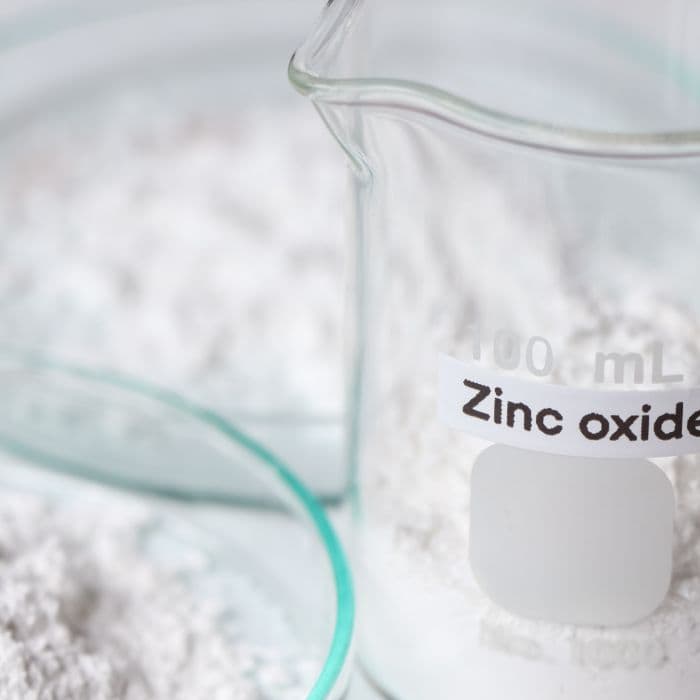
Zinc oxide is a fine white powder, but it does not spread nicely through a cream on its own. If you do not disperse (distribute) this in the right way, you get:
Uneven UV protection
A product that feels streaky, grainy or “heavy”
White cast, marks on the skin or clothing
For this you need specialised dispersing equipment, which we do not currently have in-house.
At Natural Heroes we develop and produce everything in-house. That is a deliberate choice, so that we retain full control over the quality, ingredients and sustainability of our products. But it also means that we have no access to industrial sunscreen factories or specialised coating techniques for zinc oxide.
Sunscreen comes in all shapes and sizes, from sprays to sticks, with mineral or chemical filters, and from SPF 15 to 50+. But what actually is the difference between all those options? Broadly speaking, they can be divided into three categories.
Sun protection with mineral UV filters
Sun protection with chemical UV filters
Sun protection with a combination of both (hybrid)
Active filters: zinc oxide and titanium dioxide
How it works: These filters stay on top of the skin and act like little mirrors that reflect and scatter UV radiation.
Advantages:
Works immediately: Protection starts as soon as you apply it.
Broad spectrum: Protects against both UVA and UVB rays.
Less chance of irritation: Stays on top of the skin and is often well tolerated, even by sensitive skin.
Stable in sunlight: Loses effectiveness less quickly under the influence of UV.
More environmentally friendly: Breaks down more quickly in the environment and is safer for coral reefs.
Disadvantages:
Thick texture: often spreads more stiffly and feels heavier on the skin
White cast: Visible on the skin and on (dark) clothing, especially with high SPFs.
Reapply regularly: Protection decreases after rubbing or contact with water, so reapplying is important.
And there is a solution for that… Nano zinc oxide.

To reduce the problem of the white cast on the skin, manufacturers sometimes 'chop up' the active UV filters in sunscreens into ultra-small particles. We call these nanoparticles. By reducing zinc oxide to the nanoscale, the filter becomes easier to spread and no longer leaves a white film behind.
Advantages of nano zinc oxide:
Leaves no white cast on the skin
Lighter and finer to spread
Effective UVA and UVB protection
Disadvantages of nano zinc oxide:
Environmental risk when rinsed off: nano zinc can be harmful to aquatic organisms such as plankton, fish and coral. The degree of safety depends on how the nanoparticle is formed and coated. With correct use and a safe coating, nano zinc oxide is considered a relatively safe choice!
Did you know: Nano zinc oxide consists of particles between 1 and 100 nanometres. For comparison: a human hair is about 80,000 nanometres thick. So it really is microscopically small
.
Active filters: among others Oxybenzone, Octinoxate (Ethylhexyl Methoxycinnamate), Avobenzone, Octocrylene, Tinosorb S (bis-Ethylhexyloxyphenol Methoxyphenyl Triazine), Octisalate
How it works: Chemical sun filters work by absorbing UV radiation and converting it into heat, rather than reflecting it (as mineral filters do). Because each filter covers only part of the UV spectrum, several are often combined in one product for broad-spectrum protection.
Advantages:
No white cast: They absorb fully into the skin.
Light and comfortable: The texture is usually thin and smooth
No marks on clothing: Because they do not stay on top of the skin, they are less likely to rub off.
Disadvantages:
Irritation and allergies: Some filters, such as oxybenzone and octocrylene, can trigger skin reactions. Especially when, under the influence of UV light, they change into substances that provoke irritation or even allergies. We have listed below the chemical sun filters we advise avoiding.
Absorption into the body: Chemical filters do not stay neatly on your skin. They are partly absorbed and sometimes even end up in your bloodstream.
Some you simply pass out again, but others accumulate. Traces of certain filters (oxybenzone) have even been found in fatty tissue and breast milk.
Possible hormonal effects: There are indications that some filters may have an effect on your hormones, especially with prolonged use. Research is still ongoing, but it is a cause for concern.
Activation time needed: You have to apply them 20 to 30 minutes in advance. Quickly applying it on the beach and straight into the sun? That does not really work with these filters.
Environmental impact: Chemical filters break down poorly in the environment and accumulate in seawater and in the tissues of sea animals. Oxybenzone, for example, is a sun filter that breaks down coral! Hawaii has banned this filter since 2021.
These are the sun filters we advise avoiding: Oxybenzone (Inci: Benzophenone-3), Sulisobenzone (Inci: Benzophenone-4), Homosalate (Inci: Homomenthyl Salicylate), Octinoxate (Inci: Ethylhexyl Methoxycinnamate), Octocrylene
(Inci: Octocrylene), Avobenzone (Inci: Butyl Methoxydibenzoylmethane)

Reef friendly label
Although thought is indeed being given to official rules around the “reef-friendly” label, at the moment it is mainly still a marketing term without strict regulation. So what can you do?
Choose consciously, but above all: prevent sunscreen from ending up in the sea. Wear UV-blocking clothing, for example, and regularly seek out the shade between swims. That is not only better for the environment, but also for your skin.
Active filters: zinc oxide or titanium dioxide combined with, for example, avobenzone, octocrylene or homosalate
How it works: a combination of absorbing UV radiation and then converting it into heat, and reflecting UV radiation.
Advantages:
Works immediately after application, usually well tolerated by sensitive skin
Broad-spectrum protection: the combination of filters provides full coverage
Less white cast, despite the combination with zinc oxide
Disadvantages:
Possible skin reactions (although less than with fully chemical sun filters)
Environmental impact: depends on the chosen chemical filters
Pay close attention to the label
The term "mineral sunscreen" often gives the impression that the product contains only zinc oxide or titanium dioxide. But beware: some brands also use this term when there is only a little mineral filter in it and simply add chemical filters as well.
Tip: always check the ingredient list if you want a truly fully mineral product. Look specifically for the presence of substances such as oxybenzone, octocrylene or avobenzone.
Sources:
https://pubmed.ncbi.nlm.nih.gov/27131753
https://pubmed.ncbi.nlm.nih.gov/26616753
https://jamanetwork.com/journals/jama/fullarticle/2759002
https://pmc.ncbi.nlm.nih.gov/articles/PMC4997468/https://enveurope.springeropen.com/articles/10.1186/s12302-021-00515-w
https://www.ncbi.nlm.nih.gov/books/NBK532266/
https://bond.edu.au/thinking-steps/health-matters/can-blue-light-from-your-phone-harm-your-skin#
https://www.sciencedirect.com/science/article/pii/S0022202X15349307#
https://www.midwesterndoctor.com/p/dermatologys-disastrous-war-against-f81
https://www.mdpi.com/2076-3921/11/8/1484#
https://academic.oup.com/carcin/article-abstract/34/5/1144/2463125
https://onlinelibrary.wiley.com/doi/10.1111/ics.12728#
https://www.nature.com/articles/s41598-022-13399-4.pdf
https://www.fda.gov/news-events/fda-brief/fda-brief-fda-announces-results-second-sunscreen-absorption-study
Written by: Helena