New: No BS Deo stick, up to 40% off Shop now
Do you want to stay updated on offers, (giveaway) actions and recommendations? This way you won't miss out on anything! Not too often, we promise.


Wrinkles, skin that's losing its firmness and a fading glow… As you get older (from ±25-30 years), your natural collagen production drops by about 1% every year. This can lead to wrinkles, sagging skin, dryness and loss of elasticity. There are lots of products on the market, such as collagen creams, pills and powders, that promise younger-looking skin. But what really helps your skin make collagen?
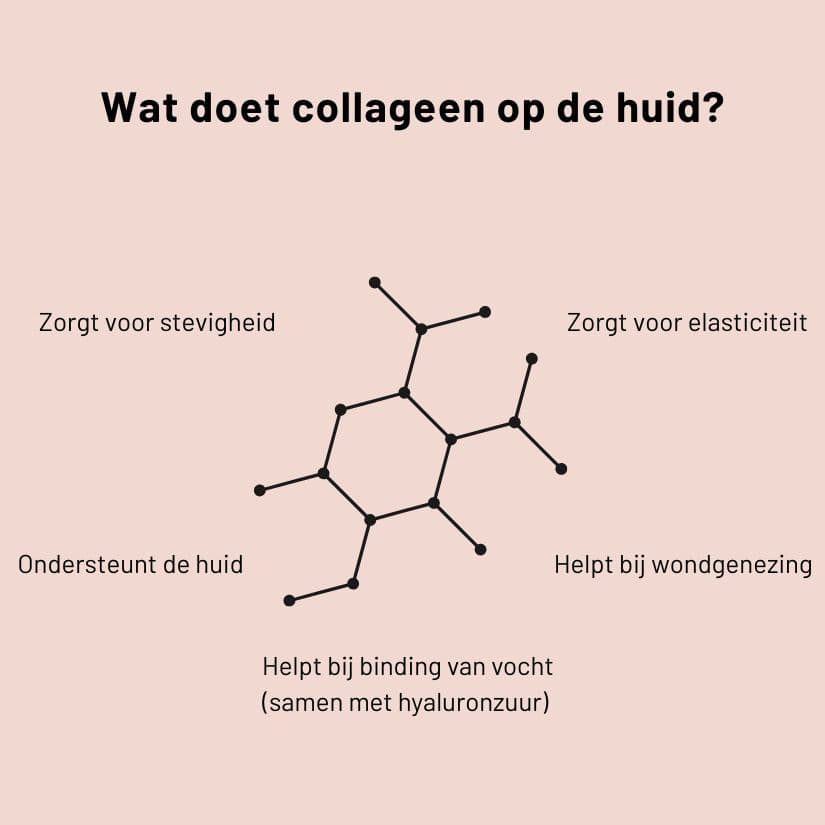
Collagen is a protein that's essential for healthy, supple, youthful skin. The word ‘collagen’ comes from the Greek word ‘kólla’, which means ‘glue’.
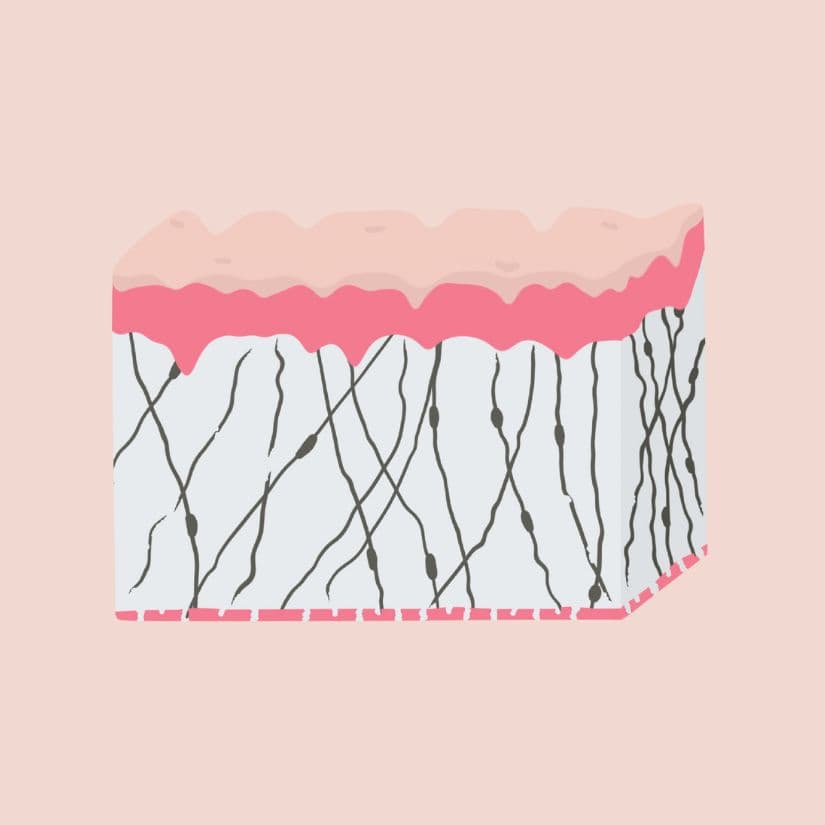
And that's exactly what it does in the skin: it holds everything nicely together. In the dermis (the deeper layer of the skin), collagen fibres provide structure and firmness. 80% of the weight of the dermis is made up of collagen. No wonder it plays such a big role in healthy, radiant skin!


In the dermis, fibroblasts produce collagen. It starts with the formation of pro-collagen in the cell, from amino acids such as glycine, proline and hydroxyproline. Vitamin C is indispensable here: without it, collagen isn't built properly.
The pro-collagen is then transported out of the cell, where enzymes convert it into actual collagen. Together, these collagen fibres form a network that gives the skin firmness and structure.
Most collagen creams don't work the way people hope. At most they'll hydrate the skin, which temporarily makes it look smoother and plumper, but they don't increase the collagen in your skin. Why not? Collagen is a large protein. Its molecules can't penetrate the top layer of the skin (epidermis). So it doesn't get deep enough to stimulate your own collagen production or improve your skin structure. It stays on the surface and at most acts as a moisturiser.
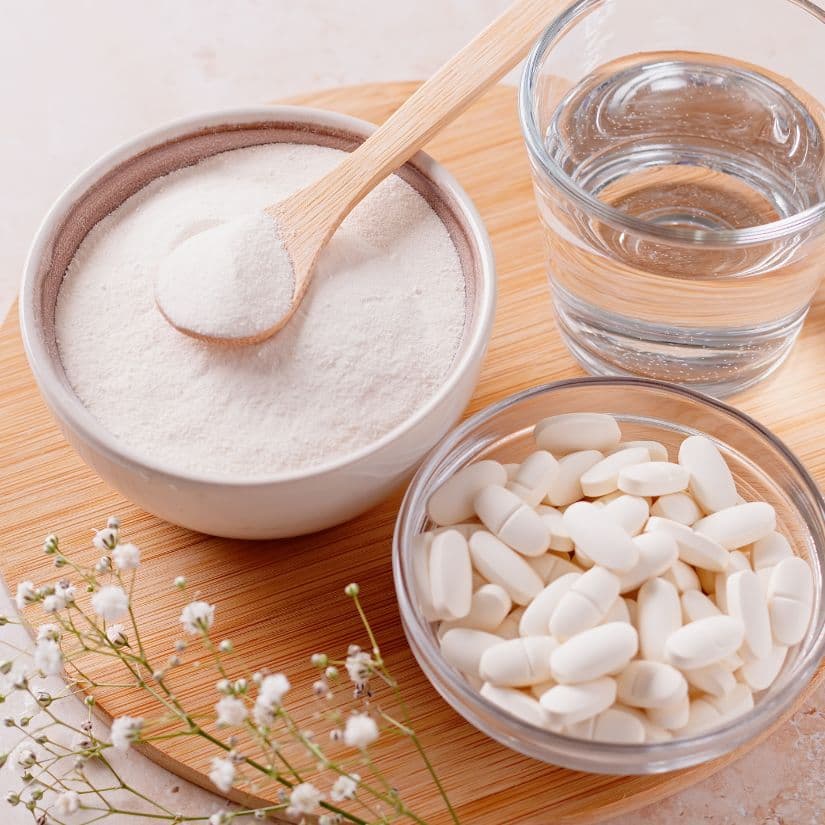
Most scientific studies use 2.5-10 grams of collagen per day to see results. To get this from pills, you'd have to swallow 6-12 pills. So this isn't recommended.
Several studies show that supplementing with collagen for 8-12 weeks can improve skin elasticity and hydration and can reduce wrinkles.
Collagen peptides (hydrolysed collagen) are the most researched of all nutrients. Hydrolysed collagen is collagen that has been broken down into shorter amino acid chains (peptides). This makes it easy for the body to digest and absorb. They mainly contain amino acids such as glycine, proline and hydroxyproline, which are important for building skin tissue.
Both this study and this study looked at the effects of collagen peptides on skin ageing. The main results were:
Skin elasticity: Improved elasticity of the skin.
Hydration: Increased skin hydration.
Wrinkle depth: Reduced depth of wrinkles.
These effects were observed after a daily intake of 2.5 to 10 grams of collagen peptides for 4 to 12 weeks, which shows that it may be effective.
However: many of the studies included had only a small sample size and were (partly) funded by a collagen supplier. In addition, some positive effects may also be attributable to other ingredients in the supplements (vitamin C, hyaluronic acid).

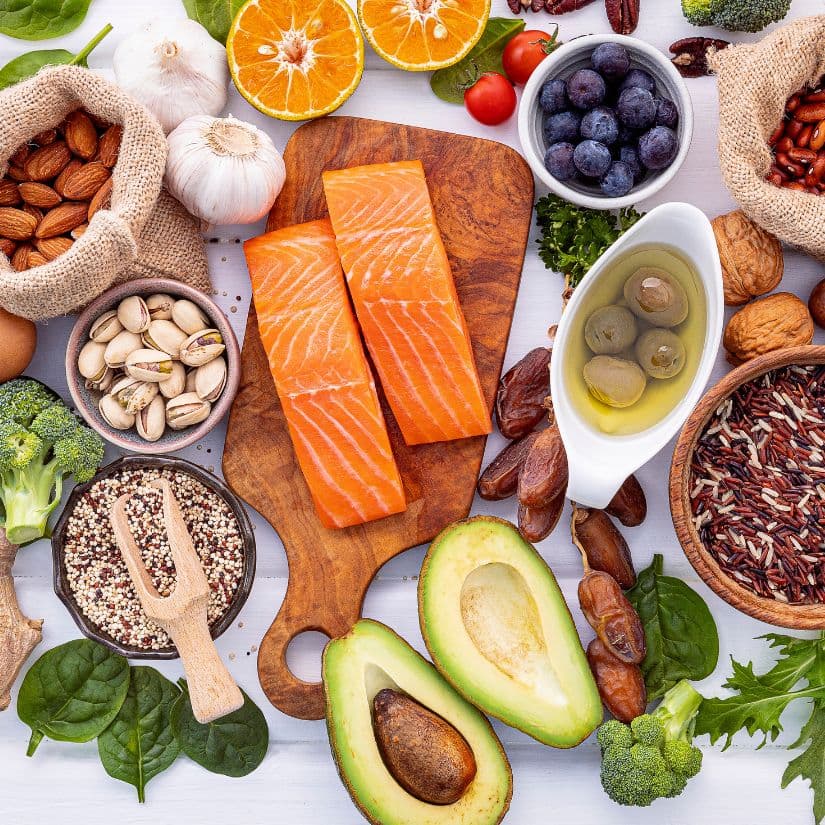
Nutrition:
Vitamin C: Vitamin C is essential for collagen formation and protection against breakdown. Without vitamin C, collagen stays “slack” and unstable. Peppers, kiwi and citrus fruits are a source of Vitamin C.
Proteins and amino acids: these are the building blocks of collagen. You'll mainly find them in animal products, such as bone broth and eggs. (glycine, proline and lysine). Lysine and Proline are also found in legumes and nuts.
Zinc: helps with collagen formation. Without enough zinc, fibroblasts (the collagen-producing skin cells) can't produce normally functioning collagen fibres. Zinc is mainly found in animal products such as oysters and beef liver. Combine sources of zinc with vitamin C-rich foods → this improves absorption.
Antioxidants and polyphenols: these protect against collagen breakdown caused by UV & free radicals. Cocoa, green tea and blueberries are a great source!
Supplements:
Collagen peptides: oral supplements (2.5-10mg per day) show improvements in elasticity, hydration and wrinkles in several studies.
Zinc: it's only important to supplement if you have a zinc deficiency.

Vitamin C (Ascorbic acid)
Vitamin C is essential for collagen synthesis. Vitamin C boosts collagen production, helps stabilise collagen molecules and inhibits enzymes that break down collagen. Applying vitamin C directly to the skin is more effective for increasing its local concentration. However, its effectiveness depends on the stability and pH of the formulation. Use 10-20% in a serum.
Niacinamide (Vitamin B3)
Niacinamide stimulates collagen production in dermal fibroblasts, the cells responsible for producing collagen and elastin. Niacinamide inhibits enzymes that break down collagen structures, particularly under the influence of UV damage and ageing. Clinical studies in the article show that using 5% in your formula improves skin texture and reduces wrinkle depth.
Retinol (retinoids)
Retinol is converted into retinoic acid in the skin and is effective at improving signs of skin ageing, mainly by stimulating collagen production and inhibiting collagen breakdown. It's currently considered a gold standard in anti-ageing dermatology. However, it can cause redness, dryness and flaking, especially at higher concentrations or with sensitive skin types, and it isn't suitable for use in natural cosmetics.
Retinaldehyde (RAL)
Retinaldehyde, also called retinal, is a vitamin A derivative. It's a direct precursor of retinoic acid, the active form of vitamin A that all retinoids are ultimately converted into in the skin. Fibroblasts become more active under the influence of RAL: they produce more collagen and elastin, resulting in smoother, firmer skin. It reduces fine lines and wrinkles, firms the skin and strengthens the skin barrier. However, this ingredient has been studied less and there are fewer long-term studies. RAL is chemically less stable than retinoic acid and requires more expensive stabilisation and delivery systems (such as liposomes or encapsulation). Retinaldehyde is a substance the body makes itself: it occurs naturally in the human body (retina and skin), but is produced synthetically.
Matrixyl®️ (Palmitoyl Pentapeptide-4)
Matrixyl®️ is a signal peptide that prompts skin cells (fibroblasts) to produce collagen, elastin and glycosaminoglycans. It mimics the natural process of skin repair after damage by acting as a kind of ‘reminder’ to the cell.
GHK-Cu (Copper peptide):
GHK-Cu is a copper-bound tripeptide that occurs naturally in human plasma and is involved in cell communication in the skin. Among other things, it stimulates the production of collagen, elastin and glycosaminoglycans (such as hyaluronic acid). It also promotes skin firmness.
Bakuchiol
Bakuchiol stimulates the skin to produce more collagen, just like retinol (vitamin A). It helps your skin become firmer by producing collagen, but without redness or flaking. That makes it perfect for sensitive skin or if you prefer a natural solution.
AHAs
AHAs such as Glycolic acid and Lactic acid can stimulate collagen production in the skin by activating fibroblasts and speeding up cell renewal. Combined with ingredients such as retinoids or bakuchiol, they boost the skin renewing and firming effect. AHAs can cause irritation in sensitive skin types, and UV protection is essential when using them.
Sources:
https://www.orthokennis.nl/artikelen/collageen-huid-haar-nagels
https://pmc.ncbi.nlm.nih.gov/articles/PMC10180699/
https://pubmed.ncbi.nlm.nih.gov/32436266/
https://pubmed.ncbi.nlm.nih.gov/33742704
https://pubmed.ncbi.nlm.nih.gov/23949208/
https://pubmed.ncbi.nlm.nih.gov/26561784/
https://pubmed.ncbi.nlm.nih.gov/16029676/
https://pmc.ncbi.nlm.nih.gov/articles/PMC5605218/
https://pdfs.semanticscholar.org/4052/f4362ad04c201f0f956a0db6d97d6ae1e75b.pdf
https://pubmed.ncbi.nlm.nih.gov/10473959/
https://pmc.ncbi.nlm.nih.gov/articles/PMC2699641/
https://onlinelibrary.wiley.com/doi/10.1111/j.1468-2494.2009.00490.x
https://pubmed.ncbi.nlm.nih.gov/24471735/
https://pmc.ncbi.nlm.nih.gov/articles/PMC6073405/
Written by: Helena

Recipe
Elevate your skincare routine to the next level with this advanced Vitamin C + Hyaluronic Acid Serum. This powerful serum combines the brightening benefits and antioxidants of pure L-Ascorbic Acid (Vitamin C) with the deep hydration of Hyaluronic Acid. This serum is designed to rejuvenate and protect your skin, delivering visible improvements in skin tone evenness, texture and overall radiance!

Recipe
This refreshing skincare serum is designed to give your skin and hair a natural glow. Niacinamide (Vitamin B3) is the star of this formula. This ingredient is known to even out skin tone and calm redness. Combined with the intense hydration of Glycerine and the healing benefits of Panthenol (Provitamin B5), this serum keeps your skin soft, smooth and supple. A luxurious treat for your skin!

Recipe
Elevate your skincare routine to the next level with this advanced Vitamin C + Hyaluronic Acid Serum. This powerful serum combines the brightening benefits and antioxidants of pure L-Ascorbic Acid (Vitamin C) with the deep hydration of Hyaluronic Acid. This serum is designed to rejuvenate and protect your skin, delivering visible improvements in skin tone evenness, texture and overall radiance!