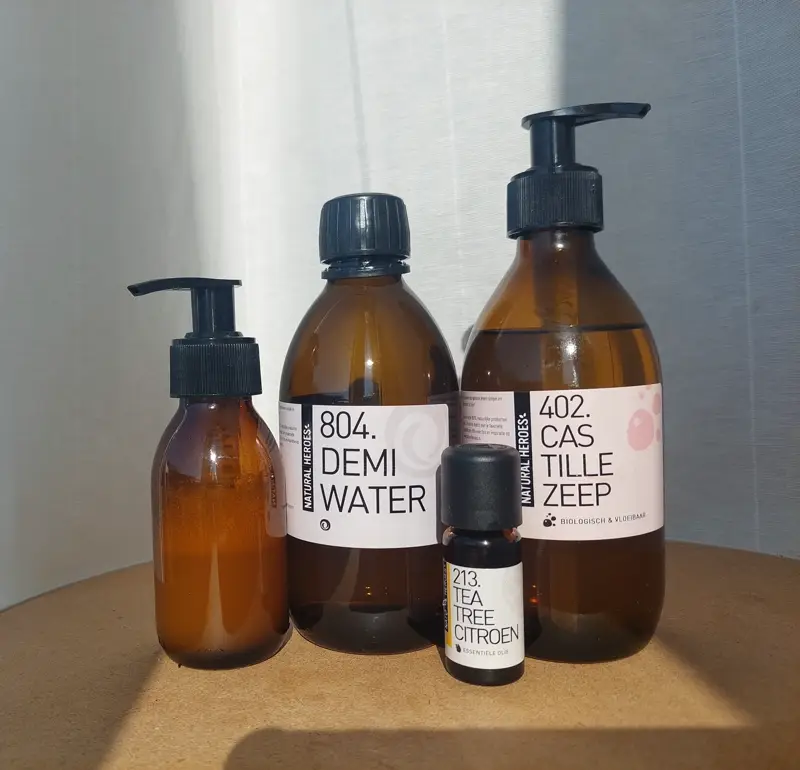
Soft texture and great for DIY
“I used the Castile soap in a DIY hand soap and an all-purpose cleaner.”
Lau · Castile Soap
New: No BS Deo stick, up to 40% off Shop now
Make it yourself with Natural Heroes
Want to make your own soap? Then your project starts with a choice: a bar of soap, a liquid soap or a wash. They look alike, but you make them in different ways. Find out which approach suits you, what you need and what to watch for with liquid soap.

Not every product we call soap in everyday life is made the same way. These are three routes to making your own cleansing product.
| Feature | Melt and pour base | Oils and lye | Liquid soap or wash |
|---|---|---|---|
| How it works | You melt a ready-made base according to the instructions and pour it into a mould. | Fats or oils react with lye. This is called saponification. | You combine cleansing agents, also known as surfactants, with the other ingredients in a formula. |
| Do you work with lye? | No | Yes, with suitable protection | No |
| What to watch for | Which additions suit the base you've chosen | Formula, ratios and safety measures must be exactly right | Concentration, acidity and preservation |
| Result | Bar of soap | Bar of soap | Hand soap, body wash or shower gel |
The rest of this guide is about the third route: liquid soap and wash. Prefer a solid bar? Then take a look at the wash bar recipes.
Start with a complete recipe for the use you have in mind. Every ingredient has its own job, so you can't simply swap them or leave them out.
The liquid base of the formula, for example the prescribed water or hydrosol. Use exactly the type the recipe names.

These help remove dirt and grease with water. Use the combination and quantities from the formula.

Depending on the recipe, these help with the composition and texture. Follow the mixing method given.
Helps protect a water-based formula against microbial growth. It has to suit the formula, dosage and acidity.
To weigh even small amounts carefully. Choose scales that are accurate enough for the recipe.
To weigh out, mix separately and combine the ingredients.
To check the acidity using the measuring method and range the formula specifies.

To bottle your soap and record its name, date made and directions for use.
Before you start, look at the full ingredient list and all the tools you need. That way you know which materials you already have and what you still need.
View the soap recipesIn liquid soap, the ingredients work together. The cleansing agents, together with the rest of the formula, determine how the product cleans and lathers. A thickener affects the texture. The amount of foam on its own tells you nothing about how mild a product is.
For your first attempt, use the specified raw materials and ratios. A small change can affect the texture, the acidity or how well the preservation works.

A hydrosol is not an essential oil. A hydrosol is a watery distillate of plant material; essential oil is far more concentrated. If a recipe calls for a hydrosol, you can't replace it with the same amount of oil.
The pH tells you something about your product's acidity. When formulating, it has to suit the ingredients and the intended use. There's no single pH value that makes every homemade soap or wash suitable for every use.
A water-based soap also needs suitable protection against bacteria, yeasts and moulds. Working cleanly is important, but it doesn't replace an effective preservation system. Even a product that smells and looks normal can be contaminated.
A correct pH reading does not on its own prove that the formula is safe or keeps for long. So follow a suitable recipe with clear instructions and don't change the preservation at your own discretion.
This step-by-step guide helps you prepare and understand how a formula is built up. The exact mixing order, quantities, checks and waiting times come from the recipe you choose.
Read the whole recipe first, including the directions for use. A hand soap, body wash and shower gel are meant for different uses. Check what you're going to make before you order ingredients.
Clean your worktop, tools and packaging thoroughly as the recipe instructs. Wash your hands and set out all your materials. Don't use a bottle that still contains traces of another product.
Work with the weights in the recipe. An amount in grams is not automatically the same number of millilitres. Put ingredients that need to be processed separately in their own clearly marked beakers.
Combine the parts as the recipe describes. Watch out for any temperature requirements and for how the thickener is added. Stir gently to keep unnecessary foaming to a minimum.
Check the pH with a suitable measuring method. Only adjust it by following clear instructions for the formula you're using. Also check that every ingredient, including the prescribed preservative, has been added correctly.
Let the mixture rest if the recipe says so. Then fill the packaging and note the product name, the date made and the directions for use. Copy the storage instructions from the recipe for exactly that formula and method.
Ready to start? Choose a recipe that comes with the formula and method.
View the soap recipesFrom our shop
Two raw materials with a similar name can work differently or have a different concentration.
Stick to the raw materials in the recipe. That also applies to hydrosols, cleansing agents and preservatives.
Extra water changes the composition and can affect the protection against microbial growth.
Don't dilute a soap or wash by feel to make it runnier.
You can't see or smell every kind of contamination.
Don't write a shelf life you've made up on your bottle. Use well-founded storage advice for the exact formula and method.
Reviews with photos
“I used the Castile soap in a DIY hand soap and an all-purpose cleaner.”
Lau · Castile Soap
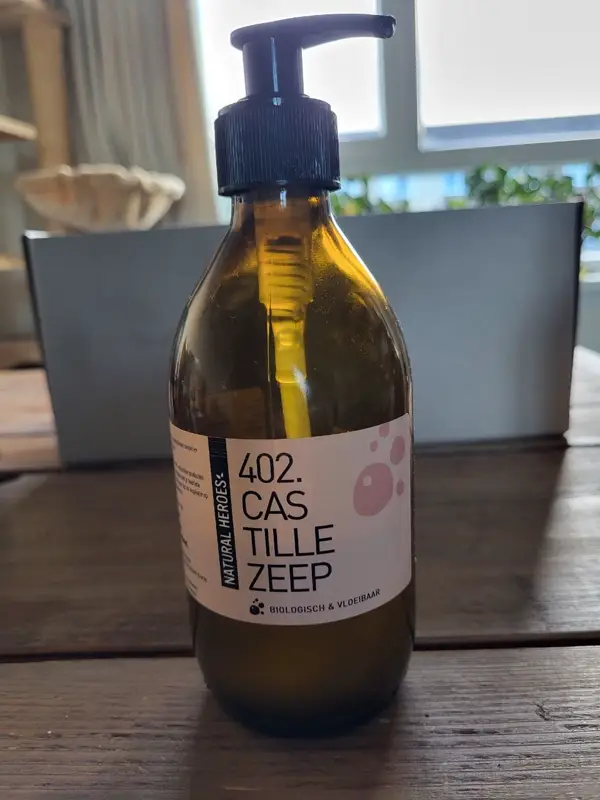
“Good product, comes in a nice (reusable) glass bottle. So far I've made washing-up liquid and hand soap with it.”
Lotte · Castile Soap
“A lovely base soap to add essential oil to as you like, for things like all-purpose cleaner. And for all kinds of recipes.”
Rianne · Castile Soap
“I use it in all sorts of products. Versatile and always a nice result.”
K. · Glycerine (plant-based)
Reviews translated from Dutch.
Every recipe is made for a specific use. A hand soap is not automatically a shower gel or a product that suits every skin. Follow the directions for use and the storage advice of your recipe.
Keep your soap away from your eyes and don't add extra essential oil beyond what the recipe says. A homemade soap is not a treatment for skin complaints. Stop if irritation occurs and talk to your GP about any complaints that persist.
Yes, you can work with a ready-made melt and pour base, so you don't handle lye yourself. You can also make liquid soap based on cleansing agents. That is a different method from traditional soap making through saponification.
No, not directly. A hydrosol is watery, while essential oil is far more concentrated and doesn't mix with water by itself. A swap like that means the formula has to be assessed again. Stick to the prescribed hydrosol.
Don't leave out the prescribed preservation. In a water-based soap, the formula has to be protected against microbial growth. A natural ingredient or clean packaging doesn't replace that protection either.
That depends on the complete formula, preservation, preparation, packaging and use. Follow well-founded advice for the exact recipe. If you change ingredients or ratios, the original shelf life no longer automatically applies.
Add up the preparation, weighing, mixing, checks and any resting time. The active making time isn't always the total time until the product is ready to bottle or use. So read the final steps too before you begin.
You now know the different ways to make soap and what to watch for with liquid soap. Browse the Natural Heroes recipes for hand soap, body wash and shower gel and open the one that appeals to you. There you'll find the ingredients, method and directions for use.
View the soap recipesLook at the recipe first, then decide which materials you still need.
Do you want to stay updated on offers, (giveaway) actions and recommendations? This way you won't miss out on anything! Not too often, we promise.
 You can unsubscribe at any time.