Ready-made products for your natural routine..
Do you want to stay updated on offers, (giveaway) actions and recommendations? This way you won't miss out on anything! Not too often, we promise.


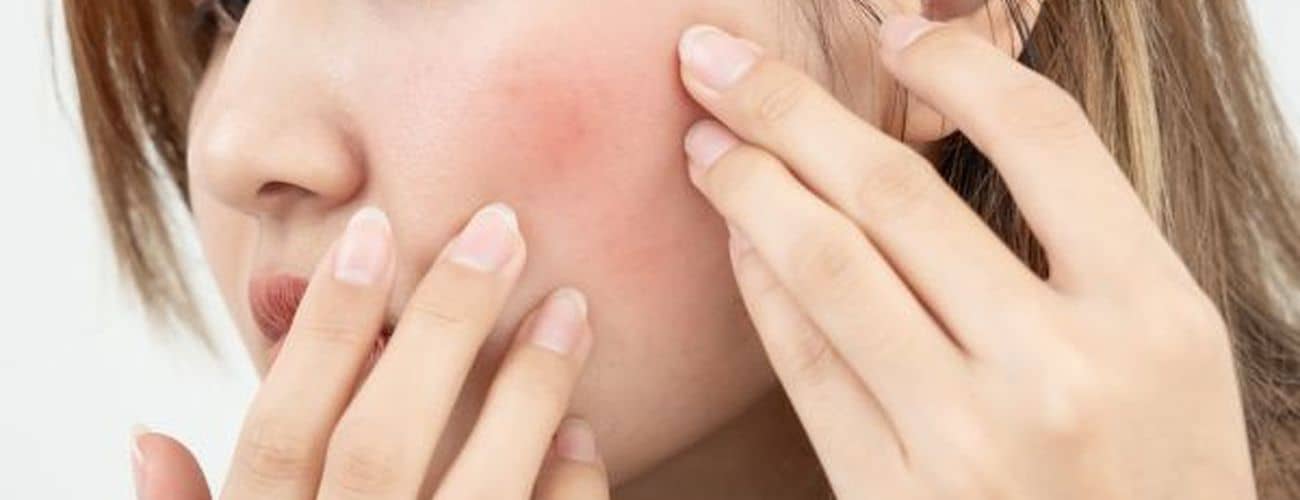
A skin that looks red, sometimes with bumps and spots… rosacea. This skin condition is very common, particularly in women. In this blog you can read more about rosacea, what its characteristics are and how to care for this skin in a natural way.
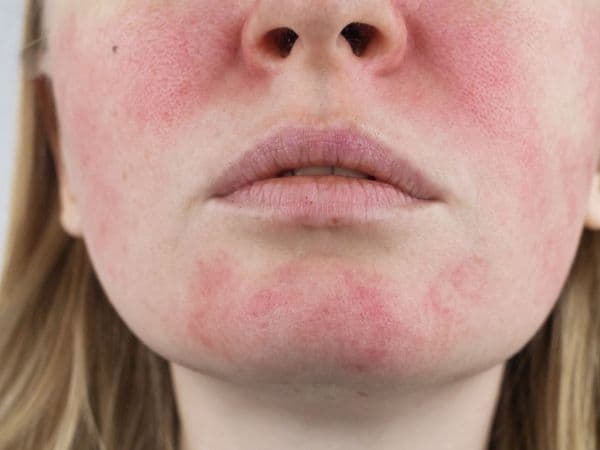
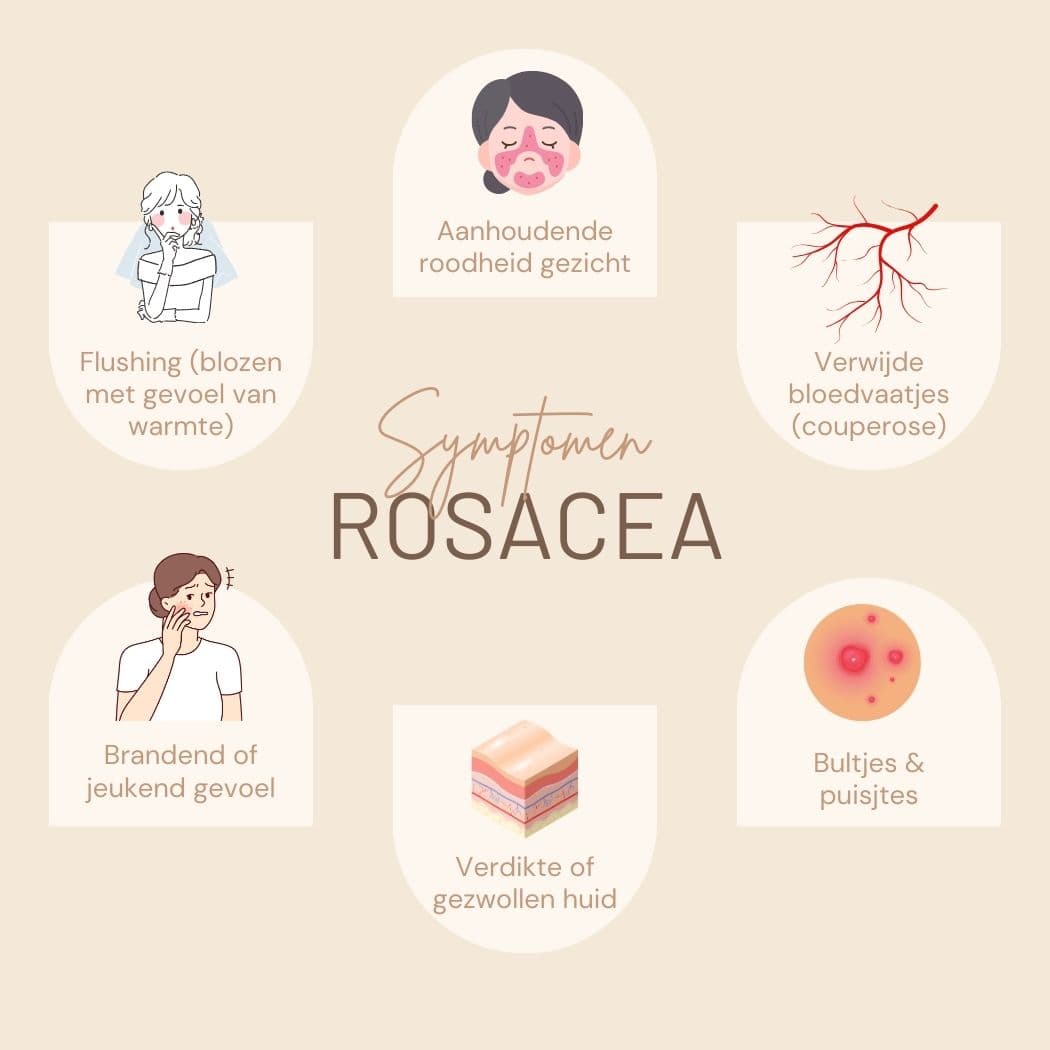
Rosacea is a skin condition that usually appears on the face. It is characterised by a red discolouration of the face. Rosacea literally means ‘as red as a rose’. The symptoms range from redness to visible blood vessels and bumps and spots. Rosacea is especially common in women between the ages of 30 and 50 with a fair skin type. Men can develop this skin condition too.
The literature always distinguishes 4 different subtypes.
Erythematotelangiectatic rosacea:
Redness and visible vessels (erythema means redness and telangiectasia are visible blood vessels).
Papulopustular rosacea
Redness with bumps and spots (papules are bumps and pustules are spots).
Rhinophymatous rosacea:
Here the soft tissues of the face are affected too, seen as a thickening of the nose.
Ocular rosacea
Irritation and redness of the eyes.

In practice, a different classification is used to recognise rosacea. This is because characteristics of several subtypes occur at the same time, or because it can change over time. Rosacea is therefore now classified according to clinical features.
Rosacea is diagnosed when at least one diagnostic feature and at least 2 main features are present.

Diagnostic features of rosacea:
Persistent redness of the face. This is very typical of rosacea. When the redness is permanently visible, it is considered persistent redness
Thickening of the skin
Main features of rosacea:
Bumps and spots
Flushing (flare-ups)
Visible blood vessels (telangiectasia)
Irritation of the eyes

What is the difference between couperose and rosacea?
With couperose, the superficial blood vessels are visible on the face, mainly the cheeks. Couperose is mostly a cosmetic problem. With rosacea, in addition to the visible vessels there is also redness of the skin, possibly bumps and spots and a burning sensation on the skin.
The cause of rosacea is unknown. Various causes are mentioned, but it is not entirely clear how the skin condition develops.
Heredity & environment
Both hereditary and environmental factors can influence the onset and course of the skin condition
Demodex mites
Demodex mites may also play a role in the onset of the skin condition. These are tiny creatures that live on our skin. These mites are harmless and protect our skin. People with rosacea often appear to have a higher concentration of these mites, especially around the hair follicles. The skin responds to this with an immune reaction.
Immune system response
In addition, a faulty response of the immune system could be a cause.
Nervous system
With rosacea there is an oversensitive response to physiological triggers such as heat, spices and alcohol. These triggers can cause inflammatory reactions, which show as redness, swelling and a burning sensation.
Diet
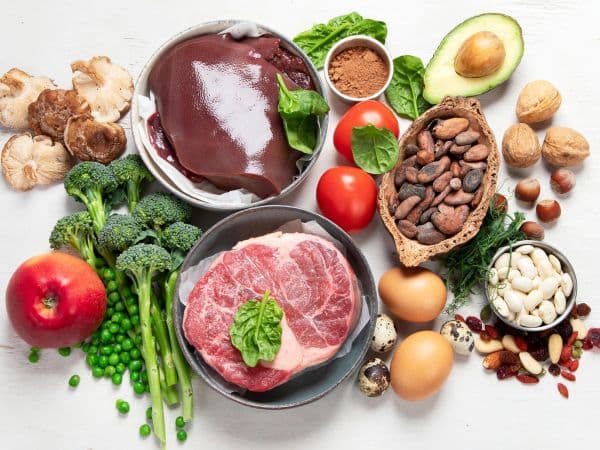
Diet has an influence on rosacea; that much has become clear from studies. There is not one single product that causes more redness. It differs from person to person. Histamine-rich foods, or foods that release histamine in the body, do appear to have more of an effect. The tricky thing about this is that it generally involves healthy foods. Examples of these are:
Dairy, mature cheeses
Tomatoes, spinach, aubergine, mushrooms, soya beans, kidney beans, peppers
Bread (especially with lots of additives)
Alcohol, coffee, tea
Chocolate, peanuts, pecans
Chilli powder, coriander, curry
Bacon, meat, fish
Vinegar, ready-made dressings
Citrus fruit, pineapple, raspberries
This does not mean you have to cut all of these foods out of your diet straight away!
Hormonal changes
Rosacea can be linked to hormonal changes. Many women report a worsening of symptoms during pregnancy or the menopause. However, not enough is yet known about this.

In the natural care of skin with rosacea, we focus mainly on the use of soothing, hydrating and protective ingredients. It is important that the products do not clog the skin. It is also advisable to avoid friction on the skin and the use of irritating ingredients.
The care of rosacea-prone skin generally depends on the type, the symptoms and the severity. Always contact a professional if you have skin complaints. The following step-by-step plan is a gentle and protective skincare routine.
The first step is to cleanse your skin with a gentle cleanser. This cleanser cleans the skin mildly without drying it out. Avoid drying soaps, cleansing products with alcohol and exfoliating ingredients.
Hydrate your skin with a toner. Toners help to restore the pH value of your skin and provide an extra layer of hydration.
Care for your skin with a serum or moisturiser. Nourish the skin with powerful ingredients.
Protect the skin with a moisturising cream, for long-lasting hydration of the skin.
Do not use a rough flannel, but your hands or a cotton pad
Pat your face dry with a soft towel; avoid friction on the skin as much as possible
Avoid products with alcohol, and pay close attention to your make-up products too
Avoid scrub products; a mild peel could help, for example one based on lactic acid.

Keep a diary!
Because many complaints arise from certain foods, it can be useful to keep a food diary. In addition, write down each day what you see on your skin, and when there is a worsening (or improvement) of skin complaints. Do this for at least 2 weeks. Once you have discovered certain triggers, you can avoid them for at least 8 weeks. If necessary, consult a dietitian or nutritionist.
Written by: Helena