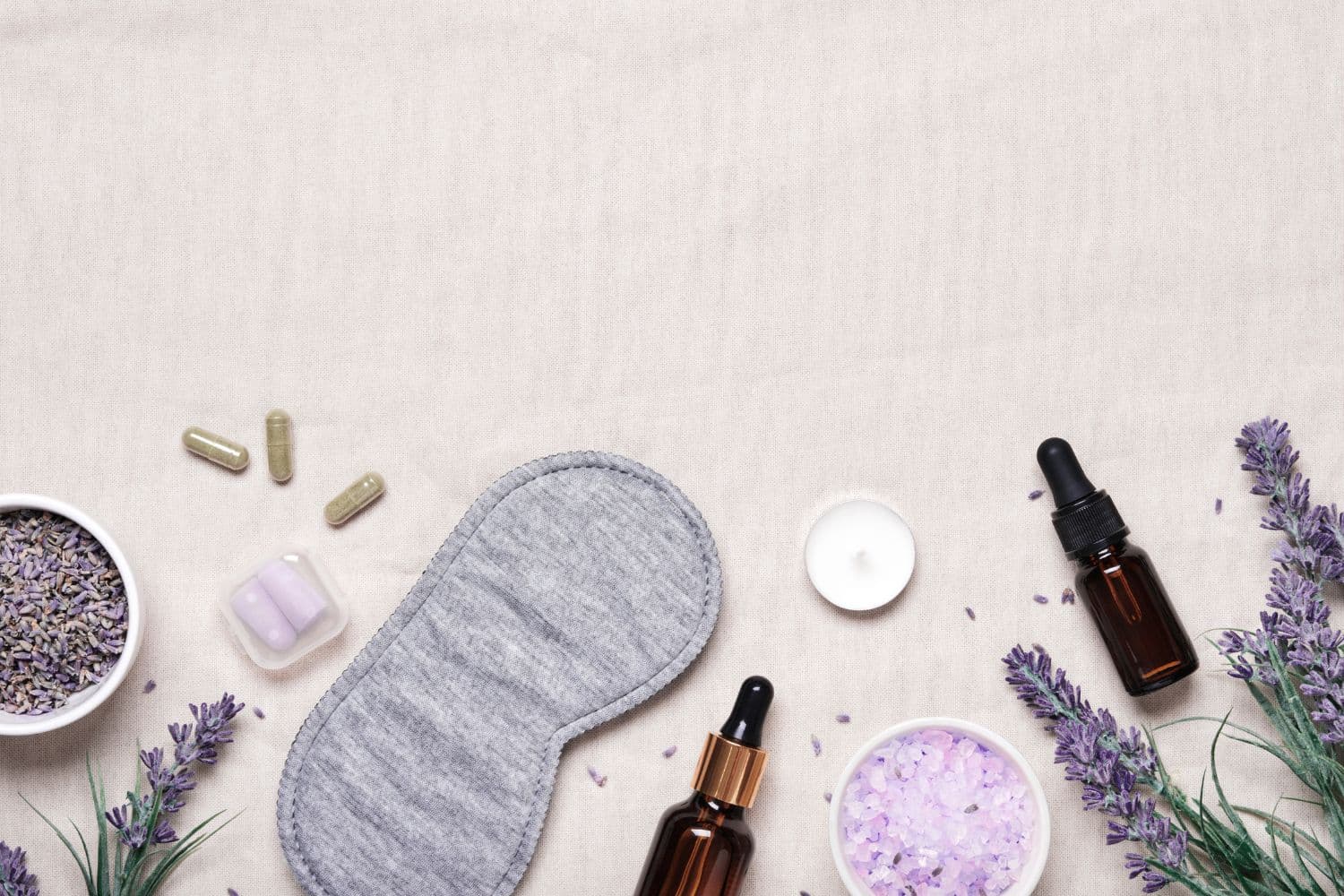
Ready-made products for your natural routine..
Do you want to stay updated on offers, (giveaway) actions and recommendations? This way you won't miss out on anything! Not too often, we promise.


Tonight I'm really going to bed on time... How often do you promise yourself that? Until it's later than you had in mind again. Did you know there's a very good reason to go to bed on time? Read all about the importance of a good night's sleep in this blog.
There's a very good reason to actually go to bed on time today. As well as waking up far more energetic and improving your mood, a good night's sleep also gives you more beautiful skin! It isn't called beauty sleep for nothing!
Okay, our body can cope with one bad night's sleep, but did you know that sleep deprivation has a big effect on our body and our skin?
Raised cortisol levels
Sleep deprivation causes raised cortisol levels. In the skin this leads to:
A reduction in hyaluronic acid
Damage to the barrier function. This results in dry, dull skin that becomes irritated more quickly
A greater chance of spots developing. This is because sebum production increases and substances are produced that cause inflammation.
Slowed melatonin production
Sleep deprivation also slows down the production of melatonin. As it grows dusky in the evening, our body produces melatonin. This sleep hormone makes you feel tired and helps you sleep wonderfully, but it also has positive effects on the skin. Melatonin:
Protects the skin against cell damage
Helps the skin to repair itself
Stimulates the production of new collagen.
A lack of melatonin therefore causes faster skin ageing and poorer skin repair. That's how important sleep is for you!

A good night's sleep ensures good blood circulation in the skin, giving you radiant skin.
When you sleep, our whole body rests, including our skin. If we don't get enough rest, our skin can't repair itself properly from the damage either. This is already visible after a few short nights. The corners of your mouth start to droop, your eyes swell, your skin becomes paler, fine lines become more visible and dark circles appear under your eyes.
Your skin can cope with a few short nights, but prolonged sleep deprivation causes accelerated skin ageing because your skin can't repair itself sufficiently.
You can have the very best skincare routine, but there's no cream for a bad night's sleep.

Dr Andrew Huberman has put together a toolkit for good sleep. The following points are certainly important for a good night's sleep:
Make sure you go outside within 30-60 minutes of getting up (when the sun rises) and in the late afternoon (when the sun sets).
Go to bed at the same time every evening and get up at the same time every morning; this creates a rhythm that your body will get used to.
Avoid caffeine within 8 to 10 hours before going to sleep. Caffeine has a big influence on sleep quality (so does alcohol, by the way).
Avoid bright (blue) light as much as possible between 10 pm and 4 am. You could wear glasses with a blue-light filter. Switch off all screens (laptop, TV, mobile) at least one hour (preferably 2 hours) before going to sleep.
Allow yourself some relaxation an hour before you go to sleep: a short walk, put the kettle on for a nice cup of tea and add a relaxing blend to the diffuser.
Keep the bedroom cool and dark; this promotes a good night's sleep.
Written by: Helena