Ready-made products for your natural routine..
Do you want to stay updated on offers, (giveaway) actions and recommendations? This way you won't miss out on anything! Not too often, we promise.


Frankincense Oil is a very popular Essential oil and one of the most frequently asked questions our customer service receives is: 'What is the difference between the two different Frankincense Essential oils and which one is most suitable for my skin?' In this blog we therefore look at the differences between these two oils, so you know exactly which one suits your skin best!
Frankincense oil is obtained from the resin of Boswellia carterii and Boswellia serrata, two widely used species within the Boswellia genus. Boswellia carterii is found mainly in Somalia and other parts of East Africa, while Boswellia serrata is common in India. These trees grow in dry, rocky areas. The resin of these trees serves as the basis of Frankincense oil.

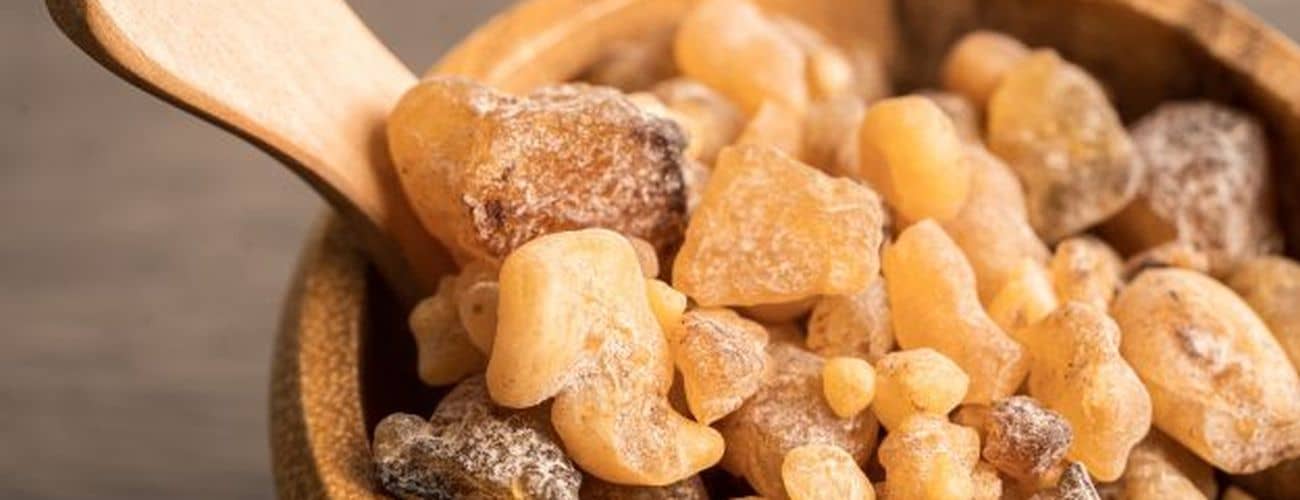
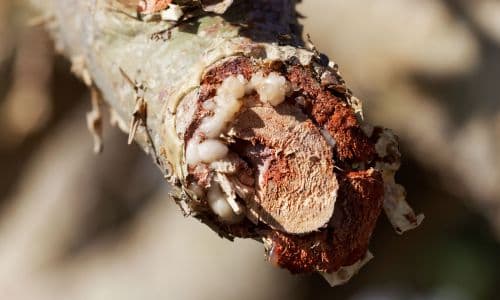
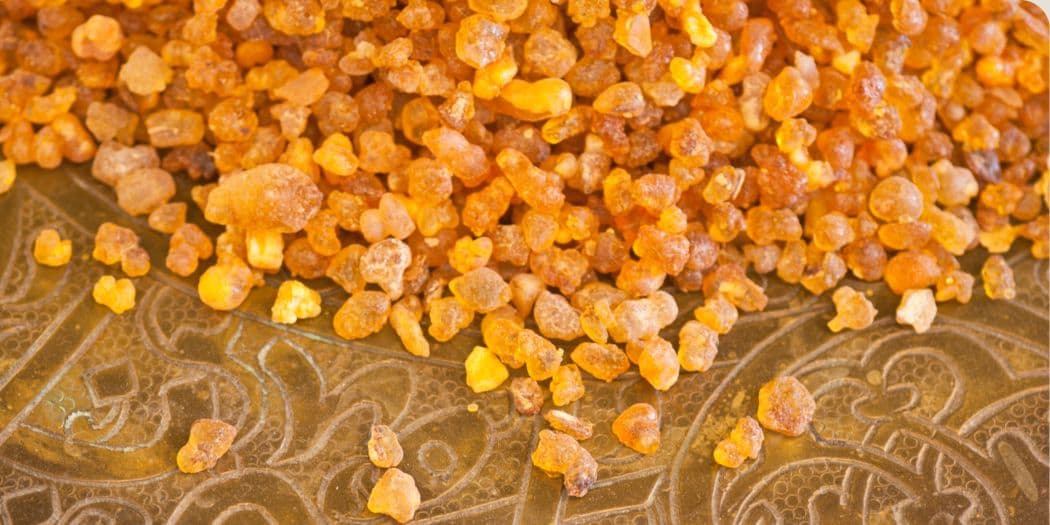
The resin of the Boswellia tree is harvested by making small incisions in the bark of the tree. The resin drips out and hardens into fragrant, amber-coloured lumps. These are known as 'tears' of frankincense. To obtain Frankincense oil, the resin undergoes a steam-distillation process. In this process the resin is heated with steam, releasing the essential oil, which is then collected and condensed. The result is a wonderfully fragrant Essential oil.
Frankincense Carterii
Focus on anti-ageing, cell renewal and firming
Hydrates the skin
Cares for scars
Suitable for: dry and mature skin
Frankincense Serrata
Focus on calming (red) skin
Reduces blemishes
Cares for scars
Suitable for: oily, blemished and sensitive skin
Please note: you should always dilute an Essential oil with a carrier oil. Use <1% in an oil. Prefer not to use an Essential oil? Then go for Frankincense water! Frankincense water is the by-product of the steam distillation of the resin. It contains traces of Essential oil and water-soluble components of the plant, but no fat-soluble active substances such as boswellic acids. It is milder and less concentrated than the oil, suitable for direct use on the skin. Ideal as a facial toner or body mist.
1. In an Anti-ageing serum
50% Jojoba oil
30% Castor oil
19% Rosehip oil
1% Frankincense Carterii
Mix all the ingredients together and use in the morning and/or evening on cleansed skin.
2. In a Calming Body Oil
99% Sweet Almond oil
0.5% Frankincense Serrata
0.5% Peppermint oil
Mix all the ingredients together and massage into the skin after showering for relaxation and better blood circulation.
3. Use in a Diffuser
Both varieties are wonderful to use in a diffuser. For example, make one of the blends below.
Breathe more freely blend
2 drops Frankincense Serrata
2 drops Eucalyptus Globulus
1 drop Rosemary
1 drop Thyme
1 drop Peppermint
Diffuse during the day or before going to sleep to breathe more freely.
Emotional balance blend
3 drops Frankincense Carterii
2 drops Bergamot
2 drops Sandalwood
1 drop Lavender
Diffuse during meditation or at moments when you could use a little balance.
4. Relaxing Massage Oil
99% Sweet Almond oil or Arnica oil
0.5% Frankincense Serrata
0.3% Peppermint oil
0.2% Rosemary oil
Massage onto sore muscles (after exertion).

Frankincense Serrata and Carterii are both Essential oils derived from the resin of Boswellia trees, but they come from different species and regions, which results in variations in composition, scent and uses.
Origin
Serrata: This variety grows mainly in India and was originally used in Ayurvedic medicine.
Carterii: This variety comes from Somalia and is widely used in the Middle East.
Difference in scent
Serrata: has a warm, spicy and slightly woody aroma. Due to the higher concentration of boswellic acids, this oil has a deep, less volatile scent that lingers longer.
Carterii: Deep, earthy with fresh citrus notes. The higher concentration of monoterpenes such as alpha-pinene and limonene give it a fresher, brighter scent.
Chemical composition
The chemical composition of Frankincense oil depends on the species and growing location. Both oils contain a mix of monoterpenes, sesquiterpenes and diterpenes, but the ratio and specific compounds differ
Serrata: This variety contains Boswellic acids. Boswellic acids are bioactive compounds that occur naturally in the resin of the Boswellia tree; these acids can help to calm redness and irritation. In addition, it contains alpha-Thujene, a monoterpene that contributes to the spicy scent.
Carterii: The high concentration of monoterpenes such as alpha-pinene and limonene means the Carterii variety has a hydrating effect on the skin.
Effect on the skin
Serrata: Thanks to the higher content of boswellic acids, Frankincense Serrata has a more astringent effect, which can help to regulate oily or blemished skin. In addition, it can help to calm redness.
Carterii: The high concentration of monoterpenes means the Carterii variety has a hydrating effect on the skin. It also has a brightening effect on the skin and thus creates an even complexion. It also improves the elasticity of the skin and makes signs of skin ageing less visible.
Did you know there are many different types of Frankincense? Some of these species are rarer or even threatened with extinction (examples: Boswellia sacra and Boswellia frereana). So always check carefully which variety you are buying! Of the two varieties we sell, we are certain that they are not threatened with extinction.
Written by: Helena