Ready-made products for your natural routine..
Do you want to stay updated on offers, (giveaway) actions and recommendations? This way you won't miss out on anything! Not too often, we promise.


Jojoba oil regulates the moisture and sebum balance and therefore has benefits for every skin type. Jojoba oil is perfect as a base oil; then add other oils for a unique skin oil. Read more about Jojoba oil.
What is Jojoba oil?
Where does Jojoba oil come from?
How was Jojoba oil used in the past?
What makes Jojoba oil special?
How is Jojoba oil made?
Why does Jojoba oil sometimes have a solid form?
Jojoba oil for your hair & beard?
Jojoba oil for your face?
Jojoba oil for your body?
What does Jojoba oil look like?
How can you best store Jojoba oil?
Where can you buy Jojoba oil?

Jojoba is one of the most widely used natural base oils and is very versatile. Jojoba oil is extracted from the seeds of the Jojoba shrub. The name Jojoba oil is somewhat misleading because, technically speaking, Jojoba oil is not an oil. It is actually a liquid wax and therefore has a different composition from most other well-known oils.
Jojoba oil has been widely used ever since an alternative to whale oil was sought in the 1970s. Nowadays, Jojoba oil is a popular product that is used both pure and in many natural skincare products.
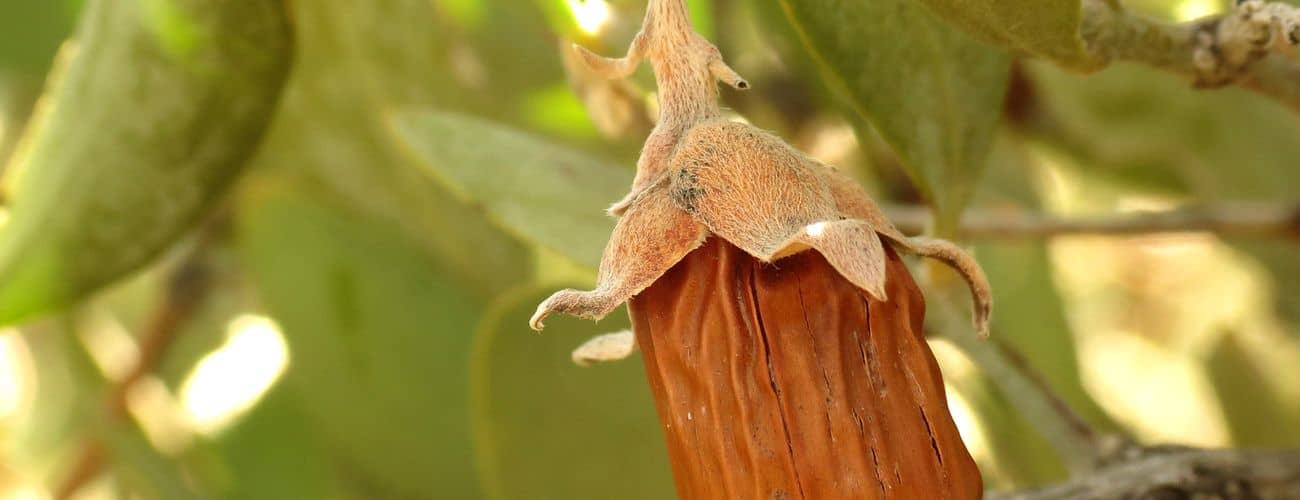
Jojoba oil is extracted from the seeds of the Jojoba shrub, also known as Simmondsia California. The Jojoba shrub mainly grows in dry, desert-like areas in North and Central America such as Arizona, California and parts of Mexico. The Simmondsia California can live for more than 200 years and tolerates temperatures of as much as 60°C. The average Jojoba shrub is about 1 to 2 metres tall. The leaves have an oval-like shape and are thick, broad and greyish-green in colour. The small yellow and white flowers of the Jojoba shrub bloom from March to May and have 5 to 6 sepals.
Native Americans used this oil as a healing remedy for various skin conditions. They noticed that Jojoba oil contained anti-inflammatory properties that worked well in caring for skin problems. Pregnant women at that time also ate Jojoba seeds because they believed the seeds helped during childbirth. Hunters ate the seeds when they went hunting to stave off hunger. In addition to using it for their own health, the Native Americans also discovered that Jojoba oil could be used to soften leather.
Jojoba oil is a natural antioxidant and contains a great deal of vitamin E and important fatty acids. This oil is unique because it offers benefits for every skin type. For example, Jojoba oil regulates the moisture balance of the skin cells, which makes it hydrating. Sensitive and dry skin in particular can benefit from this valuable property. But Jojoba oil also slows down sebum production, which makes it an ideal remedy for people with oily skin to treat their oily skin. This is because the composition of Jojoba closely resembles the sebum that our skin produces.
Jojoba oil is also special in terms of texture. The oil does not feel greasy and is odourless. This is of course because, technically speaking, Jojoba oil is not an oil but a liquid wax. For these reasons, Jojoba oil is often incorporated into cosmetic products and DIYs.
Compared to other natural oils, Jojoba oil has a longer shelf life because of its very low triglyceride content. To give other oils a longer shelf life, Jojoba oil is sometimes mixed with those oils.
Jojoba oil is made from the seeds of the Jojoba shrub. These seeds consist of about 50% oil. This oil is, as it were, pressed out of them. Cold-pressed means that the seeds are pressed at room temperature by an oil press that ensures all the valuable properties of the seed are preserved. With cold pressing, work is therefore carried out carefully using special pressing mills. It may take a little more time than using heat, but it does ensure that the Jojoba oil loses fewer nutrients. The video below explains step by step how Jojoba oil is collected and pressed.
Jojoba oil can take on a solid form at temperatures below 15° C. The oil gradually becomes more and more solid as it gets colder. This solid form looks like a kind of cloud in the oil. This has no effect on the quality of the oil. So there is no reason to panic if Jojoba oil takes on a solid form when temperatures drop. In fact, it indicates that the oil is natural. If Jojoba oil does not take on a solid form at cold temperatures, extra (synthetic) stabilisers have probably been added to the oil.
If you place an online order containing Jojoba oil during the cold winter months, there is a good chance that part of the Jojoba oil will become solid. After all, such a parcel is not kept nice and warm during delivery. If you want to use the oil immediately after receiving it, you can hold it under the warm tap for a moment. Furthermore, it is wise to store the oil in a warm room.

Jojoba oil can be used effectively for dry, porous and dull hair.
Use it as a hair mask, for example. To do this, you massage the oil into the ends of your hair and leave it to absorb for 10 minutes. Then wash your hair in the usual way with shampoo.

Jojoba oil also comes in very handy for caring for your beard. Both on its own and mixed with other (essential) oils. After all, Jojoba oil has many properties that can be valuable for caring for your beard. It softens both the skin under the beard and the hair. Because Jojoba oil does not block the pores, no skin irritation occurs. Moreover, Jojoba oil nourishes the hair follicles, which makes the hairs stronger. This is important if you have a long beard. After showering, massage a few drops of Jojoba oil into your beard and skin and, if necessary, apply a few drops throughout the day. Especially if you suffer from dry hair/skin.
Jojoba is, as mentioned earlier, a true all-rounder that can be used for all kinds of different problems.
It has a particularly positive effect on the face. Often you only need a few drops of oil, which makes it very economical to use.
With daily use of Jojoba oil on the face, people notice that the skin is less dry and has a much healthier appearance. This is because the oil closely resembles the sebum that our skin produces. Below we set out five ways in which you can use Jojoba oil for your face.

In addition to its many benefits for the face and hair, Jojoba oil also offers positive results when used on the body.

Because of its many good and nourishing properties, Jojoba oil is widely used as a massage oil. After all, Jojoba oil is able to penetrate deep into the skin and moisturise it, so that the skin feels soft again after use. It is recommended to mix the oil with other oils so that it spreads more easily. When used in massage oils, Jojoba oil is often mixed with almond oil.
If you suffer from dry hands, Jojoba oil can make your hands feel soft again. After all, Jojoba oil nourishes the skin so that the rough feeling disappears. This also works effectively on the feet. Just be careful not to use too much oil, otherwise your hands/feet will stay greasy for a very long time.

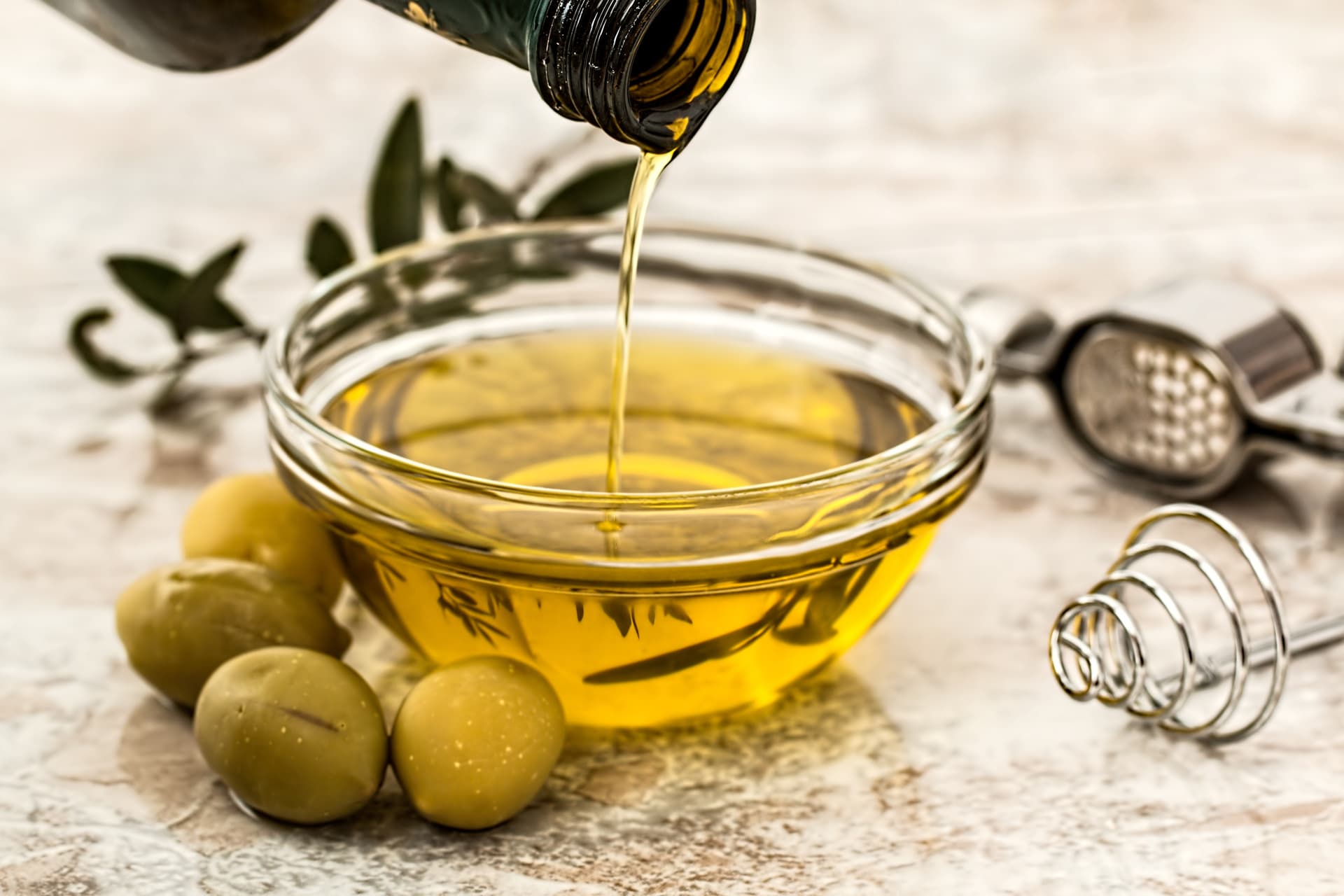
Jojoba oil is a golden oil and is therefore also called liquid gold. Jojoba oil has virtually no scent. At cold temperatures, Jojoba oil solidifies and takes on a solid form. The oil is then difficult to get out of the bottle. As soon as the temperature rises, Jojoba oil quickly becomes liquid again. In the cold winter months it is therefore handy to store the oil in a warm place. If Jojoba oil does not change in substance, the quality is poorer or it is not pure Jojoba oil.
In its original packaging, Jojoba is shelf-stable for twelve months. After a year you can still use the oil, but the valuable properties of the oil are less strong. Jojoba oil is very economical to use; often you only need a few drops to care for your face, hands and/or hair. It is therefore advisable not to buy too much Jojoba oil at once.
If you do have oil left over after twelve months, you can use it to freshen up wooden furniture if you like. After all, in addition to benefits for the body, Jojoba oil also has other uses. With a few drops of Jojoba oil you can make your furniture shine beautifully.
Author: Kelly
References
Parker, S. M. (2014). Power of the seed (Vol. 2014). Process Media.