Ready-made products for your natural routine..
Do you want to stay updated on offers, (giveaway) actions and recommendations? This way you won't miss out on anything! Not too often, we promise.


Prickly Pear oil is an oil that is rich in vitamin E and has a unique floral, fruity and pine-like scent! In this blog you will read what Prickly Pear oil does for your skin!
What is Prickly Pear Oil?
Where does Prickly Pear Oil come from?
How is Prickly Pear Oil made?
What makes Prickly Pear Oil so special?
What does Prickly Pear Oil do for the skin?
What can you use Prickly Pear Oil for?
What types of Prickly Pear Oil are there?
How is Prickly Pear Oil best stored?
Why is Prickly Pear Oil so expensive?
Where can you buy Prickly Pear Oil?
Fun fact: almost all parts of the Opuntia ficus-indica are edible! Not only are the fruits of this plant delicious, but the leaves of the plant can also be eaten by cooking them.
The Opuntia ficus-indica plant was introduced to North Africa around the 16th century. Today there are more than 250 different species of the plant, and it grows in various parts of the world, such as the Americas, Africa, but also the Mediterranean, Europe, India and the Middle East. Natural Heroes' Prickly Pear Oil is made in India.
Prickly Pear Oil is obtained by carefully washing, drying and then pressing the seeds of the Prickly Pear fruit. The seeds of the Prickly Pear fruit produce a small amount of oil, at a percentage of 5 to 15% per seed.
The Prickly Pear Oil from Natural Heroes is unrefined and is obtained by cold pressing the seeds with an oil press.
With cold pressed oils, such as our Prickly Pear Oil, the seeds of the Prickly Pear fruit are mechanically pressed at a maximum temperature of 40 degrees Celsius. The lower temperature used during extraction ensures that the natural compounds in the oil are preserved and a maximum amount of beneficial ingredients is retained.
Our Prickly Pear Oil is unrefined and still contains its original scent and colour. In this way the maximum amount of beneficial ingredients of the natural product has also been preserved. With refined oils, the colour and scent are removed during the extraction process. Refined oil is, because of its odourless property, often used as an ingredient for a DIY or as a base to blend with fragrant essential oils.
Prickly Pear Oil is one of the oils with the highest content of vitamin E, also known as tocopherol. The total tocopherol content of Prickly Pear Oil is 403 mg/kg, which is much higher than that of, for example, Olive oil (217 mg/kg). Other oils with a high content of vitamin E are Argan oil (635 mg / kg) and Sunflower oil (634 mg/kg). Prickly Pear Oil is especially rich in y-tocopherol, one of the forms of vitamin E.
Prickly Pear Oil mainly consists of the fatty acids palmitic acid, stearic acid, elaidic acid and linoleic acid. What makes the oil so unique is the high content of linoleic acid, a fatty acid that can help improve the condition of the skin.
Prickly Pear Oil is a natural product that, depending on the season, has a delightful sweet floral scent. The scent and colour of 100% pure Prickly Pear Oil can vary by season. During the winter season, the seeds of the Prickly Pear fruit are light green in colour. The oil pressed from these light green seeds has a strong sweet scent. In the summer season, the seeds of the Prickly Pear fruit are somewhat darker in colour and the oil pressed from them has a more olive-like scent.
Prickly Pear Oil is suitable for every skin type. Due to its soothing and cell-renewing properties, dry, sensitive and mature skin in particular will benefit greatly from the oil. The low comedogenic content of the oil will not quickly clog the pores, which also makes the oil very suitable for blemished skin. In other words, a friend to everyone in your bathroom cabinet!
The high content of vitamin E and the fatty acids present in Prickly Pear Oil can give dull hair a beautiful shine again. Apply a few drops of the oil to the lower half of your hair, leave it to soak in for about 30 minutes and then rinse out with your usual shampoo.
The oil helps with skin ageing and can reduce fine lines and tighten the skin. This, together with its low comedogenic content, makes it an excellent choice as an eye serum.
Prickly Pear Oil absorbs into the skin fairly quickly and can then be used both before bed and during the day. Want a lovely glowy look? The oil can also be used as a base (primer) under your make-up. Do you have dry skin? Then combine the oil with plant butters that are rich in unsaponifiable components such as Shea Butter, Cupuacu Butter and Mango Butter. The oil also blends well with other non-comedogenic oils such as Squalane and Argan oil.
Prickly Pear Oil helps to retain moisture in the skin and is a lovely product for hydrating the skin. Mix equal parts of Prickly Pear Oil with MCT oil to make a lovely body oil or massage oil. Or add up to 1% Pink Grapefruit essential oil to the Prickly Pear Oil and give your legs an intense connective tissue massage with the Cellulite brush.
The Prickly Pear fruit is used in many cosmetic products and is also known as 'Prickly Pear'. In addition to cosmetics, the fruit is also used in food products and pharmaceutical products.
There are various types of Prickly Pear plants. When it comes to cosmetic use, the seeds of the Opuntia Ficus Indica plant are mainly used. Oil obtained from the seeds of the Opuntia Stricta plant is also used for cosmetic purposes. However, research shows that the differences in components between Opuntia Ficus Indica and Opuntia Stricta are small to negligible.
To preserve the quality of Prickly Pear Oil, it is best to store the oil in a dry, cool and dark place.
Prickly Pear Oil is very sensitive to oxidation and is an unstable ingredient to incorporate into cosmetics. When an oil oxidises it becomes rancid and the essential fatty acids in the oil are lost. An important indicator for checking whether an oil has oxidised is the scent. The oil will then have a somewhat musty smell.
Do you want to counteract this oxidation? You can do this by blending the oil with other oils that do not oxidise quickly, such as MCT oil, Sesame seed oil or Sunflower oil. You can also opt for an antioxidant such as Vitamin E oil. This slows down the oxidation process and you will enjoy the Prickly Pear Oil for longer.
The price of 100% pure Prickly Pear Oil is generally higher than that of other vegetable oils. The reason for this is that the seeds of the Prickly Pear fruit produce relatively little oil. About 1 million seeds are needed to produce 1 litre of Prickly Pear Oil. That may seem like a lot, but the Prickly Pear fruit is largely made up of seeds. The extraction of the oil is particularly costly because it is a labour-intensive process. It takes about one week (36 hours) to manually separate the seeds from the pulp of the fruit.
https://www.vreeken.nl/312000-vijgcactus
https://www.sciencedirect.com/science/article/abs/pii/S0308814604007605
https://www.ncbi.nlm.nih.gov/pmc/articles/PMC7465185/
https://www.linkedin.com/pulse/what-prickly-pear-oil-causes-its-expensive-price-zineglob-sarl
Janes, D., & Kocevar Glavac, N. (2018). Modern Cosmetics (Vol. 1). Simiro Dobro Besedo.
https://pubmed.ncbi.nlm.nih.gov/22705878/#:~:text=The stratum corneum (SC)%2C,water from exiting the body.
https://www.researchgate.net/publication/330641749_Oxidative_Stability_of_Edible_Plant_Oils
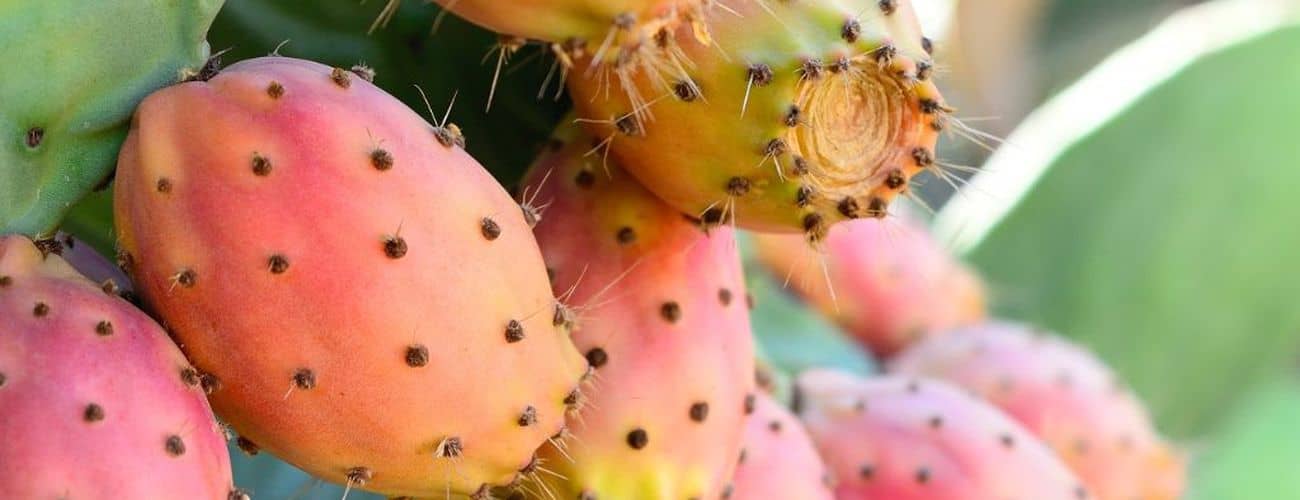
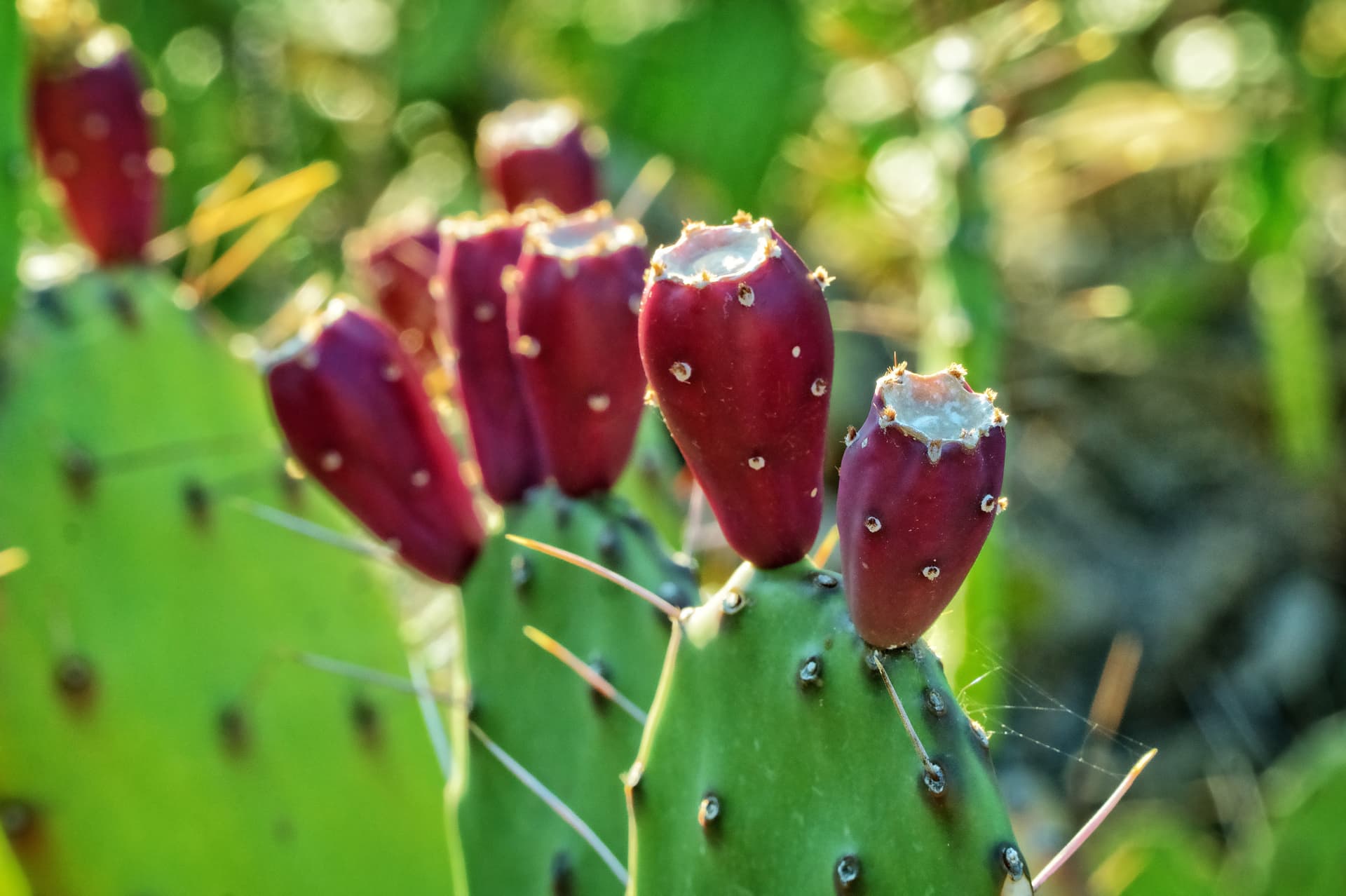
Prickly Pear oil (Prickly Pear oil) is a light yellow to orange-coloured vegetable oil obtained from the small seeds of the fruit of the cactus plant Opuntia ficus-indica, also known as the writing cactus. In addition to its delicious sweet Prickly Pear fruits, this plant also produces beautiful yellow, white or red flowers in the spring season. Once the flowers have faded, beautiful egg-shaped fruits grow on the cactus plant: the Prickly Pear fruit.
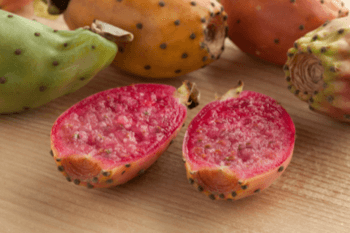
With a quantity of about 300 seeds per fruit, a large part of the Prickly Pear fruit is made up of seeds. These seeds are rock hard, almost as hard as stone.
The fruit has a delicious sweet taste and is packed with good nutrients. Because of its sweet flavour, the fruit is often used in jams, cocktails and even salad dressings!
The Prickly Pear plant thrives particularly well in warm climates characterised by dry summers and mild winters. In dry and semi-arid areas, the plant is also used as a fence for livestock, as the plant can grow up to five metres tall. In addition, in areas with limited access to water, cultivating the plant can play an important role. Growing the Prickly Pear helps to keep the soil fertile and protect it against erosion.
What is so special about Prickly Pear Oil is that the oil is rich in vitamin E and contains a high level of linoleic acid. In addition, the oil has a unique floral, fruity & pine-like scent.
Prickly Pear Oil helps to combat signs of skin ageing
The Vitamin E in Prickly Pear Oil helps protect the skin against external influences, such as UV rays. In addition, the vitamin E in the oil ensures that the upper layer of the skin is hydrated and the production of new skin cells is stimulated. In this way the oil can help to combat fine lines.
Prickly Pear Oil keeps the moisture balance in check
The high content of linoleic acid in Prickly Pear Oil helps to keep the outer layer of the skin, also known as the Stratum Corneum, healthy. The outer layer of the skin forms a barrier that prevents unwanted substances from entering the body and helps to maintain the moisture level of the skin.
Prickly Pear Oil softens the skin
Prickly Pear Oil contains palmitic acid, a saturated fatty acid that acts as an emollient. An emollient forms a kind of protective layer on the skin, which means water evaporates from the skin more slowly and the skin stays soft and supple. In addition, palmitic acid can help to restore the skin barrier.