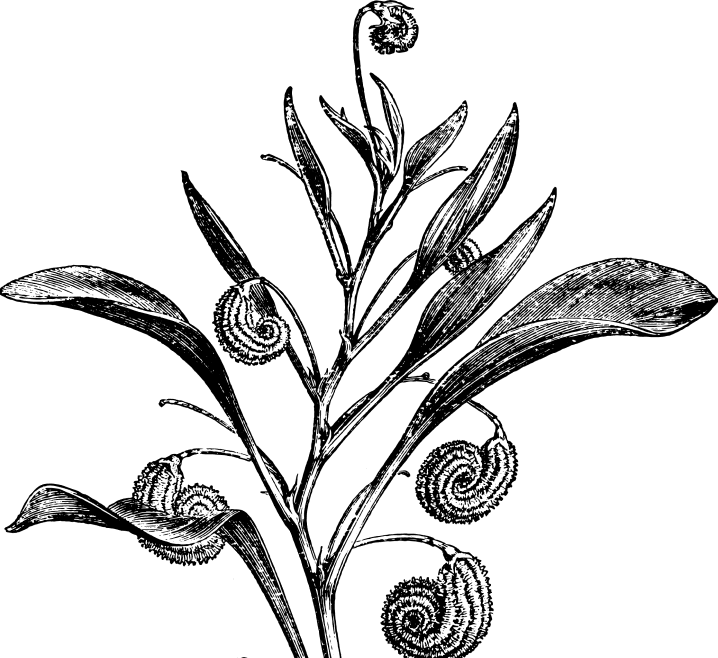
The seed is stubborn and doesn't germinate or cultivate easily. Without human interference, it's perfectly capable of growing into a modest, gnarled tree 10 to 15 metres tall.
Only after 20 years can you (literally) reap the fruits. At the age of 50 it reaches its maximum capacity and produces 15 to 20 kilos of fresh fruit. The real powerhouses can even produce 45 kilos. And they keep blooming at full strength for 200 years.
The green, plum-like fruits of 4 to 6 centimetres take about 6 months to ripen. Flowering begins in November, and from April to August the fruits fall to the ground by themselves.
The fruit has a sweet, fleshy pulp that is edible and an incredibly rich source of vitamins and minerals. For comparison:
The shea fruit contains 196.1 mg of vitamin C per 100 grams, while an orange contains 50 mg.
Inside the fruit is the nut, which is 50% made up of fat . This fat is eventually used to make shea butter . There's a whole process before that. More on that later.
The colour of the butter can vary from ivory, cream, yellowish white and greyish to beige, depending on the harvest season or region. Refined shea butter is bright white.
The scent is very distinctive. It smells nutty and slightly sweet, and okay, I'll be honest, the first time I smelled it I also detected a hint of horse manure. You get used to the scent, and now I actually think it smells nice. Luckily it fades quickly after applying, because it isn't a synthetic added fragrance.
Stories from the past
Long before shea butter became known in the Western world as a beauty balm, it already had a rich history of thousands of years in Africa.
As far back as Ancient Egypt it was used as a cosmetic product by none other than Cleopatra. Ancient kings were buried in hollowed-out trunks of the shea tree.
Even then, its special skincare properties were well known. People used it on their skin and hair to protect against the fierce sun and hot, dry winds of the African deserts and savannah.
As a traditional remedy , it has been used in Africa for centuries. (You'll find more background via the link at the bottom of the page.)
In Gambia it's traditional to apply shea butter to the umbilical stump of newborn babies.
Pregnant African women rub shea butter on their bellies to keep their skin well cared for. After giving birth, they massage their babies with it.
Combined with the juice of citrus fruits such as lime, it's used as an antiperspirant and helps to keep unpleasant body odours to a minimum.
Shea Butter: Versatile and Edible
In African cuisine, shea butter is used for preparing food and as a base for soups and drinks.
In the food industry it's widely used in chocolate production, as a substitute for cocoa butter. Because the number of cocoa trees is declining, it's cheaper to use shea butter; it also has a lower melting point than cocoa butter, which makes it easier to work with.
Production: For Women, By Women
The processing and production of shea butter is exclusively a job for women. It's often women's only source of income, which is why it's called Women's Gold . I love that by using shea butter, I can support women in Africa so they can build a better life.
The difference in quality depends on how the butter is produced. Raw, unrefined shea butter still contains all its active components and therefore has moisturising and caring properties. Refined shea butter loses almost all of its active components.
Raw
Only the fruits that have fallen to the ground are gathered and taken to the village. They're dried in the sun and peeled by hand. The nuts are then cracked, washed and dried. The nuts are roasted and then ground into a thick paste with a mortar. This paste is kneaded by hand and purified with clean water. The paste is then boiled. During boiling, the fat rises to the surface. This oil is collected and cooled into shea butter.
Cold-pressed
The ground nuts are put under pressure, which forces the liquid components out so they separate. This doesn't yield all of the butter, but it does yield a large part of it.
Refined
The process starts with raw shea butter. It's exposed to enormous heat, which unfortunately makes the caring properties almost completely disappear, because the components are effectively boiled to pieces.
Preservatives are added so it keeps longer. Then hexane (a chemical that's harmful to the environment) is used to deodorise and decolourise it. Chemical residues always remain.
After refining, the shea butter is white and hard. This is mainly used in commercial products, so they don't have to deal with colour differences and can make them look more appealing.
Moisture, Fat, Care: How and Why It Works
Caring Vitamin A
Probably best known for its effect on the retina. Maybe you remember this from childhood (or you now say it to your own kids): 'Eat your carrots, they're good for your eyes!'
As a skin vitamin it stimulates skin cell renewal. It plays an important role in the formation of elastin and in collagen production. Collagen is a protein that provides structure and keeps everything 'firm'.
So vitamin A is a lovely vitamin for mature skin and helps keep the skin supple and cared for.
Protective Vitamin E
We don't produce vitamin E ourselves; we have to get it from sources such as our diet. This vitamin is essential, and it's the most common vitamin in the skin.
It helps protect the skin against harmful free radicals and supports the barrier function of the skin. (The vernix on newborn babies' skin contains an extremely high concentration of vitamin E.)
As an antioxidant, it also cares for the skin naturally. Vitamin E helps the skin retain its moisture.
Fatty Vitamin F
Vitamin F is actually an old name, and not a vitamin at all, by the way; today it's better known as the essential fatty acids alpha-linolenic acid and linoleic acid (omega-3 and omega-6 fatty acids).
Omega-3 strengthens the cell membranes in the skin and makes them more supple.
Omega-6 helps form the cell membranes and improves moisture absorption of the skin. It cares for blemish-prone and dry skin.
These fatty acids work better when vitamin E is also present.
Cinnamic acid
A powerful antioxidant. Please note: shea butter is not a sunscreen and doesn't protect you against harmful UVB rays. Cinnamic acid does help the skin retain moisture. So for an afternoon of sunbathing on the beach, always use proper sunscreen.
Unsaponifiable components
What's unique about shea butter is that it contains a high level of unsaponifiable components . This means it doesn't form soap. Soap breaks down the skin's natural, oily protective layer, leaving the skin less protected against external influences, more sensitive and dry.
Thanks to its high level of unsaponifiable components, it hydrates and doesn't break down the protective layer. On average, shea butter contains around 5 to 17% unsaponifiable components, unlike other natural oils, which contain barely 1%.
Because of the unsaponifiable components, the vitamins and essential fatty acids, it penetrates deep into the skin and so has a long-lasting effect. Its composition is roughly the same as our own sebum, which is why it's so good for the moisture balance. Because all the substances occur naturally in shea butter, they work well together and reinforce each other's effects.
From (Years of) Experience
All in all, this purely natural butter has a rich history, and thanks to centuries of observation and experience, a lot of knowledge is now available about its remarkable effects . Since learning the impressive story behind shea butter, I've started using it myself too. It beats all my other natural moisturisers (including coconut oil), and I'm amazed by how long it lasts.
Before, the flakes would be back on my forehead after just a few hours, but with shea butter I no longer have to worry about that. Even after 12 hours my skin still feels soft and looks fresh. No dull, dry skin, no flakes, but even more importantly… after just 2(!) days my under-eye bags and dark circles looked fresher.
It melts as soon as it touches your skin and is really easy to spread. For my face, neck and hands, half a teaspoon is enough. Very economical to use indeed.
No more other day and night creams for me.
Treat yourself to cared-for, super-soft skin that looks fresh all day long too.
Looking for where to buy Shea Butter? Click here!
Source: research on shea butter - http://www.ncbi.nlm.nih.gov/pmc/articles/PMC1429586/?page=3
Author: Hannah van der Horst

 You can unsubscribe at any time.