Ready-made products for your natural routine..
Do you want to stay updated on offers, (giveaway) actions and recommendations? This way you won't miss out on anything! Not too often, we promise.


In this blog I take you into the magical world of oil pulling. We explore its rich history, unravel the science behind a healthy mouth flora, and I share my favourite, simple recipes so you can experience this powerful ritual yourself.
There are those age-old rituals that stand the test of time. Practices so simple and pure that, in our modern, busy world, they almost seem too good to be true. Oil pulling is one such ritual for me. It's a fixed part of my morning routine, a moment of gentle care that nourishes not only my mouth, but my whole being.
When I first heard about it, my inner 'ingredient nerd' was immediately triggered. Swilling a tablespoon of oil around your mouth for better health? Is that a myth, or is there a deeper wisdom behind it? I dived in, as I always do, and what I discovered was a beautiful blend of ancient Ayurvedic wisdom and modern, scientific insights.
In this blog I take you into the magical world of oil pulling. We explore its rich history, unravel the science behind a healthy mouth flora, and I share my favourite, simple recipes so you can experience this powerful ritual yourself.
The origin of oil pulling lies thousands of years back, in the warm, rich tradition of Ayurveda in India. There, this ritual is known as 'Gandusha' or 'Kavala Graha'. It was an essential part of 'Dinacharya', the daily routine for keeping the body in balance. In the traditional Ayurvedic texts, oil pulling was seen as a remedy for a wide range of ailments, based on the idea that the mouth is the gateway to the whole body.
However beautiful I find that holistic vision, as an 'ingredient nerd' I also like to look at what we now know. And although there's no scientific evidence for those broad claims about overall health, the evidence for its powerful, local action in the mouth is overwhelming. For me, that's where the true, proven magic of oil pulling lies: in restoring and supporting the balance of our oral microbiome.
That ancient Ayurvedic wisdom is beautifully supported today by modern science. We now know that our mouth is a complex and lively ecosystem, home to billions of bacteria. We call this the oral microbiome.
Think of it as a lush garden. These bacteria live together in a thin, natural layer called biofilm. A healthy biofilm is like a protective, moist blanket over your teeth and gums. It's your body's natural way of keeping things in balance. The problem only arises when the 'bad' bacteria, which turn sugars into acid, gain the upper hand. The biofilm then becomes thicker and more hostile, and we know it as plaque. The goal of oral care, then, isn't to destroy the biofilm, but to keep it thin, healthy and in balance.

And this is often where it goes wrong. Many commercial oral care products are like an all-destroying pesticide for that delicate garden.
Aggressive Mouthwashes
Mouthwashes with alcohol kill bacteria, that's true. But they make no distinction and also destroy the good bacteria, throwing your ecosystem completely out of balance.
Foaming Toothpastes
Many toothpastes contain Sodium Lauryl Sulfate (SLS), an aggressive cleanser that can irritate your sensitive oral mucosa.
These products strip the natural, protective biofilm, so your mouth flora has to start from scratch over and over again. In the long term this can lead to problems such as bad breath, sensitivity and gum problems.
Okay, time for the nerd bit! Because what does the science really say? What I find so fascinating is that modern research increasingly confirms the old claims. It's wonderful to see how the intuitive wisdom of thousands of years ago is now supported by concrete, scientific data. It's not magic in the sense of 'hocus pocus', but the pure, logical magic of nature. Let's dive deeper into the mechanisms and the studies that show how this simple ritual can be so effective for the health of your mouth.
Knowledge block: The scientific basis of Oil Pulling
A simple, effective process
The mechanism behind oil pulling is brilliant in its simplicity. When you swill the oil around your mouth, it reacts with the minerals in your saliva. This process is called saponification, or 'soap-forming'. A kind of natural, soapy substance is created that helps to loosen the biofilm (plaque), without destroying the healthy balance (Asokan et al., 2011).Against plaque and gingivitis
Time and again, studies show that daily oil pulling significantly reduces the amount of plaque and the degree of gingivitis. Sometimes even as effectively as a standard chlorhexidine mouthwash (Peedikayil et al., 2015; Amith et al., 2007; Asokan et al., 2009).Against cavity-causing bacteria
Several studies have shown that oil pulling can drastically lower the number of Streptococcus mutans bacteria in the saliva and in the plaque (Asokan et al., 2008; Kaushik et al., 2016).Against bad breath
Here too the results are promising. Studies show that oil pulling can significantly reduce the micro-organisms that cause bad breath (Asokan et al., 2011; Sood et al., 2014).
As an ingredient nerd, I think it's really important to be honest about what a ritual can and can't do. In traditional Ayurveda, oil pulling was sometimes seen as a remedy for as many as 30 different illnesses. Although I find that holistic vision beautiful, it's important to look at the scientific evidence.
Myth 1: It cures illnesses and draws toxins out of your blood.
Let's be very clear about this: there's no scientific evidence for these claims. The cleansing action of oil pulling is local, in your mouth. Should you try it as a beautiful, natural routine for your oral hygiene? Yes, absolutely! Should you expect it to detox your body and cure illnesses? No.
Myth 2: It makes your teeth whiter.
It can make your teeth look whiter. How? By gently removing surface stains caused by the biofilm. But it doesn't change the actual, deeper colour of your teeth. So don't expect a bleaching effect like at the dentist.
Myth 3: It replaces brushing and flossing.
This one is the most important of all: oil pulling never replaces brushing and flossing. The mechanical cleaning of a toothbrush and floss is essential to remove plaque completely. See oil pulling as a wonderful addition to your routine, not as a replacement.
Myth 4: It loosens your fillings.
People are sometimes afraid that it pulls out fillings or crowns. If this happens, it means there was already an underlying problem, such as beginning cavities. The gentle movement of the oil isn't strong enough to affect a healthy filling.
The Timing: The best moment is right when you wake up, on an empty stomach.
Step 1: Brush and floss first
Start by brushing and flossing your teeth. This removes the larger bits, so the oil can then do its work better on the deeper-lying biofilm. Why? If you brush after rinsing, you brush away the soft, nourishing layer that the oil leaves on your gums. By doing the oil pulling as the last step, you give those good substances the chance to do their magic.
Step 2: Take a tablespoon of oil
Take a tablespoon of oil into your mouth. Coconut oil is fantastic, but Sesame oil (the traditional Ayurvedic choice) is also a good option.
Step 3: The Rinsing
Swirl the oil gently around your mouth and between your teeth. If your jaw starts to hurt, you're doing it too hard.
Step 4: The Duration
Traditionally 15 to 20 minutes is recommended, but modern insight teaches that even 1-5 minutes is already very effective.
Step 5: Spitting It Out
Spit the oil out into the bin, never into the sink.
Step 6: Rinse Afterwards
Rinse your mouth thoroughly with warm (salt) water. Done!


1 tablespoon Coconut oil
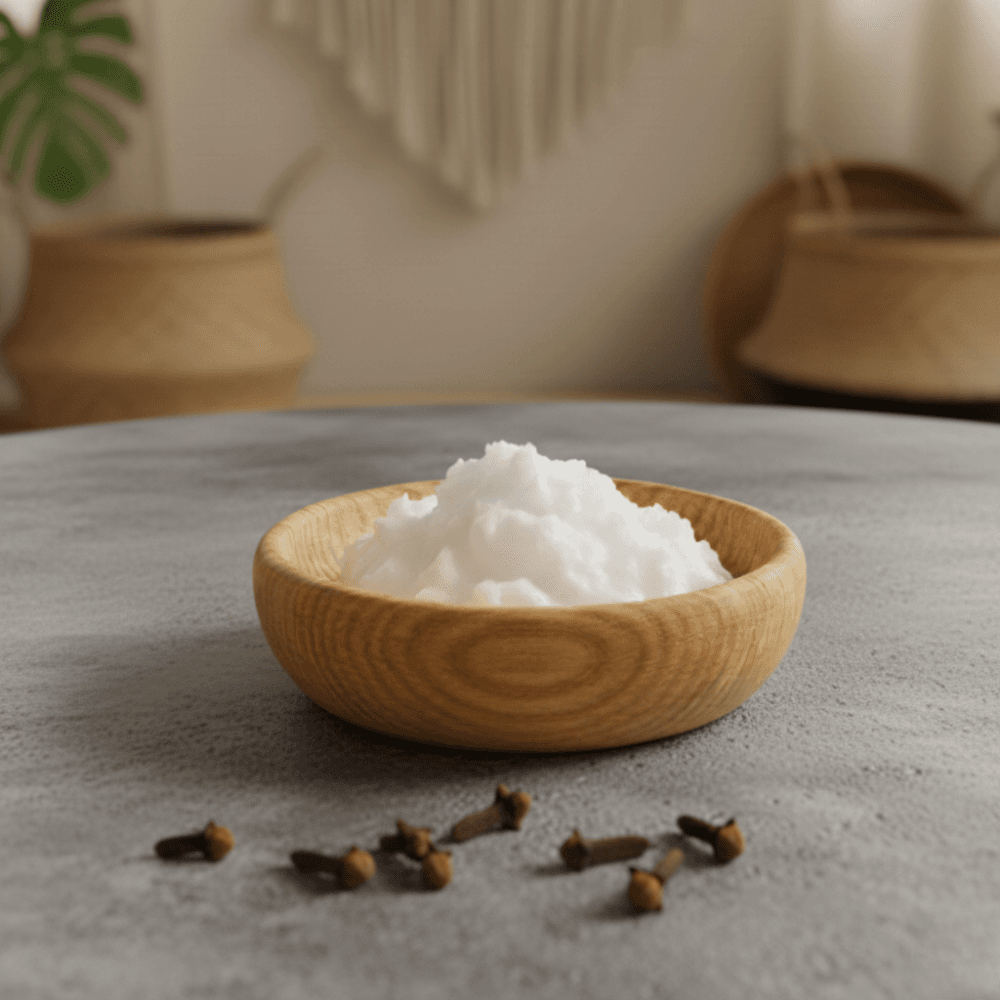
1 drop Clove Essential Oil
The Magic: This is such a gentle, loving blend for when your gums need a little extra attention. Clove is a classic in dentistry for good reason; the active substance eugenol is known for its purifying and mildly numbing properties, which can give immediate relief.
1 tablespoon Coconut oil
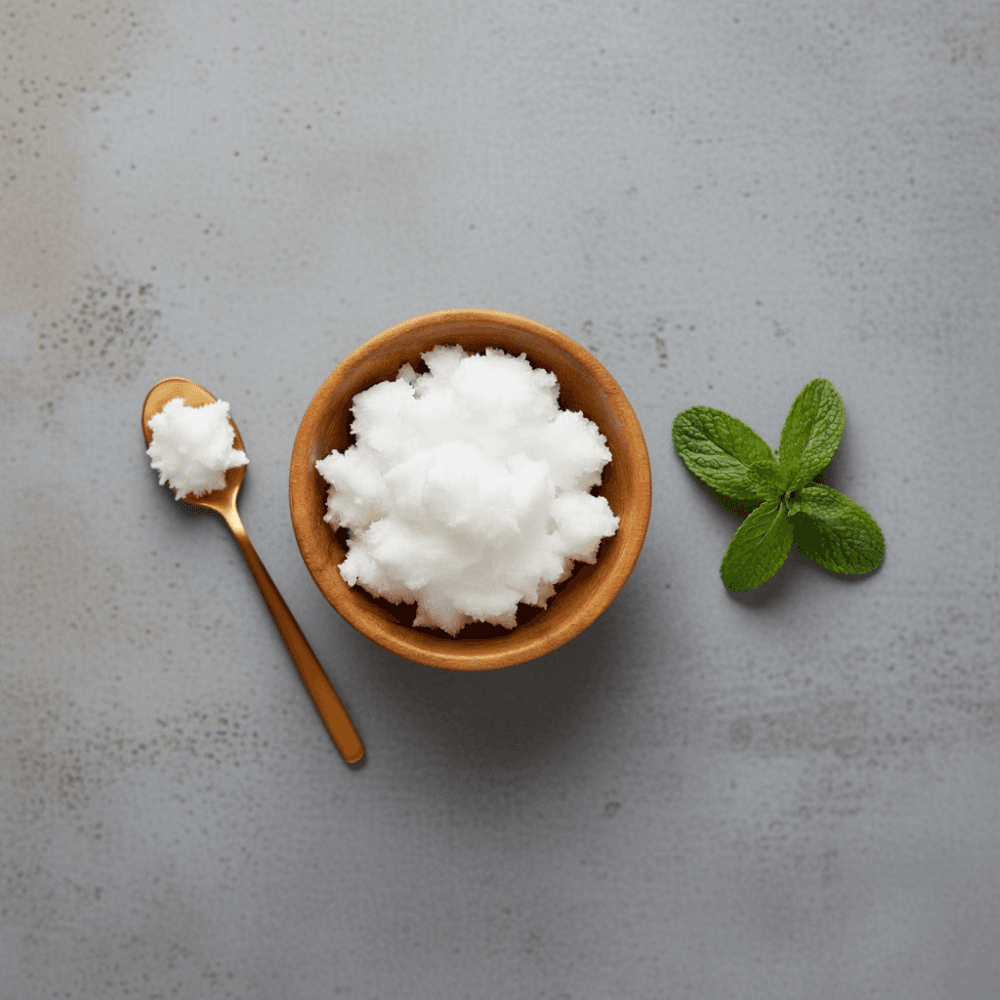
1 drop Peppermint Essential Oil
1 drop Tea Tree Essential Oil
The Magic: This blend is like a fresh breeze for your mouth. Peppermint naturally gives that unmistakable, tingling kick and an immediate feeling of freshness. But the real hero here is Tea Tree. Where peppermint mainly refreshes, Tea Tree, with its powerful, purifying properties, tackles the bacteria that cause bad breath. So you don't just mask it, you cleanse the mouth flora on a deeper level.


1 tablespoon Coconut oil
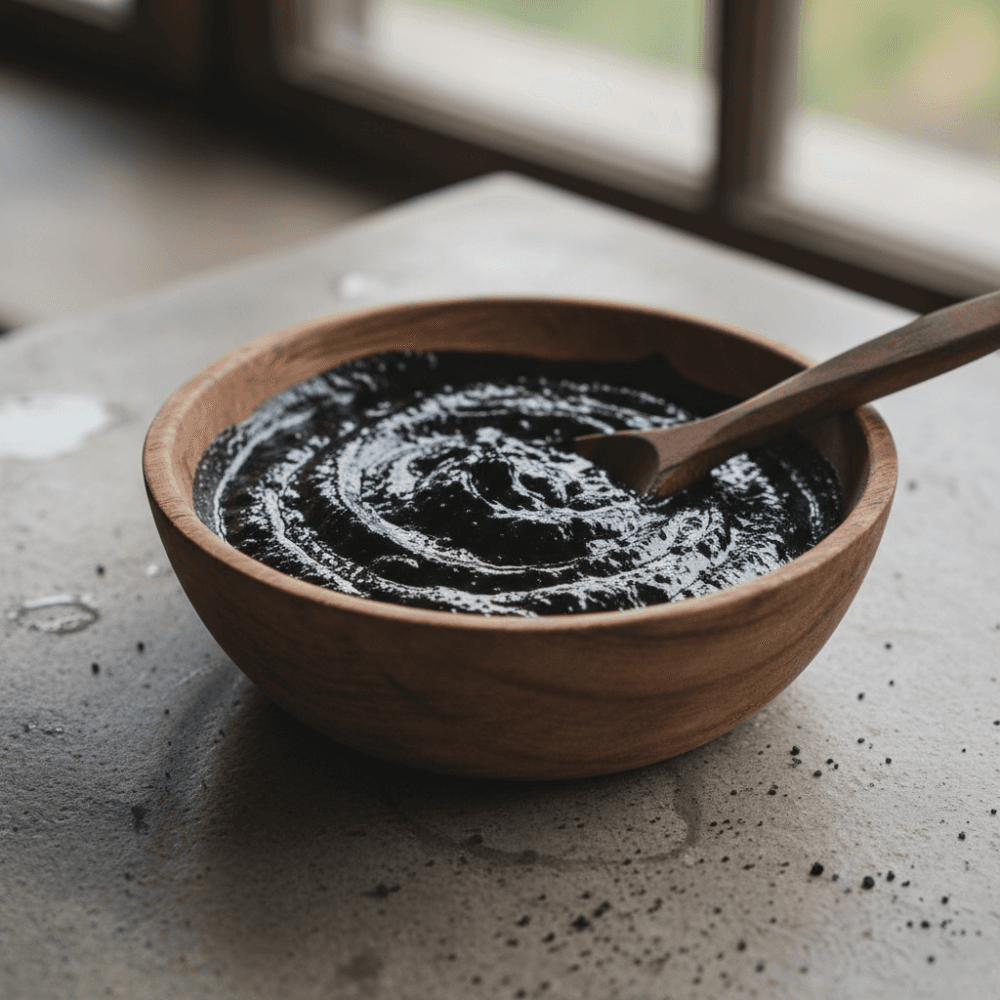
¼ teaspoon Activated Charcoal Powder
The Magic: Activated charcoal is a master at binding impurities. Its structure is extremely porous, so it works like a kind of magnet for tannins, the substances from coffee, tea and red wine that cause discolouration on your teeth. It's a very gentle, mechanical way to brighten and more deeply clean your teeth, without damaging the enamel. A mini-detox for a naturally whiter smile. Note: it's a black substance, so be careful with your sink!
Would you rather have an oil pulling recipe that you can make in advance and easily take with you wherever you go? Then take a look at my Oil Pulling Mouthwash recipe. This natural oil pulling mouthwash combines the antibacterial action of coconut oil with the light, silky texture of MCT Oil and Sesame Seed Oil. Enriched with Activated Charcoal for a purifying effect and a touch of refreshing Peppermint and Menthol, it not only gives your mouth a wonderfully fresh sensation, but also supports the natural mouth flora.
I hope this deep dive into the world of oil pulling inspires you to give this beautiful, simple ritual a place in your morning routine too. It's so much more than just oral care. As Ayurveda teaches us, your mouth is the gateway to the rest of your body. By caring lovingly for your oral microbiome, you lay a strong, healthy foundation for your overall wellbeing.
The best part is: you don't need any complicated products for it, only the pure, honest power of nature. Don't see it as yet another 'must' on your to-do list, but as a small, meditative moment for yourself. An act of deep care, to start each day with a clean slate.
With lots of love,
Malou
Sources (a selection from the many studies):
Asokan, S., et al. (2009). Effect of oil pulling on plaque induced gingivitis: A randomized, controlled, triple-blind study. Indian Journal of Dental Research.
Asokan, S., et al. (2011). Effect of oil pulling on halitosis and microorganisms causing halitosis. Journal of Indian Society of Pedodontics and Preventive Dentistry.
Gbinigie, O., et al. (2016). Effect of oil pulling in promoting oro dental hygiene: A systematic review of randomized clinical trials. Complementary therapies in medicine.