Ready-made products for your natural routine..
Do you want to stay updated on offers, (giveaway) actions and recommendations? This way you won't miss out on anything! Not too often, we promise.


Rose Water is a hydrosol, made from roses, which is why it's also called rose hydrosol. It's a popular ingredient in perfume because of its sweet, pleasant scent. Besides its lovely scent, Rose Water has special properties for skincare and is widely used in traditional cooking. Because this special water naturally has the characteristics of a rose, it's also very versatile. In this blog you'll find everything about Rose Water and 8 ways to use it.
What is Rose Water?
Where does Rose Water come from?
How was Rose Water used in the past?
What makes Rose Water special?
How is Rose Water made?
Can you make Rose Water at home?
Does Rose Water contain alcohol?
How can you use Rose Water? (8 ways!)
What does Rose Water look like?
How should you store Rose Water?
Where can you buy Rose Water?
Rose Water is a hydrosol, made from roses, which is why it's also called rose hydrosol. It's a popular ingredient in perfume because of its sweet, pleasant scent. Besides its lovely scent, Rose Water has special properties for skincare and is widely used in traditional cooking. Because this special water naturally has the characteristics of a rose, it's also very versatile. In this blog you'll find everything about Rose Water and 8 ways to use it.
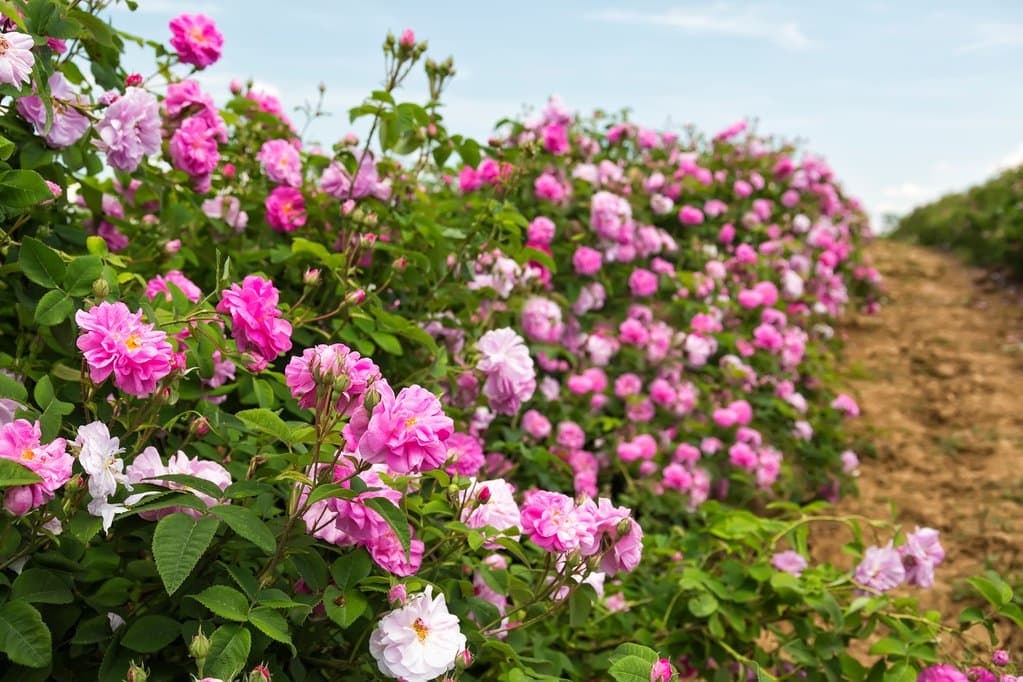
Rose Water is, of course, made from roses. Wild roses grow in rugged areas and cope easily with harsh weather. They mainly grow in the northern hemisphere, at latitudes from Alaska to Mexico. But roses can also be found in North Africa. And even in the Netherlands and Belgium, several rose species grow in the wild. The dog rose (Rosa Canina), the sweet briar (Rosa Rubiginosa) and the burnet rose (Rosa Pimpinellifolia) are especially well known here. Every rose smells different, so some roses are better suited to making Rose Water than others. The best-smelling roses for making Rose Water are: Rosa Damascena, Rosa Centifolia and Rosa Gallica. Bulgarian Rosa Damascena in particular is widely used to make Rose Water (see the image below).

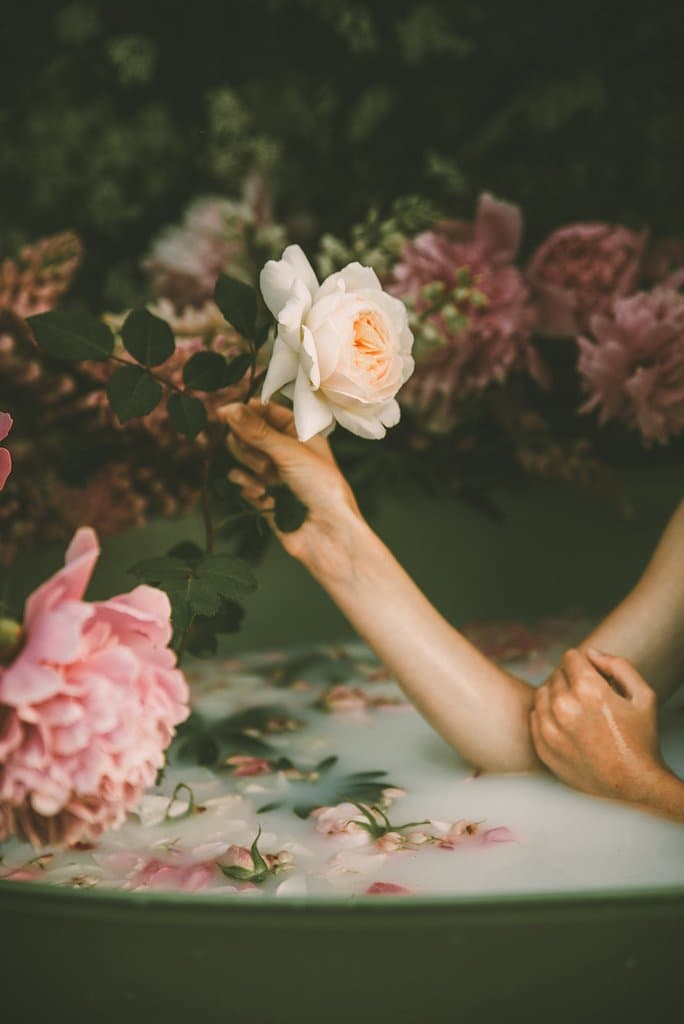
Legend has it that Cleopatra washed her body and face with Rose Water. It was one of Cleopatra's many beauty secrets. She regularly took long, luxurious baths in this special water.
In the tenth century, using rose petals became very popular in Persian cuisine. Rose petals made food smell lovely and gave dishes a delicious flavour.
The tenth-century Persian scientist Avicenna is known as the discoverer of Rose Water. Rose Water soon became widely used in medieval Arab cuisine. The many crusades brought Rose Water to Europe's attention and made it a profitable source of trade for the Persians. From then on, the use of Rose Water spread throughout Europe. For example, Rose Water was used to clean your hands before eating and as a washing-up liquid to make the dishes smell lovely.
Scientists of the time described Rose Water as a powerful and strengthening substance.
Rose Water is made from the petals of roses such as Rosa Damascena, Rosa Centifolia and Rosa Gallica. These are three wonderfully fragrant rose varieties, and they make the best Rose Water.
Rose Water is a hydrosol, so it's made from rose petals. Hydrosols are flower or herbal waters that are created as a kind of by-product of the specific production process of essential oils. They contain water-soluble plant components that give these hydrosols the scent of the essential oil, but not as strongly.
Rose petals are steam distilled. When the steam has finally cooled back into water, two products are left.
The first is a fat-soluble (lipophilic) part. In the cosmetics world, this is called an essential oil.
The second part is distillation water with water-soluble parts. This part is called a hydrolate or hydrosol. When rose petals are distilled, the result is Rose Water.

Rose petals release their vitamins and minerals into the water during distillation. As a result, Rose Water is packed with vitamins A, B3, C, D, E and antioxidants. Among other things, this makes Rose Water great for caring for blemish-prone skin.
What's more, Rose Water is ideal for dry, mature and sensitive skin.
Rose Water also has a firming effect on the pores and supports the skin's pH value.
Of course you can make Rose Water at home. You do need to think about the type of roses you use, though, because one rose can smell slightly different from another. How do you make Rose Water? Add some rose petals to a pan with a little water. Make sure all the petals are just under the water. Bring the water to the boil, but make sure it doesn't evaporate. Stir the water and petals now and then, and put the lid on the pan so the scents don't escape.
Once the water is boiling, turn the heat down and let the mixture simmer gently for two hours. Do keep a close eye on the pan. After two hours, pour the homemade Rose Water into a bottle. It's best to use a funnel for this. The funnel stops the petals from going in with it, so you're left with just the water.
Below is a video that explains step by step how to make your own Rose Water.
Rose Water is made from roses. Like some other flowers, these roses naturally contain a small percentage of ethanol. Ethanol is the best-known and most common alcohol. Pure Rose Water consists only of roses, so there's also some ethanol in Rose Water.
So the amount of ethanol in Rose Water is minimal, but if your skin doesn't tolerate alcohol, it's better to avoid the product. If you're not sure whether you can use the product, it's wise to test a small amount on a patch of skin first. A handy place to test products is the inside of your elbow. The skin there is thin, so you can quickly see whether your skin reacts to certain products.
There are, of course, also chemical Rose Waters on the market. It's always important to check the ingredients before you buy Rose Water. If you want to buy pure Rose Water, there should be only one ingredient on the label.

Rose Water is incredibly versatile. In most cases, Rose Water is used neat, but you can also mix Rose Water with certain clay masks. Below are a few ways you can use Rose Water.


Rose Water looks like water: it's liquid and transparent. The scent of pure Rose Water can vary from bottle to bottle. This is because no scent stabiliser is added to pure hydrosols, and that includes Rose Water. So one time you'll notice the scent more intensely than another. Luckily, this has no effect on the quality of the hydrosol. In general, Rose Water does smell of rose and is slightly floral with a very subtle hint of lemon.

In its original packaging, Rose Water keeps for twelve months. Homemade Rose Water only keeps for a week unless you add preservatives. Rose Water can in principle be kept outside the fridge, but cold Rose Water works more effectively. If you don't keep Rose Water in the fridge, it's wise to store it in a dark cupboard.
And similar heroes...