Ready-made products for your natural routine..
Do you want to stay updated on offers, (giveaway) actions and recommendations? This way you won't miss out on anything! Not too often, we promise.


Making your own natural cosmetics is an educational and creative process. But did you know that one number, the pH value, can make the difference between a skin-friendly product and skin irritation? In this blog you will read why the pH value is so important, how you can easily measure and adjust it, and which mistakes you absolutely want to avoid when making your own cosmetics.
You often see it on labels: "pH-neutral". But what does that actually mean?
The term pH stands for "Potentia Hydrogenii", in other words: the concentration of hydrogen ions in an aqueous solution. The pH value determines whether a liquid is acidic, neutral or alkaline.

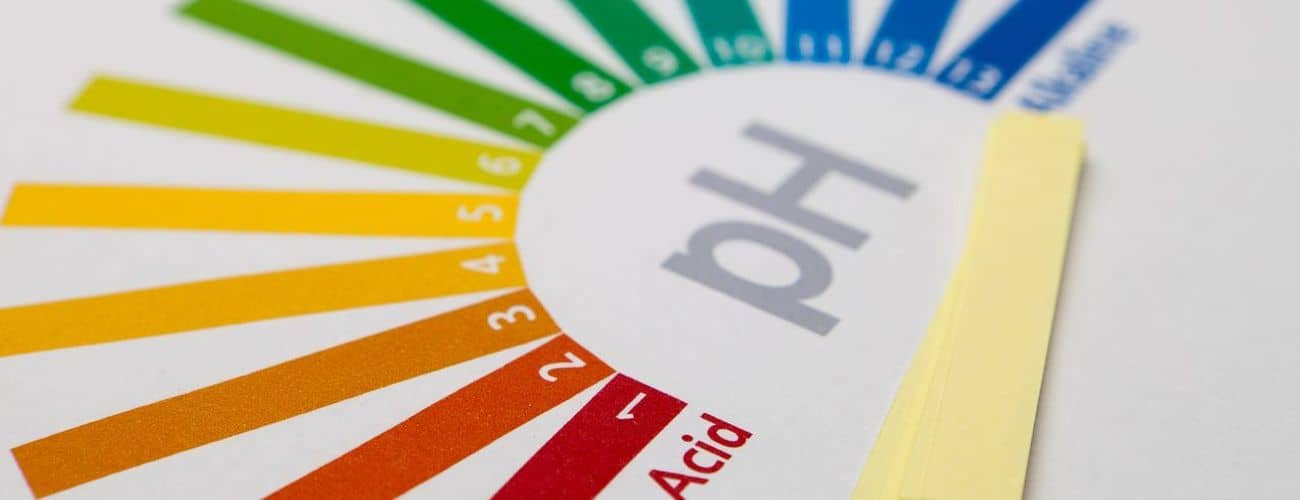
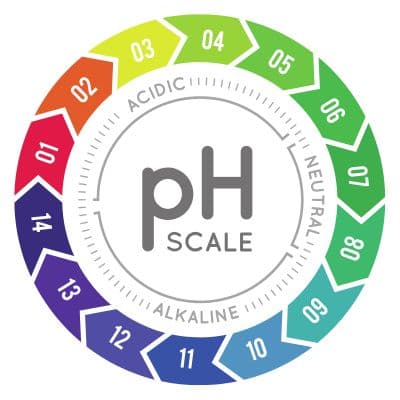
The pH scale indicates how acidic or alkaline an aqueous solution is. The scale runs from 0-14:
pH 0-6: acidic (the lower, the more acidic)
pH 7: neutral
pH 8-14: basic/alkaline (the higher, the more alkaline)
Examples:
pH 1: stomach acid
pH 2.5: soft drink (Cola)
pH 3: vinegar
pH 4: yoghurt
pH 5: black coffee
pH 7: pure water or saliva
pH 9: baking soda (sodium bicarbonate)
pH 13: drain cleaner
Did you know: each step on the scale is 10 times as strong as the previous one. A pH of 5 is therefore ten times more acidic than a pH of 6.
The skin naturally has a slightly acidic protective layer. This is also known as the skin's acid mantle. This acid mantle protects against bacteria, viruses and dehydration. The natural pH value of the skin lies between 4.5 and 5.5. If you use cosmetics with a pH that is too high or too low, this can disrupt that acid mantle and lead to: irritation or itching, pimples or dryness / flaking.
Age, climate, diet and even stress can affect the skin's pH. As we get older, the skin often becomes slightly more alkaline, which can lead to drier and more sensitive skin. That is why it is very important that the products are matched to the natural pH of the skin.
When you start making products yourself, it is also important to look at the pH value of the product. Oily skin can tolerate a slightly higher pH value. Dry or sensitive skin benefits from products with a pH of 4.5-5.5. Skin with pimples often calls for slightly acidic products (pH 4.2-5).

A pH value that is too high or too low in cosmetic products can lead to various skin problems such as redness, dryness, itching, pimples or even eczema.
It is also not good for your products. An incorrect pH value can encourage the growth of harmful bacteria. And that is something you want to avoid at all times!
A well-balanced pH helps to protect the skin barrier, maintain the microbial balance and let ingredients do their work more effectively!
A well-balanced pH
Helps retain moisture
Strengthens the skin barrier
Has an anti-inflammatory effect
An incorrect pH
Disrupts the microbiome
Increases the risk of irritations or infections
Makes the skin more susceptible to damage
Measuring the pH is simple and essential, especially if you make products yourself. There are three methods:
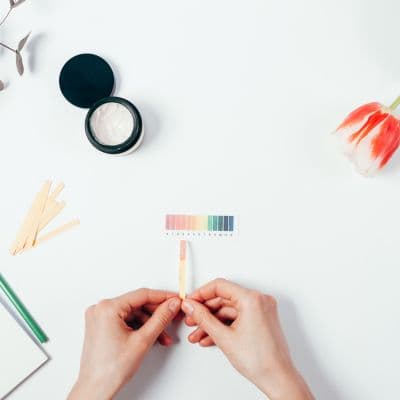
pH strips: handy, inexpensive, good for beginners
Digital pH meters: more accurate, ideal for those who regularly develop formulas
Bluetooth pH meter: high accuracy, for professional use
Always measure after mixing your complete recipe (including water phases), and before adding the preservative.

Raising the pH (making it more alkaline)
Is your product actually too acidic? (pH lower than 4.5) Then you can carefully raise the pH slightly.
Here is how to do it:
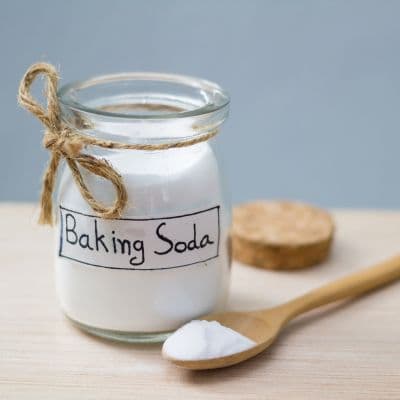
Make a Baking Soda solution: the dosage is 1 gram of Baking Soda and 9 grams of distilled water. This gives you 10 grams of solution in total.
Then add it drop by drop to your product.
Measure the pH again each time with a pH strip or digital meter, so that the pH value does not become too high.

Lowering the pH (making it more acidic)
Is your product too alkaline? (pH higher than 5.5) Then you need to make it a bit more acidic to match it better to the skin.
Here is how to do it:
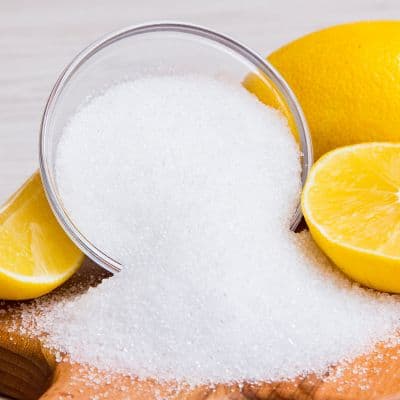
Make a citric acid solution: the dosage is 1 gram of citric acid powder and 9 grams of distilled water. This gives you 10 grams of solution in total.
Then add it drop by drop to your product.
Measure the pH again each time with a pH strip or digital meter, so that the pH value does not drop too far.
Always measure! After every adjustment you must measure the pH again.
Adjust the pH when the product is finished (all ingredients mixed).
For watery products pH adjustment is most relevant (lotions, gels, toners).
For oils and balms you do not need to measure the pH – they contain no water and therefore have no pH.
In the video below you can see exactly how to raise or lower the pH.
When a product has an unsuitable pH, you may experience:
Skin irritations such as burning, redness or itching
An increase in pimples or bacterial infections
Dryness and flaking of the skin
Damage to the skin barrier, which leads to sensitivity
Reduced shelf life of your product
Faster growth of bacteria and fungi
Not carrying out a pH measurement
Mixing ingredients in the wrong order
Not taking into account the pH of active ingredients (such as fruit acids or clay)
| Huidtype | Ideale pH-waarde |
|---|---|
| Droge huid | 4.7-5.2 |
| Vette huid | 4.5-5.0 |
| Gevoelige huid | 4.8-5.5 |
| Huid met puistjes | 4.0-4.7 |