Ready-made products for your natural routine..

Free shipping from €35
★★★★★ 9.3 / 10 out of 9,500+ reviews
Ordered before 23:00, shipped today
Natural HeroesNatural Heroes
Natural Heroes
Shop
Recipes
Information
Community
About us

Our community is the place where Heroes come together to share knowledge, experiences and ideas about nature.

Join us!
Join our community
User
My account
Cart
Basket
Wishlist
Favorites
★★★★★Kiyoh 9.3 / 10 — 9,500+ reviews
Shop
Recipes
Information
Community
About us

Our community is the place where Heroes come together to share knowledge, experiences and ideas about nature.

Join us!
Join our community
WishlistCart
User
Shop
Recipes
Information
Community
About us
Aromatherapy
Cosmetics
Do It Yourself
Herbs & Extracts
Auxiliaries
Oils & Butters
Tools & More
Ready to use
All
Bundles
Gift Card
New
Sale
FARM TO TABLE
Lavender Luisieri
Cistus
Helichrysum Stoechas
Rosemary
Eucalyptus
Spanish Thyme
ESSENTIAL OIL BLENDS
Bombshell
Eternal Bloom
Fresh Balance
Less Stress
Morning Breeze
Morning Sunshine
Night Night
Rosemary Bliss
Sweet Dreams
Tropical Zest
Velvet Rose
ESSENTIAL OILS (A-G)
Amyris
Anijs
Basilicum
Bergamot
Bergamot (Furocoumarin-Free)
Berk
Berkenteer
Bittere Amandel
Blauwe Kamille
Blue Tansy
Cajeput
Cederhout
Citroen (FCF-vrij, Gedestilleerd)
Citroen (Koudgeperst)
Citroen Eucalyptus
Citroengras
Citronella
Cognac
Copaiba
Cypres
Duizendblad
Eucalyptus (Globulus)
Eucalyptus (Radiata)
Frankincense (Carterii)
Frankincense (Serrata)
Gember
Geranium
Grove Den
ESSENTIAL OILS (H-N)
Helichrysum
Hinoki
Hô hout
Jeneverbes
Kamfer
Kamille (Rooms)
Kaneelschors
Kardemom
Korianderzaad
Kruidnagel
Kurkuma
Laurierblad
Lavandin
Lavendel
Lavendel (Spijk)
Limoen
Mandarijn
Manuka
May Chang
Mirre
Munt
Neroli
Nootmuskaat
ESSENTIAL OILS (O-Z)
Oranjebloesem / Neroli (Tunesie)
Oregano
Palmarosa
Palo Santo (Heilig hout)
Patchouli
Pepermunt (Mentha Arvensis)
Pepermunt (Mentha Piperita)
Peru Balsem Oleoresin
Petitgrain
Petitgrain (Bigarade)
Pink Grapefruit
Ravintsara (Biologisch)
Roze Peper
Rozemarijn
Rozemarijn (Cineol)
Rozemarijn Verbenon - Biologisch
Rozengeranium
Rozenhout
Salie (Scharlei)
Sandelhout
Siberische Zilverspar
Tea Tree
Tea Tree Citroen
Tijm
Verbena
Vetiver
Wintergroen
Witte Champaca (Magnolia)
Wortelzaad
Ylang Ylang (Eerste Graad)
Yuzu
Zoete Sinaasappel
Zwarte Peper
BlogsAll items
How does DIY work?Do's & Don'ts
27 Ingredients to Avoid in CosmeticsAlcohol, Aluminium, and 25 more...
(Un)refined, Organic or Cold-pressed?We explain the terms.
Natural vs Mineral OilsWhy you’d prefer not to use mineral oil.
Carrier oil vs essential oilThey share the word "oil," but are very different.
Basic Skincare RoutineA 100% natural skincare routine for your skin type.
Preservatives in SkincareWhich is suitable in your DIY?
What is the community?The place where Heroes come together!
Earth CoinsEarn points and get discounts.
Community loginIf you are already a member of our community.
About usOur mission & the story
WholesaleFor businesses.
VacanciesMake a difference!
Affiliates
ContactA response within 1 working day.
Free shipping from €35
★★★★★ 9.2 / 10
Ordered before 23:00, shipped today

Sign up for our newsletter

Do you want to stay updated on offers, (giveaway) actions and recommendations? This way you won't miss out on anything! Not too often, we promise.

You can unsubscribe at any time.
Botanical drawing of a plant
Natural Heroes

"We believe that living healthy and sustainably should be easy."

Reviews9.3 / 10 out of 9,500+ reviews

Customer service
  • Get in touch
  • Ordering & Delivery
  • Returns
  • Right of withdrawal
  • Frequently Asked Questions
  • My account
Raw materials
  • Carrier oils
  • Fragrance oils
  • Hydrosols
  • Clays & Powders
  • Herbs & Plant Powders
  • Butters & Waxes
  • Excipients
Products
  • All products
  • Do It Yourself
  • Recipes
  • Tools & More
  • Packaging
About Us
  • Community
  • Greenspark
  • Blog
  • Wholesale
  • Vacancies
  • Contact
  • Terms and Conditions
  • Privacy Policy
  • Right of withdrawal
Updates?
  • instagramInstagram
  • facebookFacebook

ideal
visa
mastercard
bitcoin
sofort
applepay
Terms and ConditionsRight of withdrawalDisclaimer© Natural Heroes 2026
  1. Blog
  2. African Black Soap
  • What is African Black Soap?

  • Where does African Black Soap come from?

  • What makes African Black Soap special?

  • How is African Black Soap made?

  • What can you use African Black Soap for?

  • How do you use African Black Soap?

  • What does African Black Soap look like?

  • How can you best store African Black Soap?

  • Where can you buy African Black Soap?

What is African Black Soap?

African Black Soap is a 100% natural soap. This soap has been used for centuries in West Africa to care for impure skin and the hair. African Black Soap is made from African fruits and plants and is suitable for every skin type. The soap is also known by the exotic names Anago Soap, Alata Simena and Ose Dudu. For convenience, in this article we will simply stick to African Black Soap.

Where does African Black Soap come from?

African Black Soap comes from West Africa and is made entirely from raw materials sourced from the local nature. The palm oil used in the soap, for example, comes from small communities, locally produced in Ghana. 100% natural African Black Soap therefore does not come from large plantations, but is made locally by village women in Africa.

What makes African Black Soap special?

African Black Soap is the only soap in the world that is completely natural. This is because no synthetic lye/sodium hydroxide is used to make the soap. The sodium hydroxide occurs naturally in the ash of, for example, the plant peels from which the soap is made. This means that African Black Soap contains a 'natural lye' that creates the soap.

Because African Black Soap is packed with vitamins A and E, it is an absolute benefactor for your skin. Vitamin A helps your skin to produce collagen, keeps your skin firm and counteracts premature skin ageing. Vitamin E hydrates and at the same time also improves the texture of your skin.

This 100% natural soap contains no chemical additives and is therefore suitable for every skin type. You can therefore use African Black Soap on oily, dry and sensitive skin. African Black Soap can even help to reduce pimples and blackheads and makes the skin soft and smooth again.

How is African Black Soap made?

African Black Soap is made from the ash of local plants and barks such as plantain (cooking bananas), cocoa pod husks and palm tree leaves. The leaves and barks are first dried in the sun and then roasted in a pot at a constant temperature, which is important to get the colour and texture right. After that, water and oil (Coconut Oil, Palm Kernel Oil, Shea Butter) are added and stirred for at least one day. The soap is "cured" for two weeks and is then ready to be used.

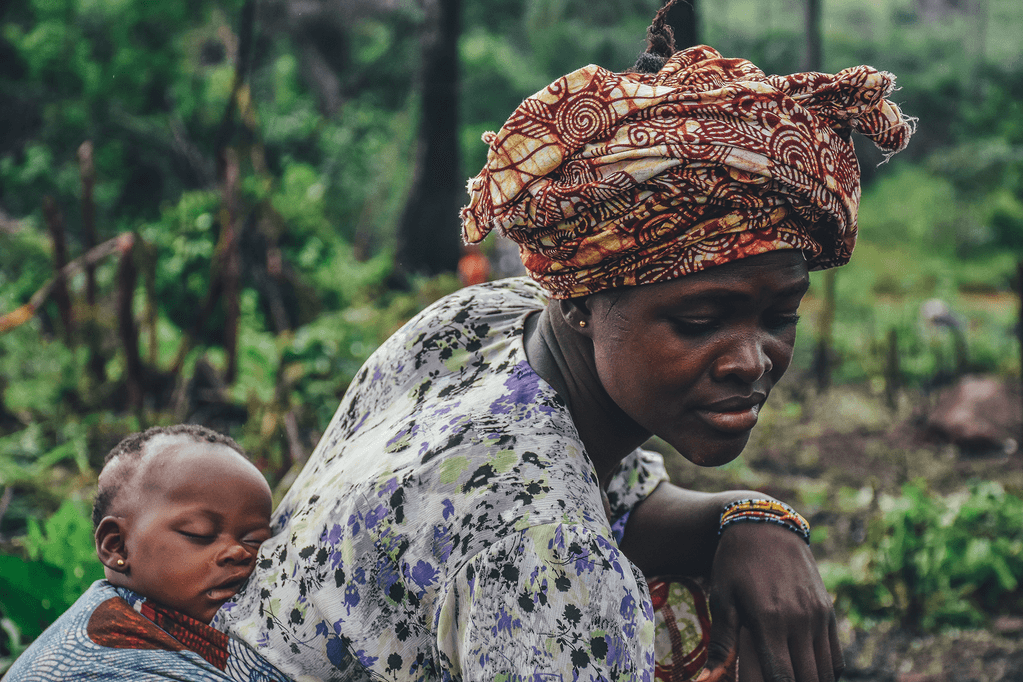
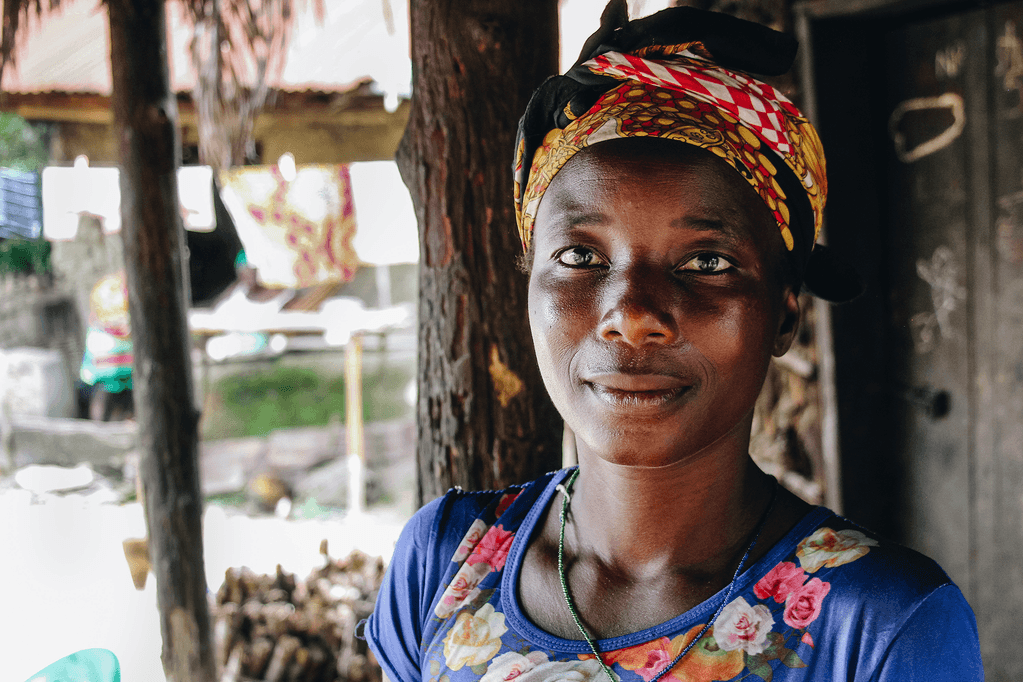
The soap is traditionally made by West African village women. Each tribe has its own secret recipe and manufacturing methods, and these are passed down from generation to generation. The soap is made in many West African countries in a 100% natural and organic way.

What can you use African Black Soap for?

African Black Soap is a real all-rounder: you can use it as soap, shampoo and shaving cream, for example. You hardly need more than one product for the shower or bath.

As a shampoo, African Black Soap is mainly used for a sensitive scalp or if you are allergic to chemical additives. African Black Soap is, after all, the only soap that is completely natural. African Black Soap is generally more suitable for people with frizzy hair than for people with straight hair. This is because African Black Soap gives frizzy hair more volume.

If you normally suffer a lot from red bumps when shaving, African Black Soap can considerably reduce these irritating bumps. This is because African Black Soap has no chemical additives, which makes the soap feel gentle on your skin.

How do you use African Black Soap?

Rub the soap between your hands and then apply the foam to a damp face or your hair. For an extra deep cleanse, let the foam soak in. African Black Soap may sting a little on first use because your skin still needs to get used to it. Rinse the soap off with plenty of lukewarm water.

The soap is incredibly compact, so you only need a small amount to wash your body, face and/or hair. The soap is therefore very economical in use and lasts quite a long time.

What does African Black Soap look like?

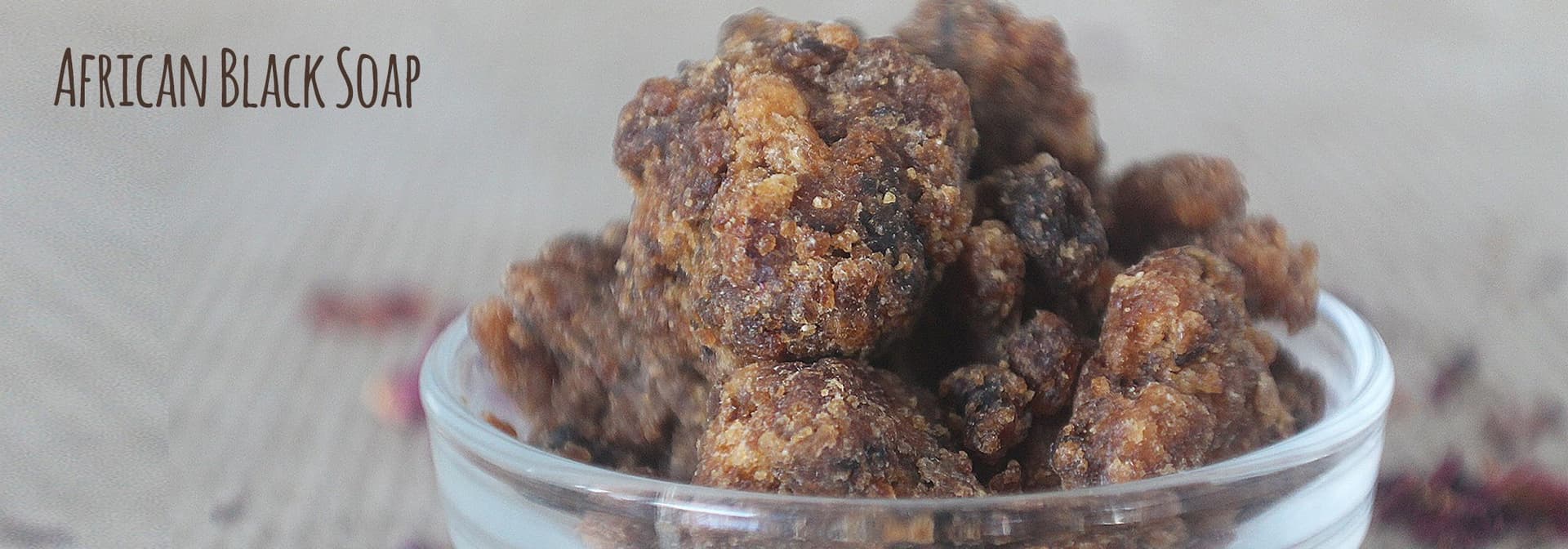
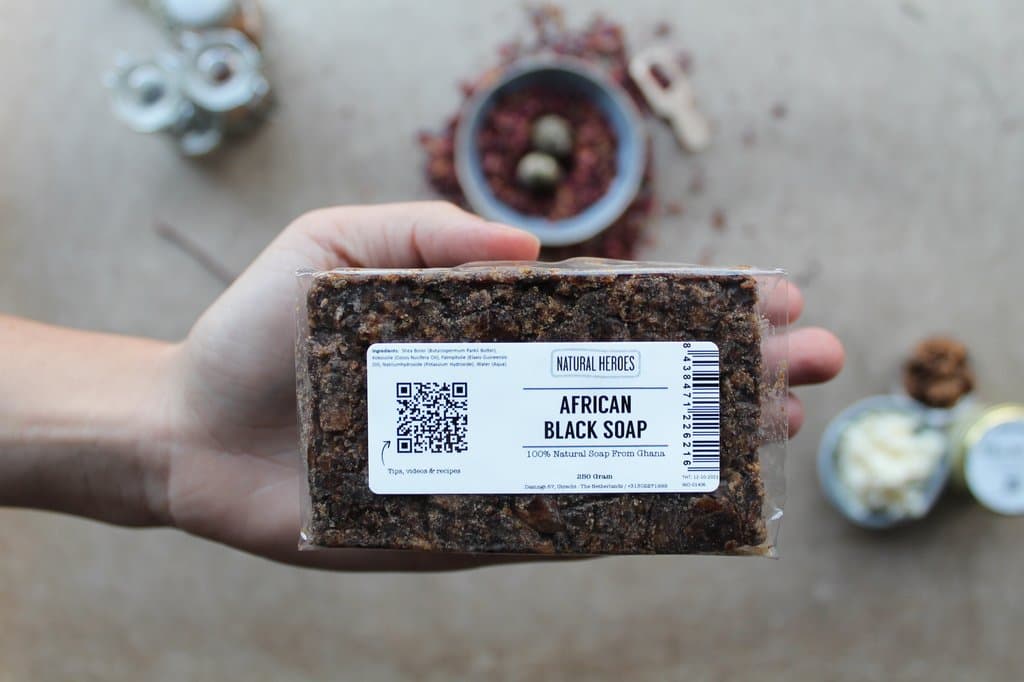
African Black Soap is a soap in which the lumps are, as it were, pressed together. It is malleable and comes in all sorts of different shades of brown. Since African Black Soap is made by hand in various African villages, no single bar of soap is the same in terms of colour and structure. Because the soap contains no additives, the soap is virtually odourless.

There are also many commercial soaps from Western countries that often contain artificial additives, including fragrances and colourings. These soaps are generally harder and have a uniform dark colour. So look carefully at the colour and texture when you buy African Black Soap; the natural variant is generally a lot better for your skin.

How can you best store African Black Soap?

African Black Soap is best stored in a wooden soap dish with holes in it so that the water can drip out. The soap lasts longer when it is kept dry. African Black Soap has an average shelf life of 36 months if you store it in the right way.

More information?

Do you want to know even more about making African Black Soap? The video below shows exactly how women from Africa make the soap. You can see in detail how they roast the fruits and how it is ultimately turned into soap. The video has English subtitles.

Author: Nevil

African Black Soap: 100% natural soap that does not dry out the skin