Ready-made products for your natural routine..

Free shipping from €35
★★★★★ 9.3 / 10 out of 9,500+ reviews
Ordered before 23:00, shipped today
Natural HeroesNatural Heroes
Natural Heroes
Shop
Recipes
Information
Community
About us

Our community is the place where Heroes come together to share knowledge, experiences and ideas about nature.

Join us!
Join our community
User
My account
Cart
Basket
Wishlist
Favorites
★★★★★Kiyoh 9.3 / 10 — 9,500+ reviews
Shop
Recipes
Information
Community
About us

Our community is the place where Heroes come together to share knowledge, experiences and ideas about nature.

Join us!
Join our community
WishlistCart
User
Shop
Recipes
Information
Community
About us
Aromatherapy
Cosmetics
Do It Yourself
Herbs & Extracts
Auxiliaries
Oils & Butters
Tools & More
Ready to use
All
Bundles
Gift Card
New
Sale
FARM TO TABLE
Lavender Luisieri
Cistus
Helichrysum Stoechas
Rosemary
Eucalyptus
Spanish Thyme
ESSENTIAL OIL BLENDS
Bombshell
Eternal Bloom
Fresh Balance
Less Stress
Morning Breeze
Morning Sunshine
Night Night
Rosemary Bliss
Sweet Dreams
Tropical Zest
Velvet Rose
ESSENTIAL OILS (A-G)
Amyris
Anijs
Basilicum
Bergamot
Bergamot (Furocoumarin-Free)
Berk
Berkenteer
Bittere Amandel
Blauwe Kamille
Blue Tansy
Cajeput
Cederhout
Citroen (FCF-vrij, Gedestilleerd)
Citroen (Koudgeperst)
Citroen Eucalyptus
Citroengras
Citronella
Cognac
Copaiba
Cypres
Duizendblad
Eucalyptus (Globulus)
Eucalyptus (Radiata)
Frankincense (Carterii)
Frankincense (Serrata)
Gember
Geranium
Grove Den
ESSENTIAL OILS (H-N)
Helichrysum
Hinoki
Hô hout
Jeneverbes
Kamfer
Kamille (Rooms)
Kaneelschors
Kardemom
Korianderzaad
Kruidnagel
Kurkuma
Laurierblad
Lavandin
Lavendel
Lavendel (Spijk)
Limoen
Mandarijn
Manuka
May Chang
Mirre
Munt
Neroli
Nootmuskaat
ESSENTIAL OILS (O-Z)
Oranjebloesem / Neroli (Tunesie)
Oregano
Palmarosa
Palo Santo (Heilig hout)
Patchouli
Pepermunt (Mentha Arvensis)
Pepermunt (Mentha Piperita)
Peru Balsem Oleoresin
Petitgrain
Petitgrain (Bigarade)
Pink Grapefruit
Ravintsara (Biologisch)
Roze Peper
Rozemarijn
Rozemarijn (Cineol)
Rozemarijn Verbenon - Biologisch
Rozengeranium
Rozenhout
Salie (Scharlei)
Sandelhout
Siberische Zilverspar
Tea Tree
Tea Tree Citroen
Tijm
Verbena
Vetiver
Wintergroen
Witte Champaca (Magnolia)
Wortelzaad
Ylang Ylang (Eerste Graad)
Yuzu
Zoete Sinaasappel
Zwarte Peper
BlogsAll items
How does DIY work?Do's & Don'ts
27 Ingredients to Avoid in CosmeticsAlcohol, Aluminium, and 25 more...
(Un)refined, Organic or Cold-pressed?We explain the terms.
Natural vs Mineral OilsWhy you’d prefer not to use mineral oil.
Carrier oil vs essential oilThey share the word "oil," but are very different.
Basic Skincare RoutineA 100% natural skincare routine for your skin type.
Preservatives in SkincareWhich is suitable in your DIY?
What is the community?The place where Heroes come together!
Earth CoinsEarn points and get discounts.
Community loginIf you are already a member of our community.
About usOur mission & the story
WholesaleFor businesses.
VacanciesMake a difference!
Affiliates
ContactA response within 1 working day.
Free shipping from €35
★★★★★ 9.2 / 10
Ordered before 23:00, shipped today

Sign up for our newsletter

Do you want to stay updated on offers, (giveaway) actions and recommendations? This way you won't miss out on anything! Not too often, we promise.

You can unsubscribe at any time.
Botanical drawing of a plant
Natural Heroes

"We believe that living healthy and sustainably should be easy."

Reviews9.3 / 10 out of 9,500+ reviews

Customer service
  • Get in touch
  • Ordering & Delivery
  • Returns
  • Right of withdrawal
  • Frequently Asked Questions
  • My account
Raw materials
  • Carrier oils
  • Fragrance oils
  • Hydrosols
  • Clays & Powders
  • Herbs & Plant Powders
  • Butters & Waxes
  • Excipients
Products
  • All products
  • Do It Yourself
  • Recipes
  • Tools & More
  • Packaging
About Us
  • Community
  • Greenspark
  • Blog
  • Wholesale
  • Vacancies
  • Contact
  • Terms and Conditions
  • Privacy Policy
  • Right of withdrawal
Updates?
  • instagramInstagram
  • facebookFacebook

ideal
visa
mastercard
bitcoin
sofort
applepay
Terms and ConditionsRight of withdrawalDisclaimer© Natural Heroes 2026
  1. Blog
  2. 20 important facts about Beeswax

20 Important facts about beeswax

  • What is Beeswax?

  • How was Beeswax used in the past?

  • What makes Beeswax special?

  • How is Beeswax made?

  • What is the difference between white and yellow Beeswax?

  • Is Beeswax vegan?

  • How do you know if Beeswax is pure?

  • What can you use Beeswax for?

  • What does Beeswax look like?

  • How is the best way to store Beeswax?

  • Where can you buy Beeswax?

What is Beeswax?

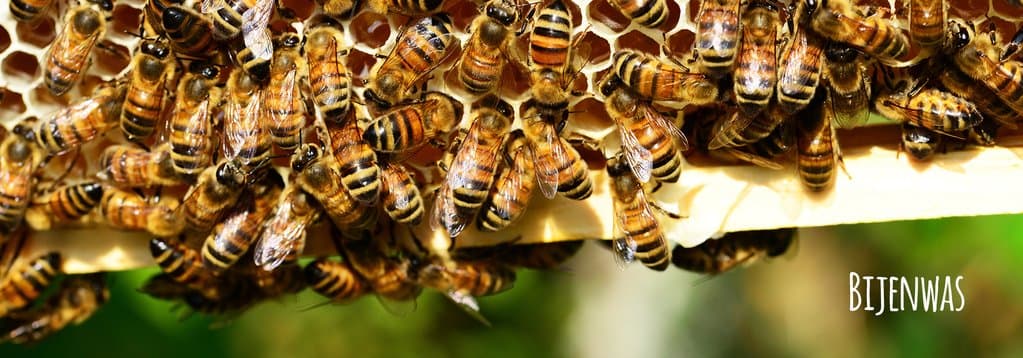
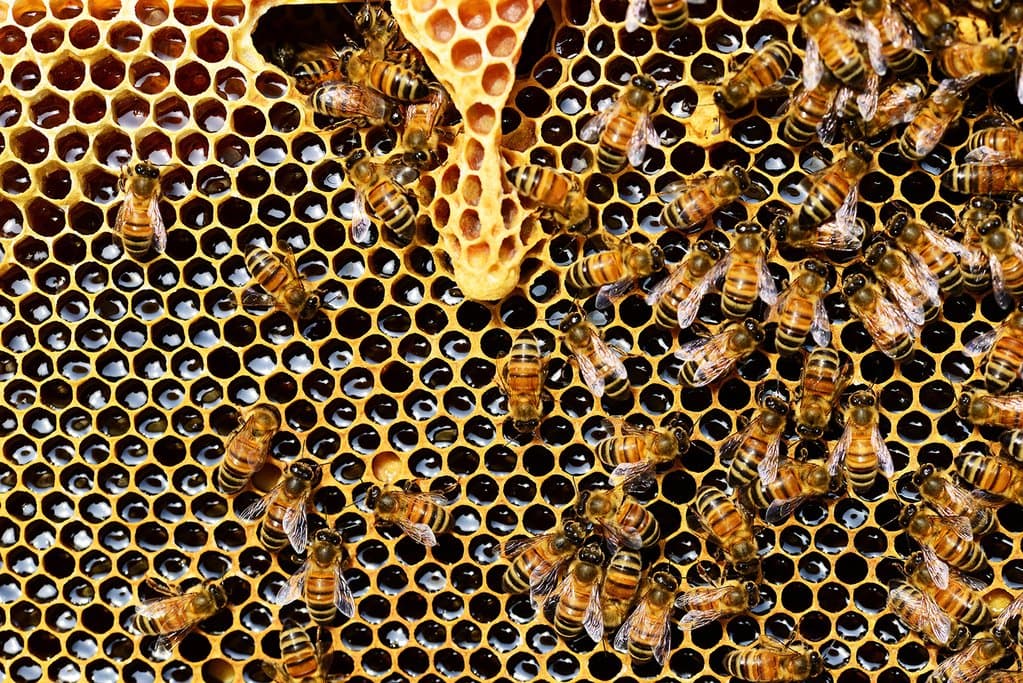
Beeswax (INCI: Cera Alba) is a fatty substance that honeybees produce to build their honeycombs. From this, bees create the 'cells' in which honey and pollen are stored.

Beeswax is a firm substance with a high molecular weight. For this reason, Beeswax melts between 62 and 65 °C. This high melting point makes it an ideal product for giving cosmetic products more firmness. But other special properties also make Beeswax a valuable ingredient in care products, among other things.

How was Beeswax used in the past?

Beeswax has been used by people from various cultures for centuries. These people used it for all sorts of purposes.

For example, Beeswax was used as far back as the Stone Age to fill cavities in the teeth. Beeswax was soft enough to press into a molar, but after solidifying it was ultimately also hard enough to eat with.

Beeswax was also widely used in shipping. Vikings, in particular, were great enthusiasts of Beeswax. They used the wax to seal cracks and holes in their wooden ships.

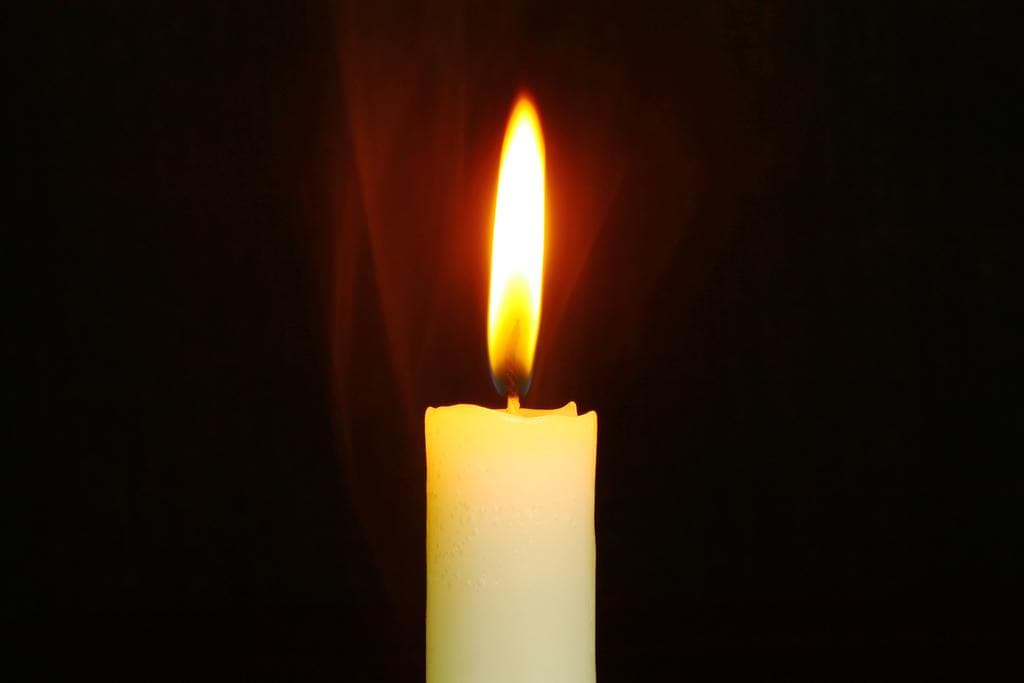
In the Middle Ages, it was discovered that you can make candles from Beeswax. Previously, candles were mainly made from animal fat. Beeswax candles were popular because the scent was more pleasant than that of animal-fat candles. In the Middle Ages, Beeswax candles were only seen in wealthy households and in churches because they were very expensive.

What makes Beeswax special?

Beeswax, like honey, has many benefits for our hair and skin. Beeswax contains hydrating components such as vitamin A. These components help your skin retain moisture, keeping it youthful and firm.

Moreover, Beeswax has anti-inflammatory properties that soothe irritated and red skin. For example, it also helps against pimples and blackheads. This is because Beeswax is able to nourish and hydrate the skin without clogging the pores. In addition, Beeswax has antibacterial properties that ensure the skin is well cared for. For these reasons, among others, Beeswax is often added to skincare products.

Beeswax also helps against irritating substances from outside. It acts as a sort of protective layer when applied to the skin. In extreme weather conditions, Beeswax can therefore give your skin extra protection.

Beeswax also has many benefits for the hair. The esters, fatty acids and Vitamin A in Beeswax provide anti-inflammatory properties that deeply nourish the scalp and hair follicles. This means Beeswax can promote hair growth. But Beeswax can also prevent hair loss. This is because Beeswax is able to retain moisture in the hair and nourishes it. It is therefore an ideal moisturiser for your hair.

The melting temperature of Beeswax is 60 to 65 °C. Because Beeswax is a natural product, this is a melting range, not a melting point. From as low as 40 °C, Beeswax is soft and malleable.

How is Beeswax made?

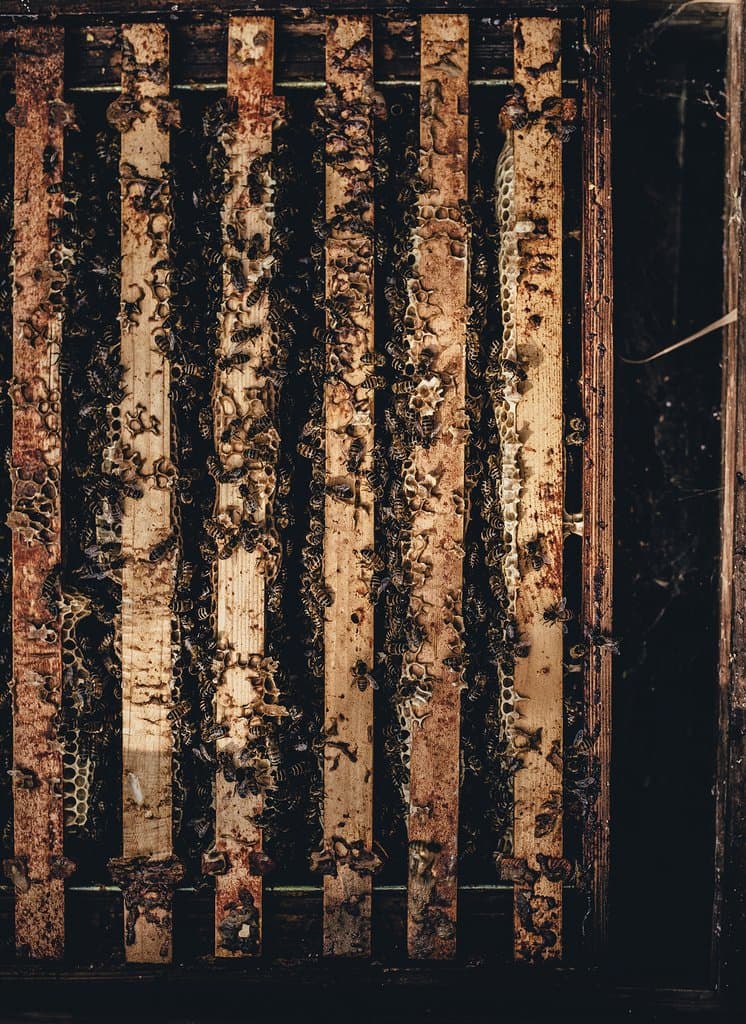
As mentioned earlier, Beeswax is made by bees. Bees turn this wax into a comb in which they ultimately store honey and pollen. While producing Beeswax and making the combs, the bees eat a lot of honey. They need this because they use a lot of energy during this process. That causes their body temperature to rise, which makes the Beeswax in their body liquid. Through small glands on the underside of the bee, the Beeswax drips out of the bee's little body. Once the wax has left the bee, it gradually becomes a hard substance. Finally, the bees create the typical hexagon-shaped combs with their tiny legs.

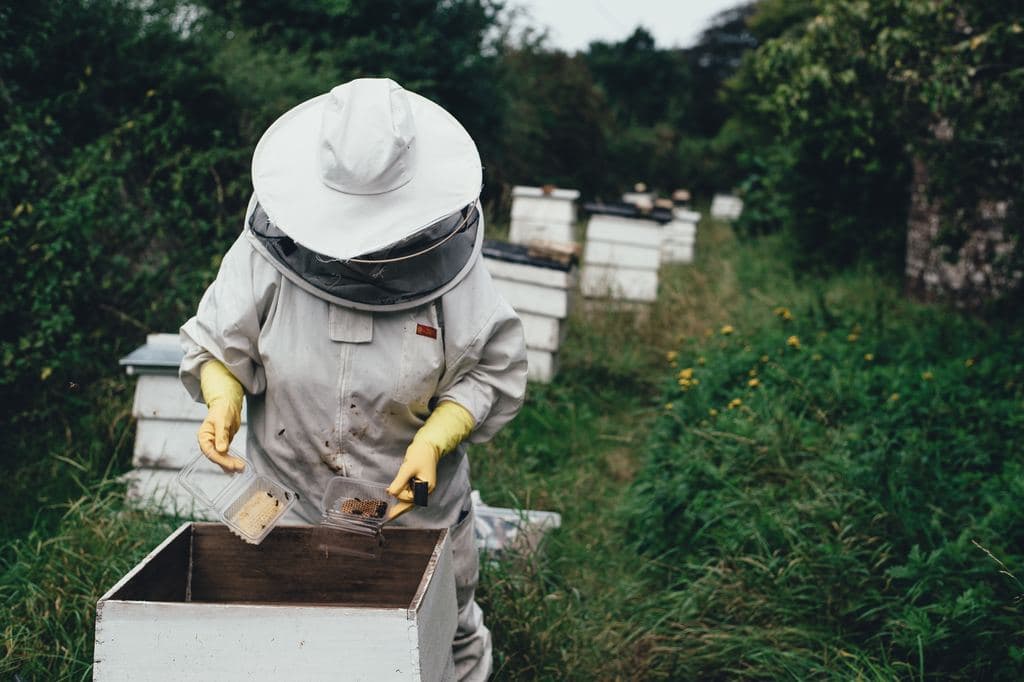
Once the bee has done the hard work, the beekeeper takes over the process. With a hot knife, the beekeeper cuts the combs loose. Once enough combs have been collected, they are melted in a large melting pan. Through this melting process, beekeepers can easily separate the wax from the honey. The honey sinks to the bottom during melting. Once everything is melted, the wax is poured into iron containers. These containers are comparable to the baking tins you use to make cakes. In these containers the wax solidifies, so that you ultimately have bars of Beeswax.

These bars are sold to various industries where they are processed into all sorts of products. Think, for example, of candles and cosmetics. The wax is of course refined and purified before being processed.

The video below clearly explains the melting process of Beeswax.

What is the difference between white and yellow Beeswax?

There are different colours of Beeswax. The two most common colours are white Beeswax (Cera alba) and yellow Beeswax (Cera flava). Why the colour differs is very easy to explain.

Initially, Beeswax is colourless. Beeswax is transparent when it comes out of the bee's body. But then bees add pollen and propolis to the Beeswax, giving it a yellow to golden-brown colour. Propolis is a substance made by bees from the buds and sap of plants and trees.

To make white Beeswax, the yellowish Beeswax is purified and bleached.

Beeswax can be bleached in various ways.

Using:

Activated charcoal

Activated charcoal is able to absorb the yellow colour of the pollen and propolis from the Beeswax. In this process, activated charcoal is therefore added to Beeswax, so that the Beeswax ultimately turns white.

Sunlight

It is also common to bleach Beeswax with sunlight. You can essentially do this at home too. To do so, you place the Beeswax in a spot where it is exposed to plenty of sunlight throughout the day. You will see that the yellowish colour of the Beeswax fades more and more. Depending on the strength of the sun, the bleaching process can take 1 to 5 weeks. In the Netherlands and Belgium it will probably take a bit longer given the limited sun.

Chemicals

Sometimes chemicals are also used. This is a quick and easy way to bleach Beeswax. Chlorine or peroxide is used for this. These two substances are well-known bleaching agents and are often used to bleach all sorts of different products.

Why is Beeswax bleached?

Beeswax is bleached so that it can also be used in food and medication. The only difference for use in cosmetics is the colour. White Beeswax is easier to mix with products that have a colour. If you want to make a natural red lipstick, for example, it is better (and easier) to use white Beeswax.

In short: White (bleached) Beeswax is decoloured yellow Beeswax.

Is Beeswax vegan?

Although Beeswax is a natural product, it is not vegan. This is because Beeswax is made from a fatty substance that bees produce. It is therefore an animal product. There are, however, various alternatives to Beeswax that you can use to make plant-based cosmetics, for example.

Alternatives:

Soy wax
Candelilla wax
Sunflower wax
Carnauba wax

Naturally, these alternatives do not have 100% the same properties as Beeswax. For example, the melting point is not at the same temperature. But for making lip balms, ointments and other cosmetic products, the above alternatives are very usable.

How do you know that Beeswax is pure?

Because the number of beekeepers is declining, it is becoming increasingly difficult to obtain pure Beeswax. To make Beeswax faster and easier, pure Beeswax is sometimes mixed with synthetic wax (paraffin).

You can distinguish pure Beeswax from impure Beeswax in the following ways.

Scent

Pure Beeswax has a typical scent. The scent is not very strong, but has a slightly sweet aroma and faintly resembles honey.

Fracture surface

You can also tell whether a block of Beeswax is pure by the way it breaks. Pure Beeswax has a fracture surface that is not perpendicular to the surface. The break of pure Beeswax is rather slanted and a little 'dull'. If a broken block of Beeswax shines, it can be a sign that it contains paraffin.

What can you use Beeswax for?

Beeswax is used in many different cosmetic products because it makes a product easier to use.

Lip balm & lotions

Beeswax is ideal to use as an ingredient in homemade lip balms and lotions. It makes your product easier to use because it becomes a bit firmer and thicker. This is because Beeswax only melts at higher temperatures (around 65ºC).

But Beeswax also consists of valuable substances that are ideal for our skin. Beeswax contains hydrating components that help your skin and lips retain moisture. This means you are less likely to suffer from dry skin or chapped lips.

Moreover, Beeswax gives the skin and lips an extra protective layer so that cold, wind and rain are kept out. Combined with a nourishing butter and oil such as shea butter, coconut oil, argan oil or jojoba oil, it is a perfect match for lip balm.

In the video below, we explain step by step how to make lip balm with just three ingredients, one of which is of course Beeswax.

Beeswax must first be heated and melted before you can use it in care products. Do this au bain-marie so that the wax does not get too hot. Once the wax is liquid, add the other oils you want in your product and heat everything for a little longer. Then pour into a glass jar, bottle or lipstick container and let it cool down. After that, your product is ready for use.

Are you curious why lip balm with Beeswax is better than ready-made lip balm? Then be sure to read our extensive blog about lip balm here:

Candles

With Beeswax it is possible to make candles yourself. All you have to do is pour the melted Beeswax into a glass jar with a wick and let it harden. For a nice scent, you can optionally add drops of essential oil with some coconut oil.

The video below visually shows how to make candles with Beeswax.

What does Beeswax look like?

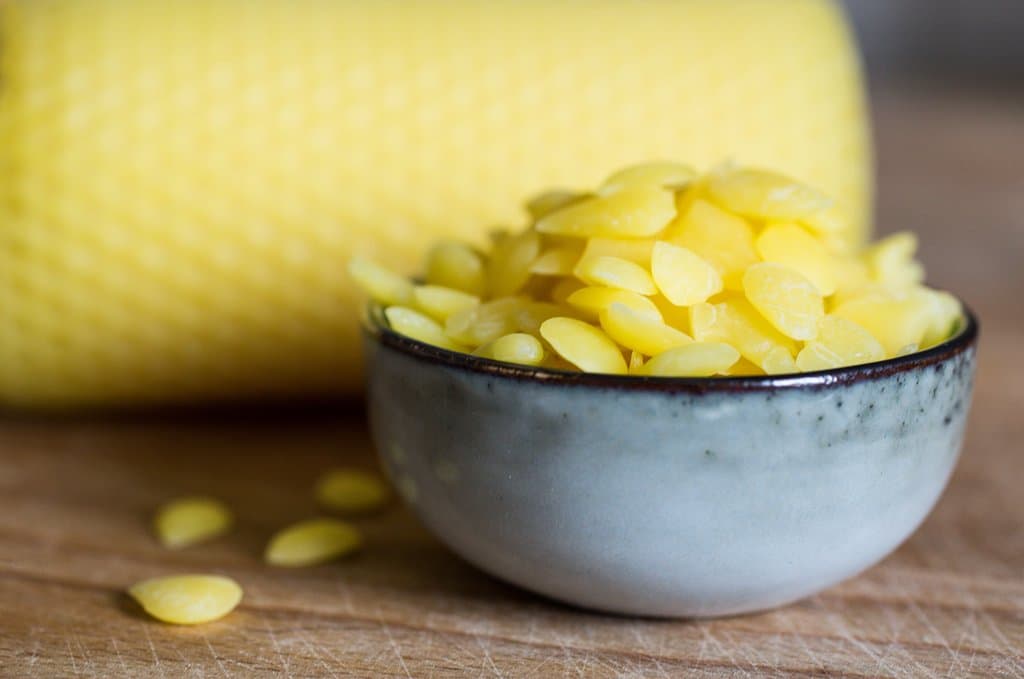
Depending on where and how Beeswax is produced, the colour can vary from (light) yellow, beige or brown. Beeswax is sometimes also bleached, which can give it a white colour.

Beeswax has a light scent that is somewhat reminiscent of sweet honey. The more often you melt Beeswax, the less strong the scent becomes.

How can you best store Beeswax?

Beeswax is best stored in a resealable container. Unblended, Beeswax generally keeps for 36 months, but usually even longer. If you mix Beeswax with other ingredients, the product keeps for a shorter time. The exact shelf life depends on the other ingredients.

Where can you buy beeswax?

Beeswax (Organic, yellow)

Beeswax (Organic, yellow)

€14.99

Beeswax (Yellow)

Beeswax (Yellow)

€7.99

Beeswax (White)

Beeswax (White)

€7.99