New: No BS Deo stick, up to 40% off Shop now
Do you want to stay updated on offers, (giveaway) actions and recommendations? This way you won't miss out on anything! Not too often, we promise.


Working with Shea Butter in recipes can bring a few challenges. In this blog you'll find all the tips & tricks to avoid them. We also share 3 different recipes you can make in under 10 minutes.
Every day we get lots of questions about Shea Butter.
Why is my Shea Butter recipe so grainy?
How do I make Shea Butter recipes that feel less greasy and sticky on the skin?
How do I mask the nutty scent of Shea Butter? (Because let's be honest, not everyone loves that familiar Shea Butter smell)
How do you work Shea Butter into a recipe?
In this blog you'll find the answers to these questions.
When I first started formulating, I really only had Shea Butter, a few oils, essential oils and a couple of waxes, and I used whatever I had lying around in the cupboard at home. Like almost every DIYer, I didn't start out with emulsions, pH measurements and complicated recipes. I was, and still am, a big fan of water-free formulations. Because I have sensitive skin myself, water-free products work best for me. They calm my skin, keep it supple and hydrated, and even out my skin tone. Since becoming pregnant (almost 6 months already!), I've switched to a completely water-free skincare routine, because I want to avoid irritants as much as possible and give my body and the little girl in my belly the best possible care.
- Malou

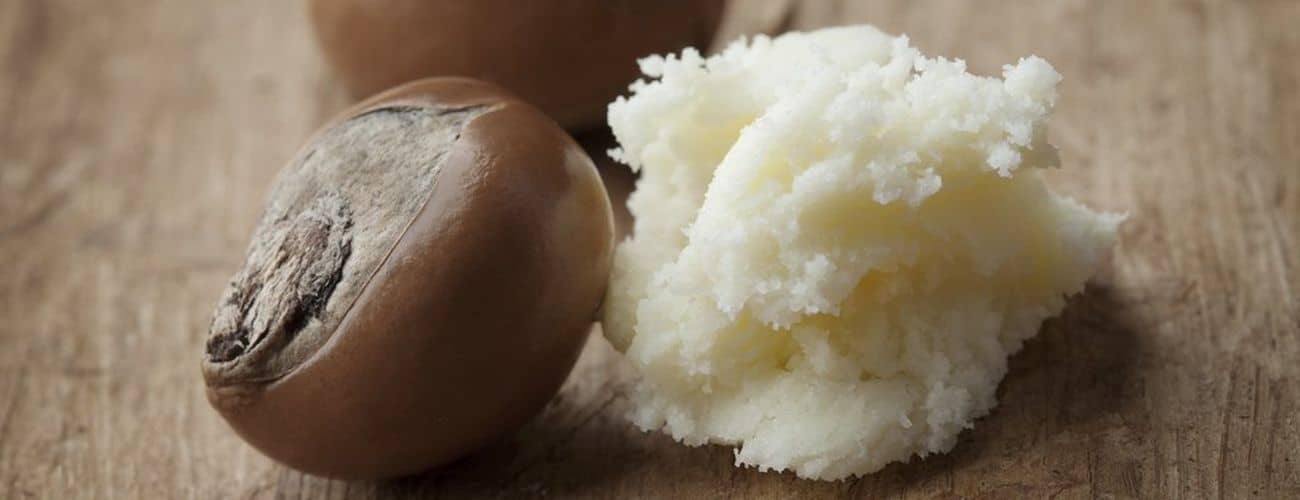
Grainy Shea Butter is something most people who have made a recipe with Shea Butter will recognise. Shea Butter tends to turn grainy in recipes. Why does this happen? Shea Butter is made up of different fatty acids that behave differently at certain temperatures. Shea Butter consists of:
Palmitic acid: 4%
Stearic acid: 38%
Oleic acid: 49%
Linoleic acid: 5%
Stearic acid and palmitic acid are saturated fatty acids. They are solid at room temperature. Oleic acid and linoleic acid are unsaturated fatty acids. These are liquid at room temperature.
The combination of these different fatty acids can cause Shea Butter to turn grainy in certain recipes. That's because each of these fatty acids has a different melting and solidifying temperature. The cooling process therefore plays a crucial role in determining the consistency of Shea Butter.
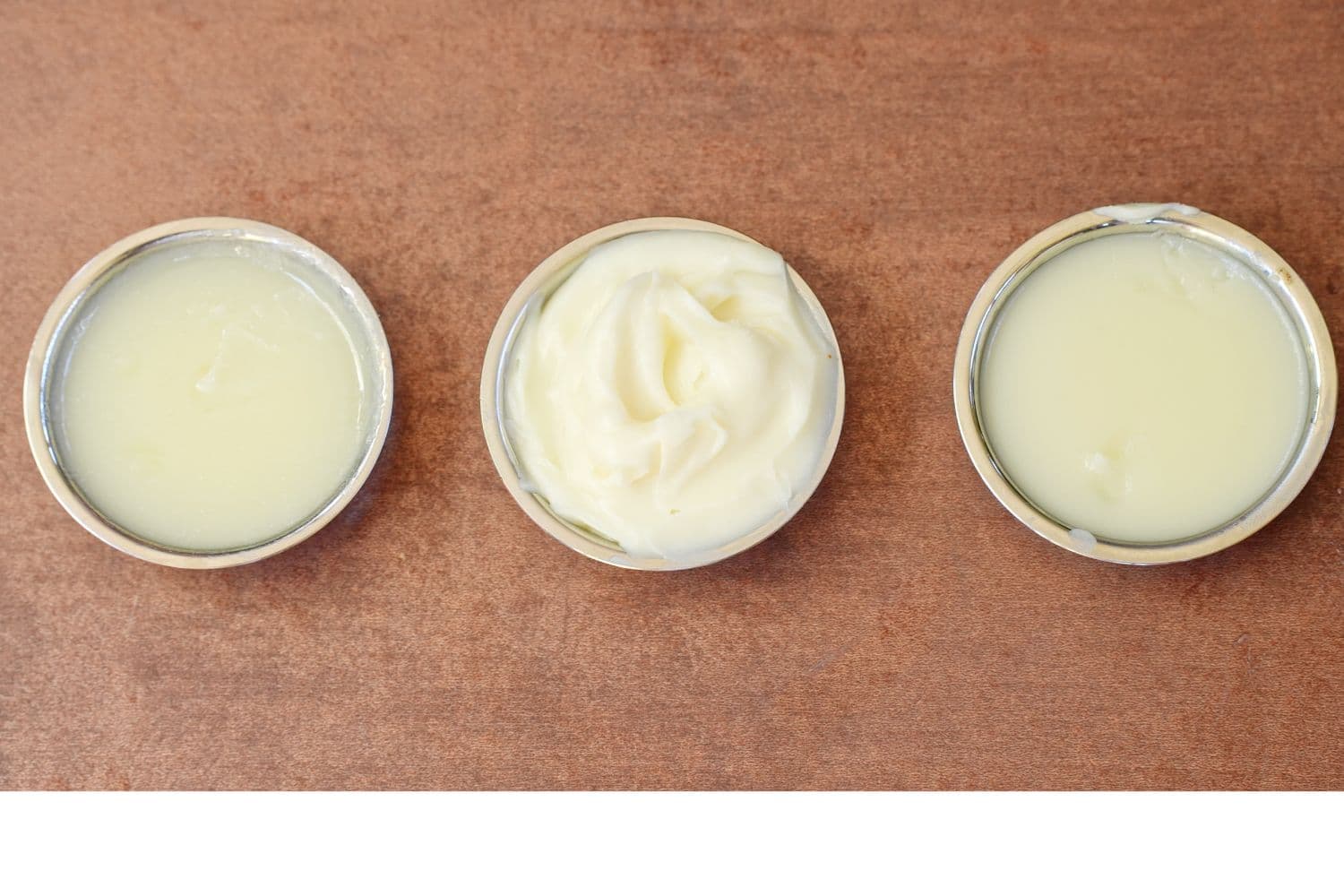
If Shea Butter cools too slowly, for example when you leave it at room temperature, the stearic acid will solidify first. This creates small crystals that eventually spread throughout the whole mixture, giving you a grainy end result. To prevent this, it's important to cool Shea Butter quickly and stir constantly while it cools.

We're often asked how to make a recipe with Shea Butter that feels light on the skin. After all, walking around for half an hour in the morning with a heavy oil on your skin isn't exactly pleasant. It can also leave marks on your clothes and make your skin feel sticky. Not great.
Whether a recipe turns out lightweight depends largely on how much Shea Butter goes into it. If most of the recipe consists of Shea Butter, the end result will probably have a similar consistency to pure Shea Butter.
There are ways to make water-free recipes with Shea Butter that feel light on the skin.
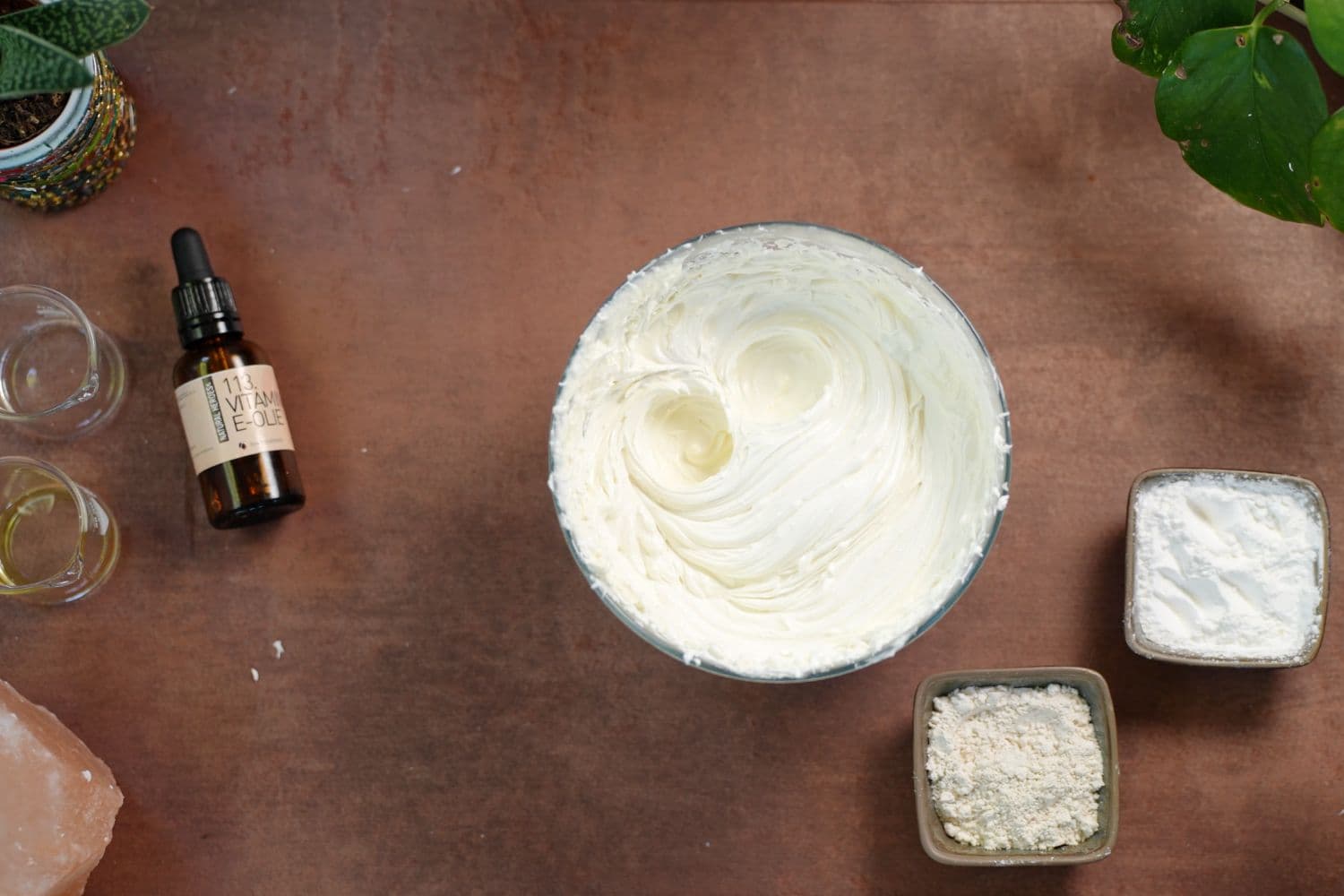
To counter the greasiness of Shea Butter, you can use Arrowroot Powder, Starch or Colloidal Oat Powder for example. You'll also find these in the Oat & Shea Fluff recipe. These ingredients make the butter feel velvety soft and less greasy on the skin, so applying it feels truly luxurious.
For whipped Body Butter recipes, you can mix Mango Butter or Kokum Butter with Shea Butter. Mango Butter feels lighter on the skin than Shea Butter and is absorbed more easily.
You can also make a Shea Butter Bar instead. Just add a little wax or fatty alcohol and some other hard butters to make it firm. That way you don't apply too much at once, so it feels much less greasy.

Shea Butter has a smoky, nutty scent. Some people love it, while others find it very unpleasant and even say it smells like a farm or a goat.
It should never smell sour or sharp, though. That means the seeds weren't dried properly during the manufacturing process, which results in an unpleasant smell.
First of all, you could mask the scent by using a mix of unrefined Shea Butter and refined Shea Butter. Refined Shea Butter has no scent. You can also mix it with Mango Butter to reduce the scent.
Or add essential oil. Floral, spicy and citrusy oils work best for this. For example, you could combine Lemon, Shea and Vanilla. That gives a lovely luxurious scent.
Do you have any more questions about Shea Butter? Let us know at support@naturalheroes.nl