Ready-made products for your natural routine..
Do you want to stay updated on offers, (giveaway) actions and recommendations? This way you won't miss out on anything! Not too often, we promise.


Salicylic acid, glycolic acid, lactic acid or just a scrub? Exfoliants are the ideal addition for beautiful, healthy and radiant skin. Exfoliating means removing dead skin cells. What exactly is an exfoliant and why should you exfoliate? In this blog, we answer all your questions and also share options for a natural variant.
Exfoliants have been used in skincare for centuries. From ground gemstones and sand to baths in milk (lactic acid). All to remove dead skin cells and stimulate cell renewal.
You have probably come across them before. Scrubs, peels, exfoliants, but what is the difference? An exfoliant is a product that removes dead skin cells from the skin. This can improve the skin's texture, reduce clogged pores and diminish fine lines and wrinkles. Exfoliating can be done in three ways: mechanically, enzymatically (enzymatic exfoliants contain enzymes that dissolve the dead skin cells) or chemically.
Of course, your skin can renew itself perfectly well, but a little help is never a bad thing, right?! Especially when you have dull, dry skin, fine lines or spots and impurities, exfoliating can be good for your skin. Accumulated (dead) skin cells can cause a dull complexion or spots and impurities.
To remove these dead skin cells, you use an exfoliant. This gives your skin the chance to form a new layer again. Your skin becomes smoother and can prevent spots and impurities.
And your skin gets a real boost from it!

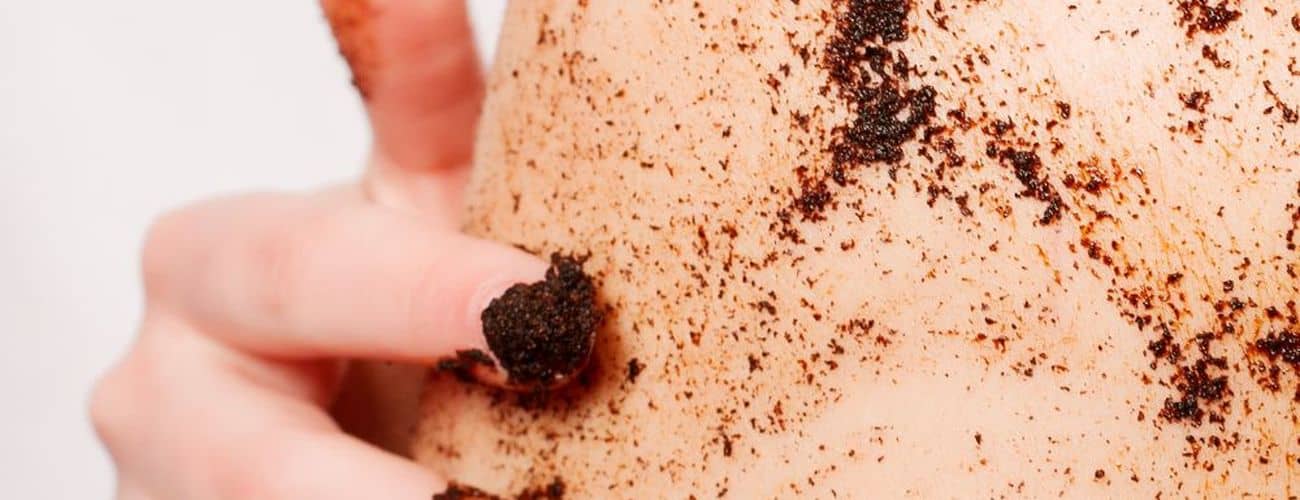
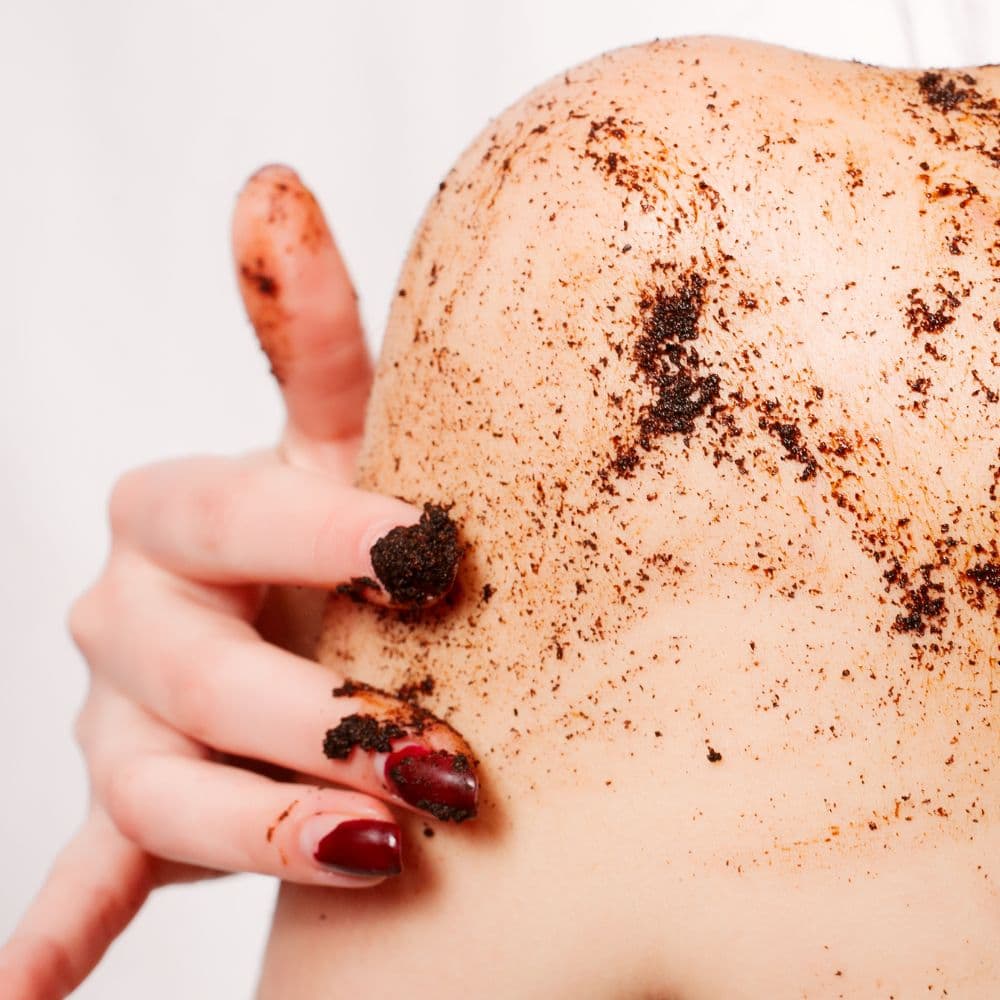
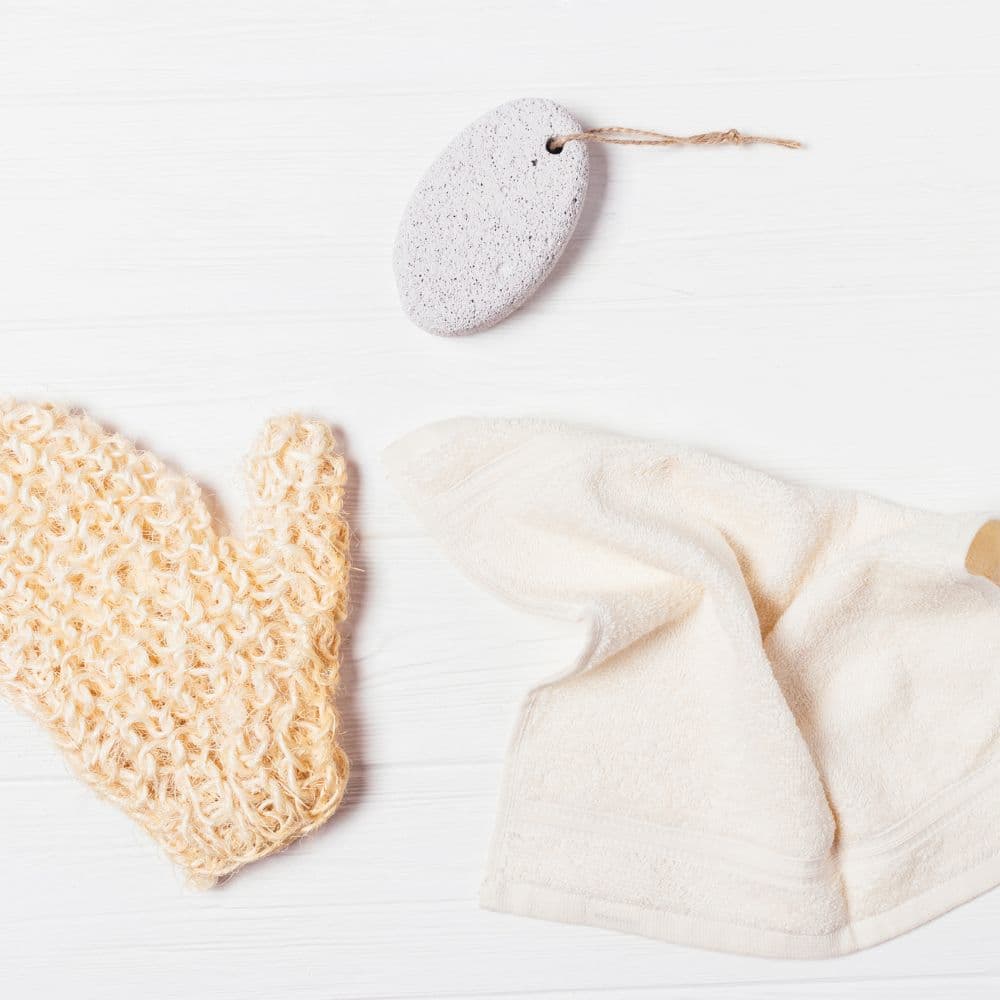
Scrubs : A scrub is a physical exfoliant that consists of small granules that scrub the dead skin cells off the skin's surface.
When using scrubs, you should be careful not to damage the skin. Too much friction can irritate and dry out the skin. Always massage it in gently.
For the face, there are mild scrubs such as the bamboo scrub. This scrub comes from fine fibres of bamboo and after use your skin feels super soft! Jojoba seeds can also be used as a scrub. These come from the Jojoba shrub.
Would you rather get started yourself? You can very easily make a natural scrub with, for example, sugar, salt or ground coffee.
Want to make a scrub for your body? Then sea salt is a really nice option. Mix sea salt with coconut oil until you have a thick paste (add a few drops of essential oil if you like) and apply this to your body. Leave it to soak in for a few minutes and rinse off again.

Chemical exfoliants dissolve the ‘glue’ that holds dead skin cells to the surface of the skin. This allows the skin cells to detach easily and the dead skin cells to flake off.
Chemical exfoliants can be divided into Alpha Hydroxy Acids (AHAs) and Beta Hydroxy Acids (BHAs).
Glycolic acid: this acid falls under the AHAs, or fruit acids. Glycolic acid consists of very small molecules and can therefore penetrate deep into the skin. It also helps the skin to retain moisture, so the skin is better hydrated. It refines the skin's texture, reducing superficial fine lines.
Tips for using glycolic acid: when you want to use glycolic acid in your DIY creation, you can add 8-10% to the water phase. Do note: glycolic acid works best in a product with a pH value of 3.8-4.4. A pH value that is too high causes glycolic acid to neutralise and thereby lose its exfoliating effect.
Malic acid: also falls under the AHAs and is a very mild acid with a slight exfoliating effect. It also has a hydrating and brightening effect.
Tips for using malic acid: when you combine malic acid with other acids, it will enhance the effect of those acids. Add 1-2% to the water phase of your product. Works great in combination with glycolic acid.
Lactic acid: this acid also falls under the AHAs. Lactic acid is a mild acid that exfoliates, hydrates and improves the skin's texture. It also supports irritated and sensitive skin.
Salicylic acid: this is a BHA and it penetrates well through an (oily) skin layer, where it reduces the buildup of sebum and dead skin cells deep in the pores. This acid is therefore very suitable for oily skin.
For oily skin, you can also use Willow bark extract . This is a plant-based form of salicylic acid. Like salicylic acid, it has purifying properties and is therefore very suitable for oily skin. Willow bark contains the component salicin. This is not exactly the same as salicylic acid, but it does have equivalent properties on the skin. It is exfoliating and provides fresh and radiant skin.
Tips for using willow bark extract: add 1-2% to your recipe. For optimal effectiveness, the pH value of your product should be between 4 and 6.5.

Written by: Helena