Naturally, after learning this I also wanted to replace my make-up with 100% body-friendly versions as quickly as possible, and unfortunately those are often still hard to find in shops.
After some research, I started experimenting with natural ingredients. It turned out to be quite simple to make a powder myself, so I just had to try it!
Since I have been wearing less and less make-up over the past few years, but occasionally like to have something light and natural on my face that does not clog my pores, this recipe for a loose powder seemed ideal. It is best to determine, mix and test the ratio of the ingredients I list on your own face, since skin tone and type naturally vary for everyone. Use very finely ground powder, otherwise you will see the particles sitting on your skin, or it will not adhere quite right.
Ingredients
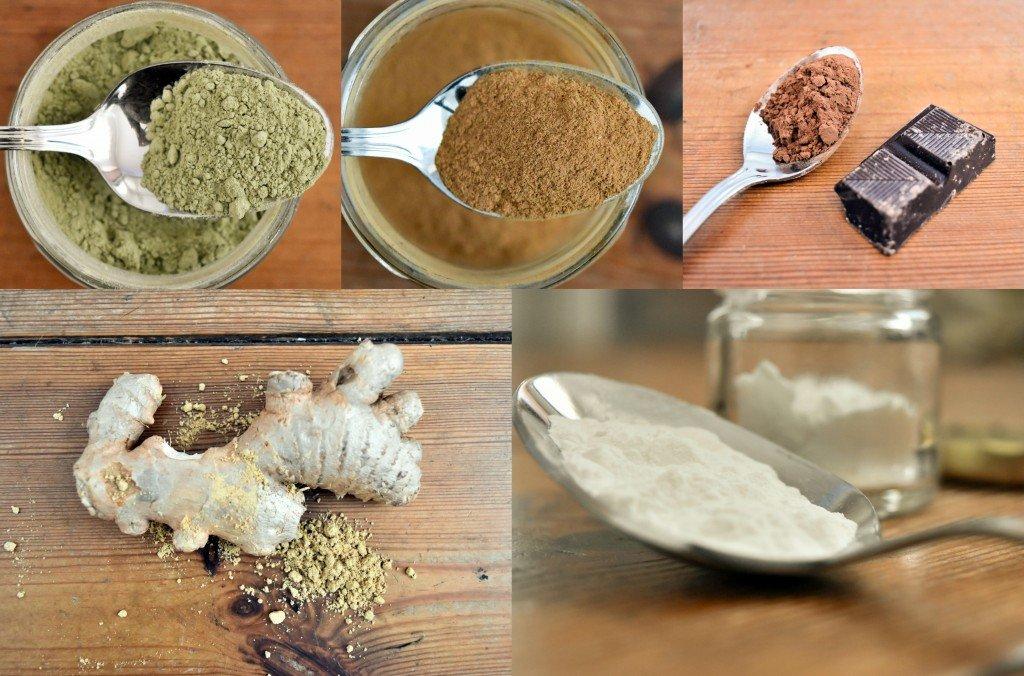
Arrowroot powder - gives a matte finish and is a good base to mix the colours into
Cocoa powder - full of antioxidants and good for your skin, gives a brown tint to your powder
Cinnamon powder - has a slightly lighter brown shade than cocoa and also gives your skin a boost
Ginger powder - if your skin has a yellow undertone, ginger gives your powder a good colour
Wheatgrass powder - with its green colour, wheatgrass neutralises a (too) red complexion; green compensates for red! Of course, do not use too much, you do not want a green foundation.
How to make it
Start with 1 tablespoon of arrowroot powder and put it in a glass or stone bowl.
Depending on your skin tone, gradually add small amounts of the other ingredients until you have your ideal match. Dip your finger into the powder mixture and rub it across the back of your hand to see whether the colour is right (be sure to test it in daylight!). Keep mixing if the colour is not right straight away.
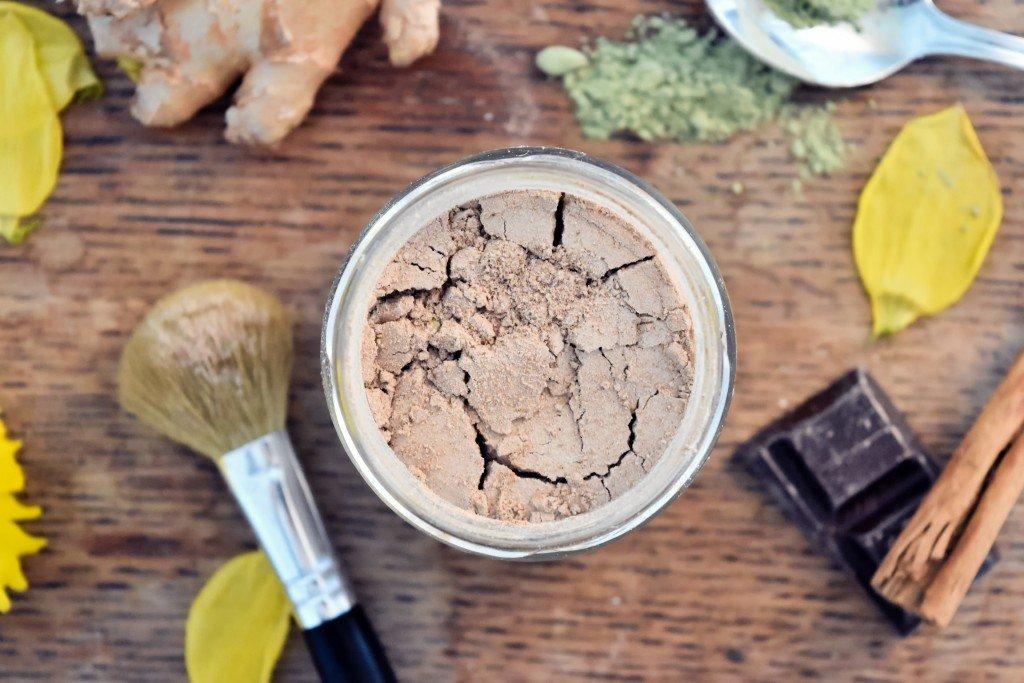
Once you have found the right colour, put it in a jar and then use it like any other loose powder foundation; dust it loosely over your face with a powder brush.
Preferably go for organic ingredients so you also avoid pesticide residues. On top of that, organic products are of course far better for the environment!
Have you ever tried a homemade natural foundation? Or tested this recipe? We would love to know! Let us know your experiences below.
Author: Hannah van der Horst

 You can unsubscribe at any time.