How is African Black Soap made?
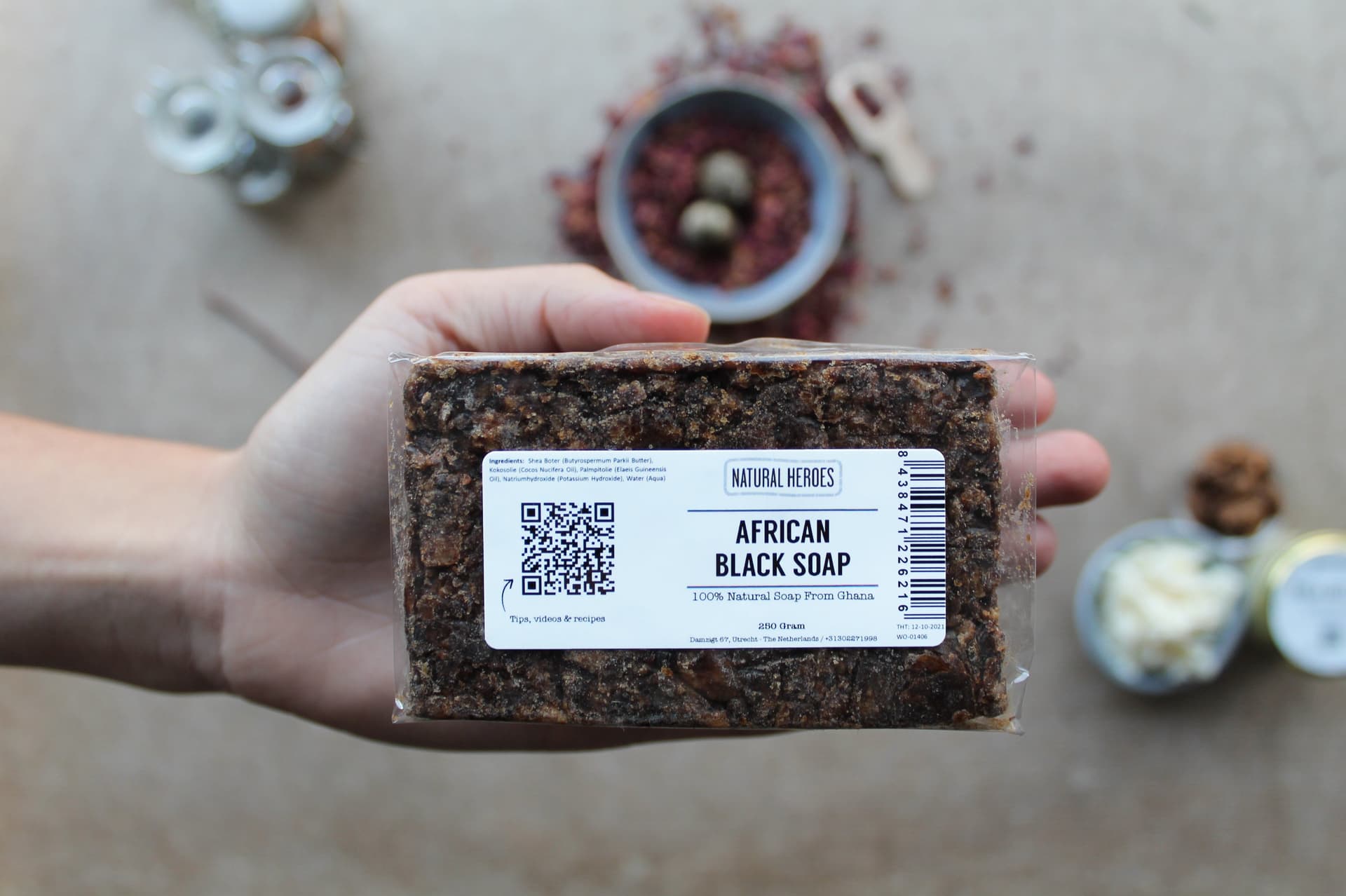
African Black Soap is made from locally harvested African plants and fruits such as African plantains, cocoa pods, palm leaves and bark from the shea tree. The ingredients are dried in the sun or roasted. On top of that, organic coconut oil, palm oil or shea butter can also be added. The mixture is then set aside so it can “cure” in the sun.
The soap is traditionally made by West African village women. Every tribe has its own secret recipe and production methods, passed down from generation to generation. In many West African countries, the soap is made in a 100% natural and organic way. But there are also many commercial soaps from Western countries that often contain artificial additives, including fragrances and colourants. These soaps are often rock hard, have an even dark colour and dry out your skin.
So when you want to try African Black Soap, you need to know exactly what you're buying. Always get advice first. Once you've got your hands on the real thing, African Black Soap works heroic wonders.
Author: Hannah van der Horst

 You can unsubscribe at any time.