Ready-made products for your natural routine..
Do you want to stay updated on offers, (giveaway) actions and recommendations? This way you won't miss out on anything! Not too often, we promise.


With a high dose of antioxidants that give your skin a boost!
With an area of almost 7 million square kilometres, the Amazon region is the largest of its kind on earth. It stretches across 9 countries: Bolivia, Brazil, Colombia, Ecuador, French Guiana, Guyana, Peru, Suriname and Venezuela. The vast tropical rainforest is also called 'the lungs of the planet' and is embraced by the Amazon River.
No less than 9% of the population in this region is made up of Indigenous peoples. Spread across no fewer than 400 tribes, the Indigenous population lives in small villages along the river. Some of these tribes are still completely cut off from the outside world and live off what nature has to offer them. For these tribes, living close to nature is completely normal. Something we in the West can learn a lot from.
In this blog post, I'll tell you about 5 special raw ingredients from the Amazon: Cupuaçu butter, Cacao butter and Sacha Inchi oil from Peru, and Açaí berry oil and Krappa (Andiroba) oil from Brazil. What's so special about these ingredients? And what were they traditionally used for? You'll also find out what skin benefits they bring, and at the end I'll treat you to a delicious body butter recipe with ingredients from this blog post!
Botanical name: Theobroma grandiflorum
Family: Malvaceae
Plant part: Seeds
INCI: Theobroma grandiflorum seed butter
You pronounce Cupuaçu as: Koo-poo-ah-soo. The Cupuaçu tree is a tropical tree that can grow up to 20 metres tall. The tree grows in the Amazon region, mainly in Bolivia, Colombia, Brazil and Peru. Our Cupuaçu Butter comes from Brazil, where the tree is also called "cupuaçuzeiro", "cupuaçueiro" or "cupu". Cupuaçu belongs to the mallow family (Malvaceae), just like cacao. So it's no surprise that Cupuaçu smells like a slightly tangy cocoa butter.
Traditional use
The melon-like pulp of the Cupuaçu fruit is used to make ice cream, jam, juices and liqueur. The seeds are also used to make a chocolate-like substance known as "cupulate". The locals also call the Cupuaçu tree "white cacao".
The Cupuaçu tree starts with planting a seed in the ground. Just like the cacao tree, it takes a few years before fruit grows on the tree. Sometimes it gets a helping hand by letting a small cutting grow on an existing strong trunk of another Cupuaçu tree. This process is known as grafting. This way, the trees bear fruit quickly and can be harvested after just 2 years. The fallen fruits are then broken open and the seeds are cold-pressed into Cupuaçu Butter.
Nourishes dry and ageing skin.
Powerful antioxidant thanks to its high content of phytosterols and arachidonic acid.
Supports the skin's lipid barrier.
Cares for dry hair and gives it shine and suppleness.
Protects skin and hair against moisture loss.
Botanical name: Euterpe Oleracea
Family: Arecaceae (palm family)
Plant part: Pericarp
INCI: Euterpe Oleracea Fruit Oil
This little berry, which you pronounce as ah-sah-EE berry, grows on açaí palm trees along the riverbanks of the Amazon region in Brazil. The açaí tree can grow 15 to 25 metres tall, and the fruit that grows on it is one of the most important export products of the Brazilian food industry. In fact, 85% of the world's açaí berry production comes from the Amazon region.
Traditional use
Global trade in açaí fruit only took off around the year 2000, but locals have used the açaí berry in food and care for centuries. The Indigenous people of South America used the dark purple berries for their nutrients and the oil in their daily care.
The açaí berry has a deep, dark purple skin and yellow flesh around a huge pit. No less than 80% of the berry is pit. To make oil from it, these large pits are collected and cold-pressed. With cold pressing, the pits aren't heated, so all the valuable properties of the seeds stay intact.
Strong antioxidant for the skin.
Cares for mature skin.
The linoleic acid in the oil supports the skin barrier.
The palmitic acid it contains helps the skin hold on to moisture.
A high content of oleic acid helps nourish and hydrate the skin.
Botanical name: Carapa guianensis
Family: Meliaceae
Plant part: seeds
INCI: Carapa Guaianensis Seed Oil
Krappa, also known as crabwood, is a tree species that is common in Central America, the Caribbean and the Amazon region. It is a tall tree that can grow up to 40 metres high. It is one of the tallest trees in the Amazon and can be recognised by its many large leaves and a trunk that is a whole metre thick. Krappa grows in areas that receive 1200 to 3200 ml of rain per year, which is why it mainly grows on the edges of swamps and along rivers that flood from time to time. Experiments have shown that this tree can stand in flooded areas for more than three months without dying.
Traditional use
Krappa oil belongs to the same family as Neem oil (the Meliaceae family) and has been used for centuries by the indigenous people of the Brazilian Amazon to care for their skin.
To make one litre of oil you need a whopping 12 to 27 kilograms of seeds! A large tree can carry up to 200 kilograms of seeds. These seeds are hidden inside the Krappa fruit. The Krappa fruit looks a bit like a chestnut and is 7 to 16 centimetres in size. One fruit contains eight to sixteen seeds and weighs between 10 and 30 grams on average.
The fruits are not picked, but only collected once they have fallen from the tree. The seeds are then cold-pressed into Krappa Oil.
Nourishes dry and sensitive skin thanks to the palmitic acid it contains.
Linoleic acid cares for the hair.
Absorbs well into the skin thanks to its oleic acid.
Calms and soothes the skin.
Keeps the skin supple.
Cares for blemish-prone skin
Soothes irritated skin.
Botanical name: Plukenetia volubilis
Family: Euphorbiaceae
Plant part: Seeds
INCI: Plukenetia Volubilis Seed Oil
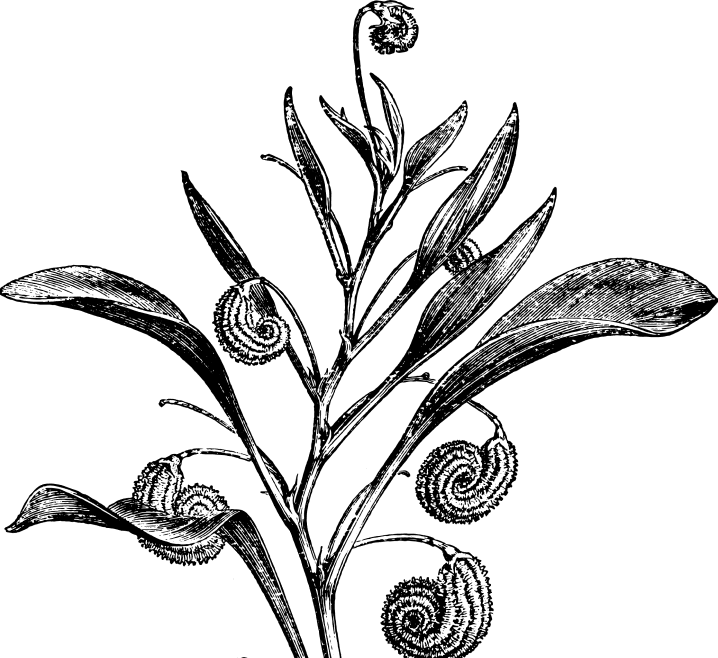
The Sacha Inchi shrub, which you pronounce as sah-chah in-chee, is originally from the Peruvian Amazon, but nowadays it is also widely grown in Thailand, in several Caribbean regions and in other countries with a rainforest climate such as Bolivia, Colombia, Ecuador, Suriname and Venezuela. This shrub-like plant can grow up to 2 metres tall and is comparable to the grapevine. It can be planted all year round, flowers 5 months after planting and bears fruit just 3 months later. The fruit looks a lot like star anise. Each of the separate little chambers of the 6-pointed star-shaped fruit holds a sacha inchi seed.
Traditional use
The Sacha Inchi nut is also called the Inca nut or sacha peanut. In the Quechua language, "Sacha" means mountain and "Inchi" means peanut. The nut was first cultivated by the Incas 3000 years ago. In the Inca empire, the Inca nut was roasted, made into delicacies and prized for its high nutritional value.
Sacha Inchi Oil is cold-pressed from the seeds of the Plukenetia volubilis plant. Once the fruit has turned dry and brown, it is ready to be picked. The stem and husk are then removed, leaving a white seed. The seeds are then cold-pressed into oil with an expeller press.
Powerful antioxidant thanks to its high Vitamin E content.
Very suitable for caring for blemish-prone skin.
A dry oil that absorbs quickly.
Cares for rough, dry and flaky skin.
Consists of 39% linolenic acid (Omega 6), a fatty acid that cares for mature skin.
Protects the skin against moisture loss and free radicals.
Botanical name: Theobroma cacao
Family: Malvaceae
Plant part: Seeds
INCI: Theobroma Cacao Seed Butter
The cocoa tree grows in tropical regions of Africa, Asia and South America. Our Cocoa Butter comes from Huánuco, Peru, in the Amazon region. The cocoa tree can live for more than 50 years and grow 5 to 10 metres tall. The cocoa pods grow directly on the trunk. This phenomenon is known as cauliflory. The tree only starts bearing fruit after 4 years of growth. A cocoa tree produces about 50 pods per year.
The Spaniard Fernando Cortez was the first to bring large quantities of cocoa beans to Europe. A few centuries later, in 1828, Casparus van Houten from Amsterdam discovered how to remove the fat from the beans, which produced cocoa powder and cocoa butter. This was the basis for chocolate as we know it today!
Traditional use
The cocoa tree originally comes from Central America, and the ancient Aztecs associated cocoa with the god of rain and fertility. As far as we know from human history, cocoa was first used by the Olmecs, one of the first great Mexican civilisations. It is said that they mainly consumed cocoa in the form of a drink. The cocoa pods were crushed and mixed with water, chilli and herbs. The bitter drink contained caffeine, one of the components of cocoa.
The pods of the cocoa tree are picked by hand. The shell is then broken open and removed. Next, the cocoa seeds are placed in barrels and fermented. The fermentation process makes the pulp liquefy so it can be separated from the seeds. The seeds are then washed and dried in the sun. Finally, the beans are ground into a thick cocoa mass and processed into cocoa butter with a hydraulic press.
Intensely nourishes dry skin.
Hydrates and protects the skin against external influences.
Keeps the skin supple.
Cares for mature skin, with vitamins K and E.
Contains polyphenols that care for the skin.
Protects the skin against free radicals thanks to its high Vitamin E content.

INGREDIENTS
100 grams Shea Butter (50%)
20 grams Cupuaçu Butter (10%)
20 grams Cocoa Butter (10%)
40 grams Krappa Oil (20%)
16 grams Sacha Inchi Oil (8%)
2 grams Vitamin E Oil (1%)
1 gram Palo Santo Essential Oil (0.5%)
0.6 grams Cardamom Essential Oil (0.3%)
0.4 grams Myrrh Essential Oil (0.2%)
Heat the Shea Butter, Cupuaçu butter and Cocoa Butter in a small pan au bain-marie and stir well until all the butters have melted.
Add the Krappa Oil to the melted butter mixture. Let the mixture cool further to below 40 °C. Once the mixture is below 40 °C, you can add the heat-sensitive ingredients: the Sacha Inchi Oil and the Vitamin E Oil. Stir the mixture well again.
Put the mixture in the fridge and let it set until it has the texture of butter again. Take it out of the fridge and loosen it up a little with a spoon. If the butter is very hard, let it stand for about 10 minutes.
Whip with a mixer with beaters or a whisk until you get a soft, fluffy texture. Don't worry about overwhipping, it's not whipped cream ;) Finally, add the essential oils and give the mixer one last spin.
Yes! Your Body Butter is ready. Time to slather it on!
Love, Malou