Ready-made products for your natural routine..
Do you want to stay updated on offers, (giveaway) actions and recommendations? This way you won't miss out on anything! Not too often, we promise.


Before the 20th century, people didn't know that skin could let oils through. It was assumed that the skin let nothing through and sealed our body off completely from the outside.
Natural oils were used in make-up and cosmetics, but after a while they started to smell odd because they oxidised. To mask the unpleasant smell, all sorts of fragrant materials were added to keep products appealing to consumers.
The arrival of synthetically produced mineral oil, from the petroleum industry, turned out to be the solution to this problem. Mineral oil was already being used to heat and light homes when the cosmetics industry ran off with it too. A logical step, because which cosmetics company wouldn't want to buy a raw material that is cheap, has good margins, is stable in cosmetics and at the same time makes skin feel soft in the short term? Ka-ching!!
But that's not sustainable, is it? Well… sustainability wasn't really a topic of conversation back then. So mineral oils were welcomed as a hero by the "unknowing" consumer.
And it's not just a thing of the past: mineral oils are hidden in today's cosmetics too. For more than a century, mineral oils have been one of the most popular ingredients in creams, lotions, balms and lipsticks.
Why is that? And are there alternatives?
This article aims to give you more knowledge about the differences between synthetic mineral oils and natural plant oils, so you can make your own conscious choices. Because in life, everything stands or falls with awareness. It's just that sometimes you simply lack the knowledge to base your choices on, right? Let's go!
On packaging they are often listed under the following INCI terms: Paraffinum liquidum, petrolatum liquid, liquid paraffin, petroleum oil, white mineral oil, paraffin oil, petrolatum.
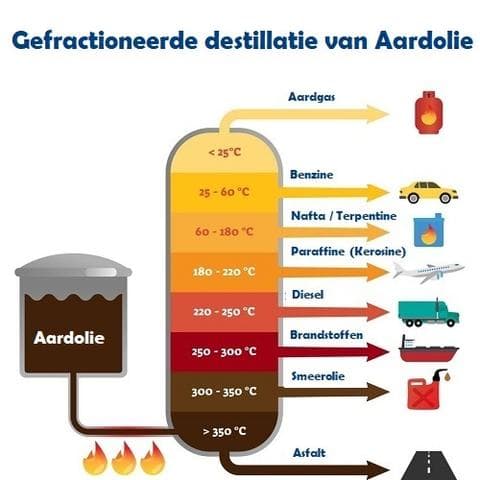
They are a by-product of the petroleum industry. Petroleum is a fossil fuel formed from the remains of animal and plant life in the earth's geological past. A huge variety of products is made from crude oil. Think of natural gas, petrol, diesel, lubricating oil, asphalt and paraffin. Kerosene is a form of paraffin. But if it is processed even further, it can also be used in cosmetics.

Well, if you look at the world through rose-tinted glasses, you could argue that using a by-product is, in a way, "zero-waste"?
Still, in the end it starts to nag... because mineral oils come from non-renewable resources. In other words, they can't keep up with our high level of consumption, because it takes a very long time for these resources to be replenished. On top of that, these oils aren't biodegradable and can disrupt our ecosystem once they end up back in nature.
In short, if you want to go for clean beauty, leave them out.
Mineral oils are widely used because of their low price and high stability in cosmetics. Because they are so heavily processed, they don't start to smell, they soften and protect the skin's surface, and they always give the same result. One size fits all!
Well-known baby brands, for example, are big fans of mineral oils. That's not so strange, because mineral oil stays on the skin and forms an excellent protective layer. The sealing effect of mineral oil leaves a thin film on the skin that protects the skin under the nappy. This makes it a quick, cheap solution for protecting baby bottoms.
Well-known lip balms also use mineral oils. You can get them in a pot or a stick, but they really only do one thing: seal off the skin. Ideal for chapped lips and rough patches. The only pity is that this is also the only thing they do. They do protect and soften in the short term, but they offer no long-term skin benefits. It's no coincidence that you have to keep reapplying. It's a quick fix.
Mineral oils may not be dangerous and may be popular for their sealing properties, but there are natural alternatives that achieve the same result too! They aren't really necessary. Think of candelilla wax, beeswax or carnauba wax, for example. Mixed with a lovely butter and oil, they protect the skin by forming a sealing (occlusive) layer, and they also bring important active ingredients that care for the skin.
Pros
✅ Cheap
✅ Quick fix
✅ Softens and protects the skin
✅ Stable in products, they don't oxidise
Cons
❌ Not sustainable
❌ One size fits all
❌ You have to keep reapplying
❌ Contain no active ingredients
❌ Seal off the skin
❌ Can cause over-hydration
Myth: mineral oils clog the skin.
It's often said that mineral oils clog the skin. This isn't true. Mineral oils are heavily processed with intensive chemical treatments before they are approved for use on facial skin, so technically they don't clog. But they do stay on the skin. As a result, if you sweat a lot with mineral oil on your skin, you can get little bumps from the sweat that can't escape. Learned something new!🙂
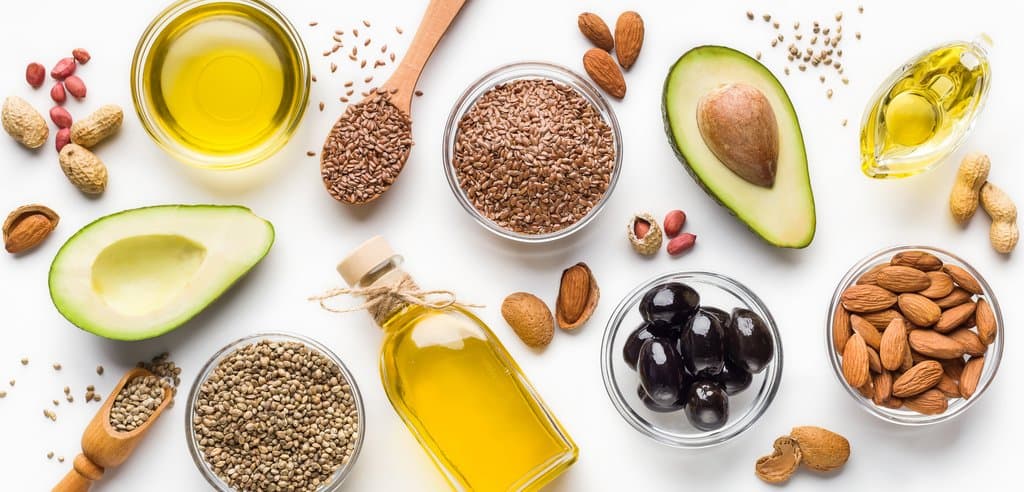
As the name says, these are oils made from parts of plants. Oils can come from all kinds of natural plant materials such as seeds, fruits and nuts. They don't need extreme processing (like mineral oils) and are extracted directly from the plant by cold pressing or with an expeller press (technically also cold-pressed).
Think of base oils such as Apricot Kernel Oil, Grapeseed Oil and Sweet Almond Oil. These base oils are often inexpensive, simple and easy to recognise by their light colour, fairly thin texture and mild scent.

Heat au bain marie 15% Candelilla wax, then add 40% Shea Butter, 20% Sweet Almond Oil and 20% Coconut Oil . Stir, and pour into a tin or glass jar. Let the balm cool before using it on the skin. And your natural baby bottom alternative is ready!
Quick, cheap short-term solutions: that's what the market has always done well on. Sustainability and the environment generally come second. Using mineral oil is a logical result of this mindset.
Mineral oils not only seem to be the least sustainable choice, they're not a good idea for the skin either. They have only one function, and that is sealing the skin off from outside influences. They do protect and soften in the short term, but they offer no long-term skin benefits. It's a quick fix.
Choosing natural oils is a choice that suits our times. Nature offers us a wide range of plant oils with many special properties. Plant oils are not only sustainable, they also contain many active ingredients that protect, soften and hydrate the skin. They can be tailored to personal needs and support the skin in the long term.
That said, not all natural oils are as stable as synthetic oils. Purely and simply because the latter are "made" by people. And nature... well, nature just "is".
In short, are you choosing nature too? Then go for natural oils and leave those mineral oils on the shelf!
Author: Malou Hofmann
Sources:
https://www.ncbi.nlm.nih.gov/pmc/articles/PMC6720566/
https://www.dr-jetskeultee-skincare.nl/product-advies/kan-je-huid-lui-worden-van-je-creme/
https://onepetro.org/WPCONGRESS/proceedings-abstract/WPC05/All-WPC05/WPC-8231/203230
https://pubmed.ncbi.nlm.nih.gov/22988452/
https://pubmed.ncbi.nlm.nih.gov/22994201/
https://pubmed.ncbi.nlm.nih.gov/32535829/
https://www.ensie.nl/winkler-prins-1870/paraffine
https://www.ncbi.nlm.nih.gov/pmc/articles/PMC4861557/
Carrier Oils for Aromatherapy and Massage - Len Price & Shirley Price
Power of the Seed - Susan M. Parker
Modern Cosmetics - Damjan Janes & Nina Kocevar Glavac