Ready-made products for your natural routine..
Do you want to stay updated on offers, (giveaway) actions and recommendations? This way you won't miss out on anything! Not too often, we promise.


Hydrosol, a by-product of the distillation process of essential oils. Perhaps less potent, but certainly no less valuable. In this blog you can read all about the different Hydrosols.
Hydro-sol, translated from Latin: water solution. It is the water that remains after the essential oil has been extracted from a plant. That does not mean that a Hydrosol is less effective. It actually has completely different components from an essential oil, and its active properties are sometimes even superior. They may be less potent, but they are certainly no less valuable!
To be able to answer this question, we take you into the world of essential oils, or rather the distillation process of essential oils. Most essential oils are distilled using distillation equipment. By means of steam, the oils are extracted from the plant, flower or leaves. Heating water creates rising water vapour. Essential oil and other substances are released from the plant and carried along with the steam. After the steam has cooled and been collected, the distillation water consists of two different parts. One part is the oil, the essential oil. The second part is a watery solution, a Hydrosol or Hydrolat. The essential oil floats on top because it cannot mix with the watery Hydrosol.
A Hydrosol is therefore the pure, watery product created by distillation. They still have the scent of the flowers that were distilled, but much less strong than the flower itself or the essential oil extracted from it.
Essential oil and Hydrosols are therefore 2 products that come from the same plant via the distillation process. Both contain the beneficial active substances of a plant. A Hydrosol is therefore a by-product of the distillation process. Now that is what we call sustainable!
Flower water, floral water, aromatic water… is that the same thing then?
Flower water is obtained by adding synthetic substances to water or by mixing a drop of essential oil with water. They may then have the scent of the flower or plant, but certainly not the same effect. A Hydrosol is always obtained from distillation.

Hydrosols contain many substances from the plant they were distilled from. In addition to the lipophilic (fat-soluble) substances that also make up the essential oil, they contain other substances too. For example, a Hydrosol contains a lot of tannins, which have an astringent effect on the skin, and it contains many flavonoids (antioxidants) and sesquiterpene alcohols. These help to drain excess fluid.
The scent of a Hydrosol is not the same as that of an essential oil. Especially when a Hydrosol has been distilled recently, it still has a real base note. Did you know that both essential oils and the Hydrosol first have to rest for a while? This allows the scent to develop properly.
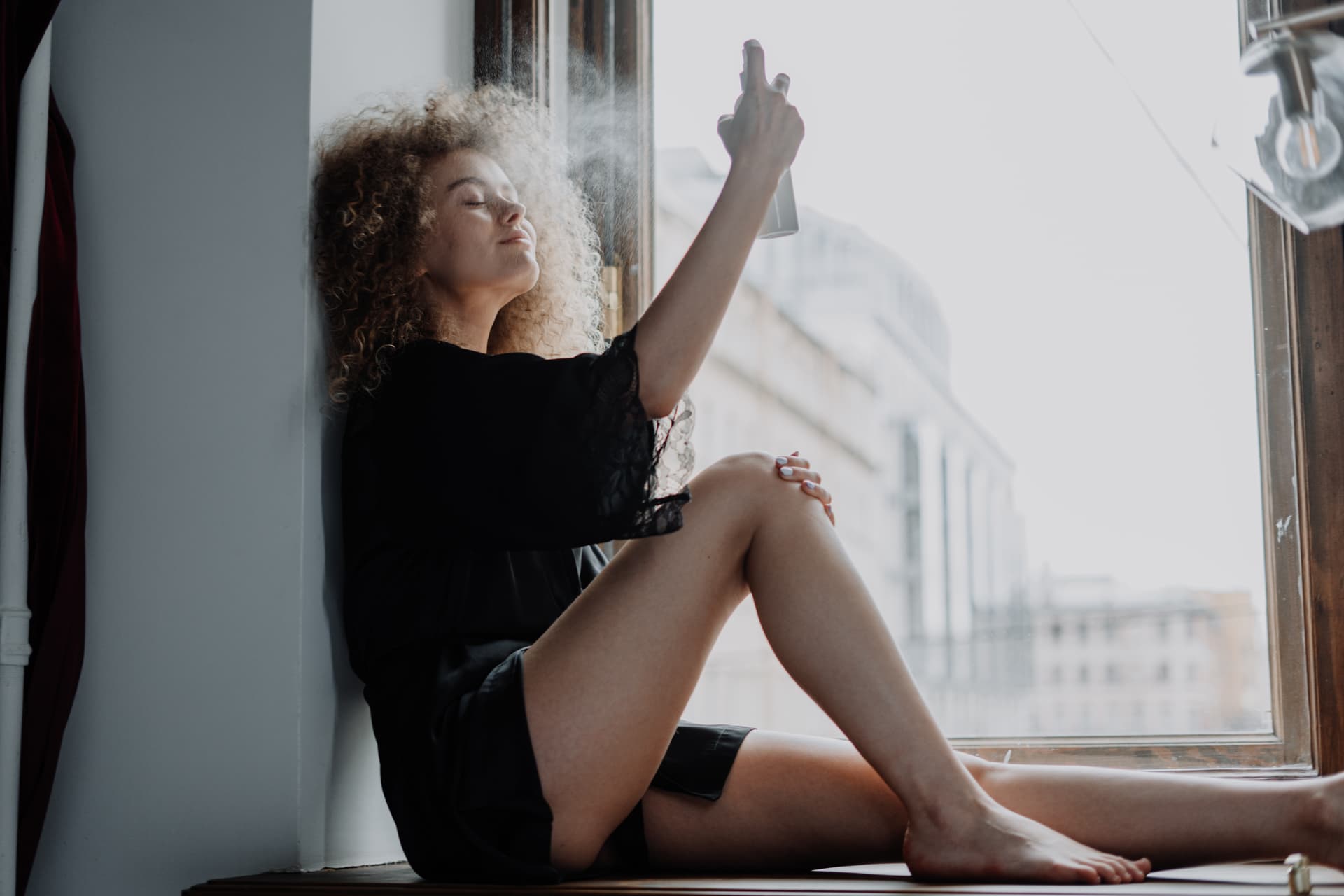
Hydrosols are less potent than essential oils. The advantage of this is that they can be used pure on the skin. For example, they can be used as a Body & Face Mist, lotion, toner, deodorant, hairspray, aftershave and air freshener. Instead of water with essential oil, you can also use a Hydrosol in your aroma diffuser. And of course a Hydrosol is a perfect ingredient in various DIY cosmetics recipes.

Orange Blossom Hydrosol
With its fantastic floral scent, Orange Blossom Hydrosol is secretly our favourite.
Obtained from: distillation of Orange Blossom (Citrus Aurantanium)
Scent: deliciously fresh, floral scent
Skin type: combination and oily skin, sensitive skin
Purifies the skin
Calms the skin
Reduces oily skin and spots
Astringent on pores
Regenerating: supports the skin’s ability to repair itself
During stressful periods you can use it very well as a natural, relaxing air freshener or linen spray.
Geranium Hydrosol
The cheerful, floral Geranium scent instantly brightens your mood and works on your natural, inner balance.
Obtained from: distillation of Geranium leaves (Pelargonium Asperum)
Scent: sweet, floral
Skin type: all skin types
Regulates sebum production, helps to balance the skin and is therefore suitable for every skin
Works on the pores: prevents them from clogging and has an astringent effect
Anti-inflammatory
Calming and cooling on the skin
Hydrates the skin
Geranium hydrosol stands for balance on every level, both inside and out!

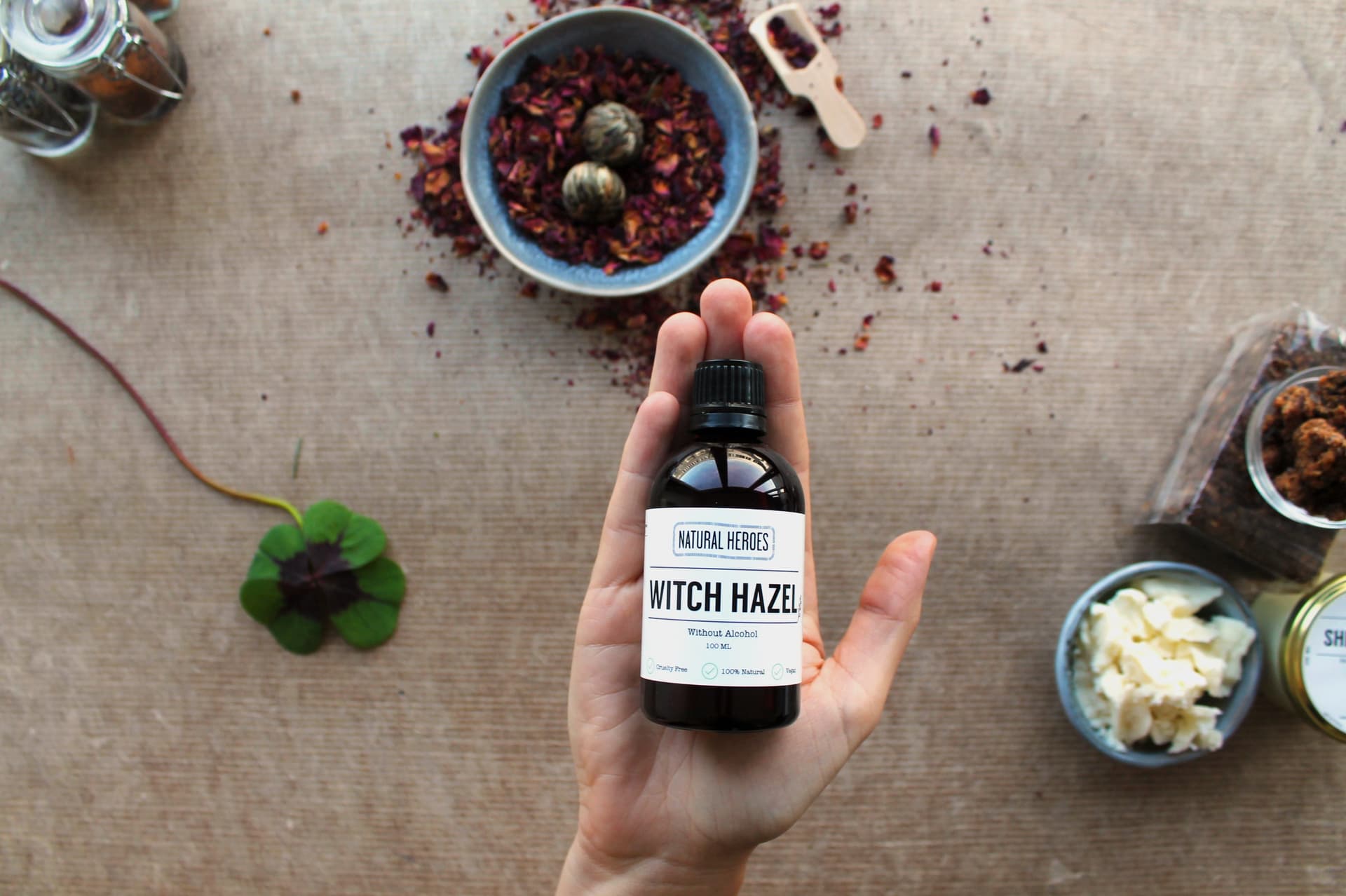
Witch Hazel Hydrosol
With its enchanting properties, Witch Hazel Hydrosol surprises us time and time again.
Obtained from: distillation of Witch Hazel (Hammamelis Virginiana)
Scent: herbaceous scent
Skin type: oily and blemished skin with large pores
Strong astringent effect
Prevents blackheads and spots
Good for blood circulation
Anti-inflammatory properties, ideal for spots
Strong anti-ager: Contains many tannins, protects against free radicals and is a good antioxidant
For the men among us, Witch Hazel is also very nice to use as an aftershave.
Tea Tree Hydrosol
Obtained from: distillation of essential oil from the Tea Tree (Malaleuca Alternifolia)
Scent: herbaceous
Skin type: oily and blemished skin
Gentle and purifying
Antibacterial
Calming on the skin
Also nice to use as a deodorant in cases of heavy perspiration. It soothes the airways and helps you breathe more freely.
Green Tea Hydrosol
Obtained from: distillation of the leaves of the Tea plant (Camelia Sinensis)
Scent: fresh
Skin type: all skin types, irritated skin, oily skin
Purifies the skin
Soothes sensitive skin
For protecting the skin
Hydrates the skin
You can think of Green Tea Hydrosol as a detox for the skin.
Quickly greasy hair? You can also use this Green Tea Hydrosol very well to wash your hair or to spray into your hair after washing. Green tea contains caffeine, which strengthens your hair follicles and stimulates hair growth. The result? Radiant and shiny hair!
Peppermint Hydrosol
Everyone is familiar with the fresh scent of Peppermint.
Obtained from: distillation of peppermint leaves (Mentha Piperita Flower).
Scent: fresh, menthol
Skin type: oily and blemished skin
Effect on the skin:
Purifying effect
Reduces oily skin
Cooling effect
Soothes the skin
Relieves the sensation of heat and sensitivity
A real refresher for your skin, especially in summer!

Rose Hydrosol
As the queen of flowers, the Rose with its rose water has already managed to seduce many people.
Obtained from: distillation of rose petals (Rosa Damascena)
Scent: sweet, floral
Skin type: all skin types, very suitable for dry and more mature skin.
Regulates the skin’s sebum production
Astringent on pores
Calms the skin
Reduces spots
Hydrates the skin
Stimulates blood circulation
Softens fine lines and wrinkles
Troubled by damaged hair? Spray some Rose Water into your hair or add it to your DIY shampoo!
Bamboo Hydrosol
Packed with silicon (silicic acid), bamboo water is a real skin improver. Silicon protects the elastin and collagen in the skin, making it more elastic and giving fewer wrinkles.
Obtained from: distillation of bamboo leaves and stems (Bambusa Vulgaris)
Scent: fresh
Skin type: Dry skin that is prone to spots
Gives the skin a silky-soft glow
Hydrates the skin
Calms dry and sensitive skin
Helps to prevent spots

Chamomile Hydrosol
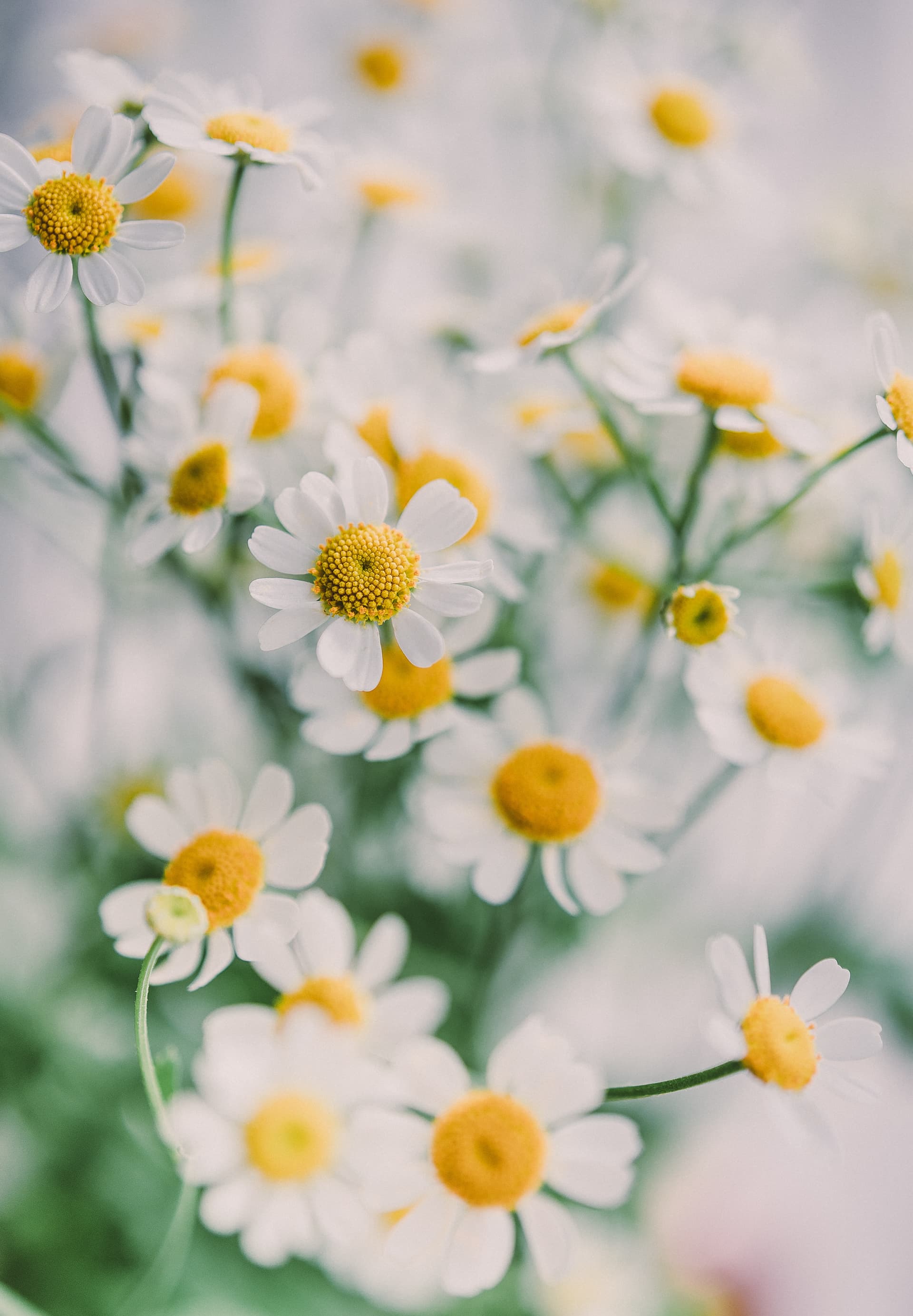
The most soothing Hydrosol is surely that of the beautiful little white flowers of Chamomile. Chamomile water is calming for both body and mind.
Obtained from: distillation of the flowers of Chamomile (Chamaemelum nobile)
Scent: sweet, herbaceous scent
Skin type: dry, sensitive skin
Soothes sensitive skin
Calms the skin
Restores the skin
Anti-inflammatory
For a wonderfully calm and restful night’s sleep, you can use Chamomile Hydrosol as a linen spray.
Lavender Hydrosol
The Lavender Hydrosol is a real all-rounder.
Obtained from: distillation of the flowering tops of the lavender bush (Lavandula Angustifolia Flower)
Scent: Fresh, light, floral, sweet
Skin type: all skin types
Cleanses and purifies the skin
Cooling
Calms red skin
Soothes the skin
Also pleasant to use as a room spray for instant relaxation, or as a body spray after shaving or in case of irritation.
Frankincense Hydrosol
This Hydrosol is also called a meditative Hydrosol because of its earthing and grounding scent.
Obtained from: distillation of the resin of the frankincense tree (Boswellia Carterii)
Scent: fresh, woody
Skin type: all skin types
Firming and astringent effect on the skin
Gives the skin a radiant glow
This Hydrosol is very nice to use in an aroma diffuser instead of water with essential oil. Or use Frankincense Hydrosol as a linen spray for a wonderfully deep and relaxed night’s sleep.
Elderflower Hydrosol
The Elder has long been admired for its good properties; it is no wonder that the whole tree is used in many different applications.
Obtained from: distillation of the flowers of the common elder (French Sambucus)
Scent: lightly sweet
Skin type: all skin types, very suitable for oilier, mature skin
Anti-inflammatory
Soothing
Restorative
Improves circulation; the skin receives more oxygen and nutrients
Elderflower water is lovely to add to your clay mask instead of water.
Lemon Balm Hydrosol
Obtained from: distillation of Lemon Balm (Melissa Officinalis)
Scent: delightful, mildly fresh lemon scent
Skin type: all skin types. Suitable for red, sensitive skin and more mature skin with large pores
Cleansing effect
Cools the skin
Calms and relaxes
Astringent effect: A real wake-up call for the skin
In short, the possibilities of Hydrosols are endless. They are very easy to add to your daily skincare routine as a Body & Face Mist or toner. And the best part? You can mix the different Hydrosols together for your own unique blend! So there really is a suitable Hydrosol for every skin.
Which one is your favourite?
Written by: Helena Laarman
Curious about our favourites?