Ready-made products for your natural routine..

Free shipping from €35
★★★★★ 9.3 / 10 out of 9,500+ reviews
Ordered before 23:00, shipped today
Natural HeroesNatural Heroes
Natural Heroes
Shop
Recipes
Information
Community
About us

Our community is the place where Heroes come together to share knowledge, experiences and ideas about nature.

Join us!
Join our community
User
My account
Cart
Basket
Wishlist
Favorites
★★★★★Kiyoh 9.3 / 10 — 9,500+ reviews
Shop
Recipes
Information
Community
About us

Our community is the place where Heroes come together to share knowledge, experiences and ideas about nature.

Join us!
Join our community
WishlistCart
User
Shop
Recipes
Information
Community
About us
Aromatherapy
Cosmetics
Do It Yourself
Herbs & Extracts
Auxiliaries
Oils & Butters
Tools & More
Ready to use
All
Bundles
Gift Card
New
Sale
FARM TO TABLE
Lavender Luisieri
Cistus
Helichrysum Stoechas
Rosemary
Eucalyptus
Spanish Thyme
ESSENTIAL OIL BLENDS
Bombshell
Eternal Bloom
Fresh Balance
Less Stress
Morning Breeze
Morning Sunshine
Night Night
Rosemary Bliss
Sweet Dreams
Tropical Zest
Velvet Rose
ESSENTIAL OILS (A-G)
Amyris
Anijs
Basilicum
Bergamot
Bergamot (Furocoumarin-Free)
Berk
Berkenteer
Bittere Amandel
Blauwe Kamille
Blue Tansy
Cajeput
Cederhout
Citroen (FCF-vrij, Gedestilleerd)
Citroen (Koudgeperst)
Citroen Eucalyptus
Citroengras
Citronella
Cognac
Copaiba
Cypres
Duizendblad
Eucalyptus (Globulus)
Eucalyptus (Radiata)
Frankincense (Carterii)
Frankincense (Serrata)
Gember
Geranium
Grove Den
ESSENTIAL OILS (H-N)
Helichrysum
Hinoki
Hô hout
Jeneverbes
Kamfer
Kamille (Rooms)
Kaneelschors
Kardemom
Korianderzaad
Kruidnagel
Kurkuma
Laurierblad
Lavandin
Lavendel
Lavendel (Spijk)
Limoen
Mandarijn
Manuka
May Chang
Mirre
Munt
Neroli
Nootmuskaat
ESSENTIAL OILS (O-Z)
Oranjebloesem / Neroli (Tunesie)
Oregano
Palmarosa
Palo Santo (Heilig hout)
Patchouli
Pepermunt (Mentha Arvensis)
Pepermunt (Mentha Piperita)
Peru Balsem Oleoresin
Petitgrain
Petitgrain (Bigarade)
Pink Grapefruit
Ravintsara (Biologisch)
Roze Peper
Rozemarijn
Rozemarijn (Cineol)
Rozemarijn Verbenon - Biologisch
Rozengeranium
Rozenhout
Salie (Scharlei)
Sandelhout
Siberische Zilverspar
Tea Tree
Tea Tree Citroen
Tijm
Verbena
Vetiver
Wintergroen
Witte Champaca (Magnolia)
Wortelzaad
Ylang Ylang (Eerste Graad)
Yuzu
Zoete Sinaasappel
Zwarte Peper
BlogsAll items
How does DIY work?Do's & Don'ts
27 Ingredients to Avoid in CosmeticsAlcohol, Aluminium, and 25 more...
(Un)refined, Organic or Cold-pressed?We explain the terms.
Natural vs Mineral OilsWhy you’d prefer not to use mineral oil.
Carrier oil vs essential oilThey share the word "oil," but are very different.
Basic Skincare RoutineA 100% natural skincare routine for your skin type.
Preservatives in SkincareWhich is suitable in your DIY?
What is the community?The place where Heroes come together!
Earth CoinsEarn points and get discounts.
Community loginIf you are already a member of our community.
About usOur mission & the story
WholesaleFor businesses.
VacanciesMake a difference!
Affiliates
ContactA response within 1 working day.
Free shipping from €35
★★★★★ 9.2 / 10
Ordered before 23:00, shipped today

Sign up for our newsletter

Do you want to stay updated on offers, (giveaway) actions and recommendations? This way you won't miss out on anything! Not too often, we promise.

You can unsubscribe at any time.
Botanical drawing of a plant
Natural Heroes

"We believe that living healthy and sustainably should be easy."

Reviews9.3 / 10 out of 9,500+ reviews

Customer service
  • Get in touch
  • Ordering & Delivery
  • Returns
  • Right of withdrawal
  • Frequently Asked Questions
  • My account
Raw materials
  • Carrier oils
  • Fragrance oils
  • Hydrosols
  • Clays & Powders
  • Herbs & Plant Powders
  • Butters & Waxes
  • Excipients
Products
  • All products
  • Do It Yourself
  • Recipes
  • Tools & More
  • Packaging
About Us
  • Community
  • Greenspark
  • Blog
  • Wholesale
  • Vacancies
  • Contact
  • Terms and Conditions
  • Privacy Policy
  • Right of withdrawal
Updates?
  • instagramInstagram
  • facebookFacebook

ideal
visa
mastercard
bitcoin
sofort
applepay
Terms and ConditionsRight of withdrawalDisclaimer© Natural Heroes 2026
  1. Blog
  2. Everything you need to know about Citric Acid

Everything you need to know about Citric Acid

  • What is Citric Acid?

  • How was Citric Acid discovered?

  • How is Citric Acid made?

  • What is the difference between Citric Acid Anhydrous & Monohydrate?

  • What is Citric Acid used for?

  • How do you use Citric Acid?

  • What does Citric Acid look like?

  • How do you store Citric Acid?

  • Where can you buy Citric Acid?

What is Citric Acid?

Citric Acid (Citric Acid) is an organic acid that occurs naturally in citrus fruits such as oranges, lemons, mandarins and limes. In lemons and limes, Citric Acid makes up around 8% of the whole. But this acid is also found in other foods such as berries and some vegetables like lettuce and tomato.

Citric Acid is not only found in food, but is also present in every body cell and is essential for the metabolism of humans and animals. The metabolism in our body has many functions and, for instance, releases energy from absorbed substances and reserves. It regulates the use of building blocks and energy, but also helps in processing waste products. Your body is busy with metabolism 24 hours a day, and that makes Citric Acid indispensable for our body.

How was Citric Acid discovered?

Ancient medieval cultures had been using citrus fruit acid for hundreds of years before they truly understood its power. In the eighth century, the chemist Jabir Ibn Hayyan from the Middle East identified Citric Acid as the specific chemical substance responsible for the sour effect. It was Carl Scheele, a well-known Swedish chemist, who first isolated Citric Acid in a laboratory in 1784. He did this by crystallising lemon juice.

How is Citric Acid made?

Currently, over 1.6 million tonnes of Citric Acid are produced worldwide. Half of this comes from China. As much as a third of all Citric Acid is consumed in Europe. That makes Europe the largest user of Citric Acid by far.

Originally, Citric Acid was produced by adding calcium oxide to citrus fruit juice. That was until Carl Wehmer first developed a process in 1893 in which sugar was fermented to produce citric acid. It was only when the American government scientist James Currie published an article in 1917 about the power of citric acid production that Citric Acid truly became popular.

So although Citric Acid is naturally found in lemons and limes, it is not made from them. The raw material we make Citric Acid from is Molasses. Molasses is a syrup, half of which consists of sugar, and is a byproduct of, for example, the maize and sugar beet/cane industry. Through fermentation of the Molasses, citrate is formed. Fermentation is a process in which bacteria, moulds and yeasts are used to make a food product. When you add acids such as sulphuric acid to the citrate, Citric Acid is produced. There are two forms of Citric Acid: Citric Acid Monohydrate and Citric Acid Anhydrous.

What is the difference between Citric Acid Monohydrate and Anhydrous?

Citric Acid Monohydrate contains water, whereas Citric Acid Anhydrous consists of less than 0.5% water. Citric Acid Anhydrous is therefore also known as 'water-free Citric Acid'. This water-free Citric Acid has a purity of more than 99% and is therefore considerably purer than Monohydric Citric Acid.

What is Citric Acid used for?

Citric Acid is a popular product, and that is for good reason. It can be used for many different purposes. Below is a brief description of what Citric Acid is mainly used for.

How do you use Citric Acid?

You can use Citric Acid to make your own products such as cleaning products, shampoos, creams and bath bombs. So you can add Citric Acid to your homemade products for various reasons. In homemade cleaning products you add it because Citric Acid helps to scrub away (rust) stains, for example. If you are making cosmetics, you add citric acid to change the acidity or extend the shelf life. When making bath bombs, Citric Acid is indispensable for the bubbling effect.

If you plan to make your own products with Citric Acid, you should bear in mind that it should never be more than 10% of the total dosage.


What does Citric Acid look like?

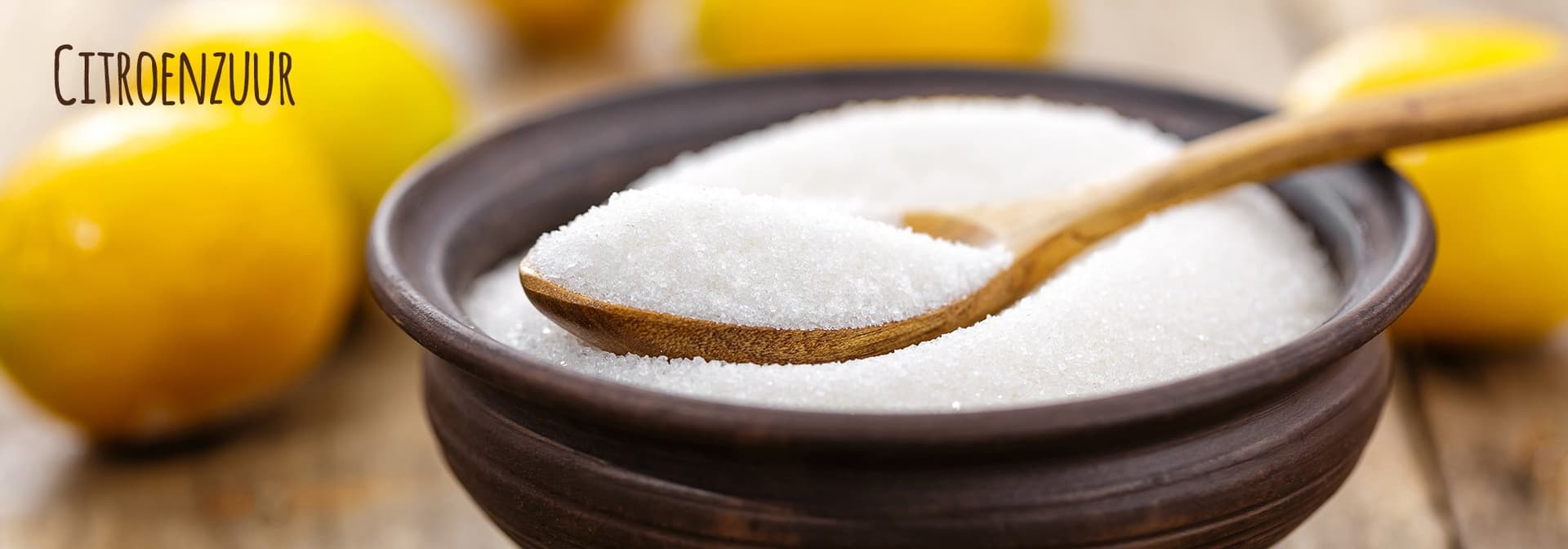
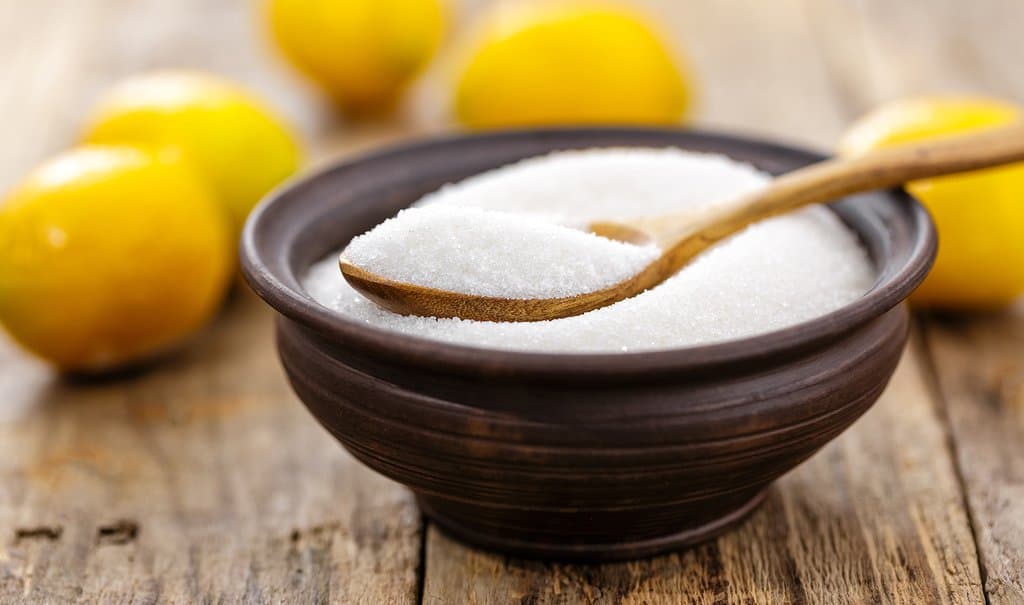
Citric Acid is bright white and has the same fine texture as granulated sugar. This acid has no scent and is, among other reasons, ideal for adding to DIY cosmetic recipes.

How do you store Citric Acid?

It is best to store Citric Acid at room temperature in a well-sealed container. Preferably in a dark place such as a cupboard. On average, Citric Acid has a shelf life of 36 months.

Author: Aurelie

Acidity regulator

Citric Acid is widely used to adjust the pH (acidity) of a formulation. The pH scale runs from 0 to 14. A pH lower than 7 is acidic, a pH of 7 is neutral and a pH higher than 7 is basic/alkaline. By adjusting the acidity, unwanted bacteria in various products can be avoided.

Bath bombs

Citric Acid is an indispensable ingredient when making bath bombs. Most bath bombs also contain Baking Soda/Sodium Bicarbonate. When you mix this Citric Acid with Baking Soda and place it in the water, carbon dioxide is produced. As a result of this reaction, the bath bomb slowly disintegrates and countless tiny bubbles are released. These bubbles make the water carbonated. A bath with carbonated water provides, among other things, better blood circulation and metabolism in the body.

Shelf Life & Acidity of Cosmetics

Citric Acid is mainly used in the cosmetics world to make products last longer. This is because Citric Acid is a natural antioxidant, which means products oxidise less quickly. That is why Citric Acid is often found in products such as soaps, conditioners, shampoos and skin and hair care products. If you look at the labels of cosmetics, you will see that Citric Acid (Citric Acid) often appears on the ingredients list.

Unfortunately, it is difficult to estimate exactly how much longer cosmetics will last thanks to Citric Acid. This depends on what ingredients are in the product and how they are stored. Products with tap water generally only last a few days, even with citric acid. With Citric Acid, distilled water can sometimes last a few weeks, and products containing oils, butters or dry powders can be kept for several months.

The acidity of cosmetics is also adjusted with Citric Acid. This is because the skin is quite acidic, which means acidic cosmetics are better for the skin.

Nutrition

Citric Acid is the most widely used food acid in the European Union. It is used, for example, to change the aroma of food. The flavour of quark and soft drinks is largely due to Citric Acid.

Citric Acid is also added to our food for other reasons. The antioxidants in Citric Acid keep fruit from browning so quickly. But this acid is also added to prevent sugar in processed foods from crystallising. Citric Acid is also found in many dairy products to avoid protein coagulating during the heating of cream and the melting of cheese.

Citric Acid (Citric Acid) is therefore found in an enormous amount of food. Think of chocolate milk, margarine, instant coffee, biscuits, nuts, cheese spread, ground herbs and canned vegetables.

Cleaning products

Citric Acid can also come in very handy when cleaning. Citric Acid kills bacteria and moulds, which means it works excellently for cleaning and disinfecting all sorts of things. It is also effective at removing soap residue, hard water stains, limescale, lime and rust. Citric Acid (Citric Acid) is therefore found in many cleaning products for cars, dishwashers, bathrooms, carpets and glassware, for example.